

Supreme Court Tightens UPSC Reservation Rules: Reserved Candidates Barred from General Seats After Availing Benefits
Digital Desk
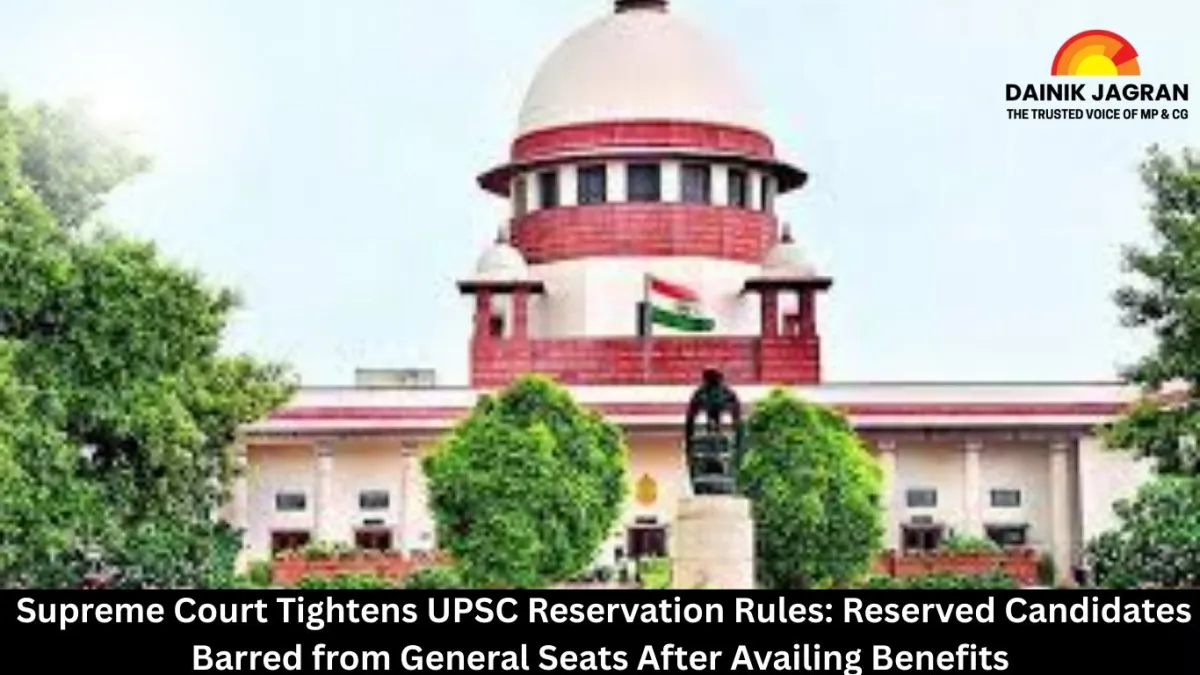
In a landmark ruling that could reshape how reservations are applied in competitive exams, the Supreme Court of India has clarified key aspects of UPSC reservation rules. On January 6, 2026, the court addressed a long-standing dispute from the 2013 Indian Forest Service examination, emphasizing that reserved category candidates who availed any form of relaxation—such as lower cut-offs or age concessions—cannot migrate to unreserved (general) seats, even if they score higher in the final merit list.
This decision overturns a Karnataka High Court order and reinforces stricter boundaries in reservation policies, amid ongoing debates on equity in public sector jobs.
As a seasoned journalist covering education and policy, I see this as a timely intervention in an era where UPSC aspirants face increasing competition and confusion over reservation norms. With the UPSC Civil Services Exam forms expected soon, this Supreme Court judgment arrives at a critical juncture, potentially affecting thousands of candidates preparing for 2026 mains and interviews. It matters now because it settles a debate that's caused repeated litigation, ensuring clearer guidelines for fair allocation of seats in government services.
Background of the Dispute
The case stemmed from a Karnataka vacancy in the Indian Forest Service, where a general seat remained open. A reserved category candidate, who had already benefited from relaxed cut-offs in prelims, petitioned for the seat based on higher overall marks. The Karnataka High Court initially sided with the candidate, allowing migration to general category. However, the Supreme Court, in a bench led by Justices J.K. Maheshwari and Vijay Bishnoi, rejected this, interpreting Rule 14 of the IFS Examination Rules 2013.
Key points from the background:
- Reserved candidates often receive benefits like lower qualifying marks or extra attempts.
- The core question: Can these benefits be "erased" by strong final performance for claiming unreserved seats?
- Historical cases, like Indira Sawhney (1992) and recent 2020 rulings, have built on this, but ambiguities persisted until now.
Key Highlights of the Supreme Court Judgment
The court made it crystal clear: If a candidate from a reserved category avails any concession at any stage—prelims, mains, or interview—they are ineligible for unreserved vacancies. "Final performance does not erase earlier concessions," the judgment stated, drawing from Union of India vs. Sajib Roy (2025).
What counts as availing benefits under UPSC reservation rules?
- Lower cut-off marks in any stage.
- Age relaxations or extra attempts.
- Reduced qualifying standards in merit lists.
Notably, fee concessions do not count, as they are financial aids to level the playing field without altering competitive edges. This nuance is crucial for economically weaker sections.
The ruling also distinguishes "migration" (reserved to general, allowed only without benefits) from "reverse migration" (general to reserved, strictly prohibited).
Implications and Expert Perspectives
This Supreme Court judgment strengthens merit-based allocations in unreserved categories, potentially reducing disputes in cadre allotments. For reserved category candidates, it underscores the need to decide early whether to claim benefits, as it locks them out of general seats.
Simulated expert view from a constitutional law professor: "This protects the integrity of reservations while preventing undue advantages. Aspirants must strategize carefully—opt for general if confident in meeting unrelaxed standards."
Practical takeaways for UPSC aspirants:
- Review exam rules thoroughly; UPSC explicitly bars migration post-benefits.
- Prepare documents meticulously, as forms are imminent.
- Focus on consistent performance across stages to avoid reliance on relaxations.
In my opinion, while this promotes fairness, it might discourage high-achieving reserved candidates from claiming benefits early, risking disqualification. Policymakers should consider explicit rule amendments for flexibility.
Looking Ahead
As India grapples with evolving reservation debates, this ruling on UPSC reservation rules sets a precedent for other exams. It’s a win for clarity but highlights the need for ongoing reforms. Aspirants, stay informed—your dream rank is within reach with smart preparation. For now, this judgment ensures reservations serve their purpose without spilling over.

.jpg)




