Beyond Strategic Petroleum Reserves: Why India Needs Real Energy Resilience
Digital desk
For India, energy security is no longer simply a question of how many barrels of crude oil can be stored underground. It is increasingly a question of how well an ordinary household can withstand the next global energy shock.
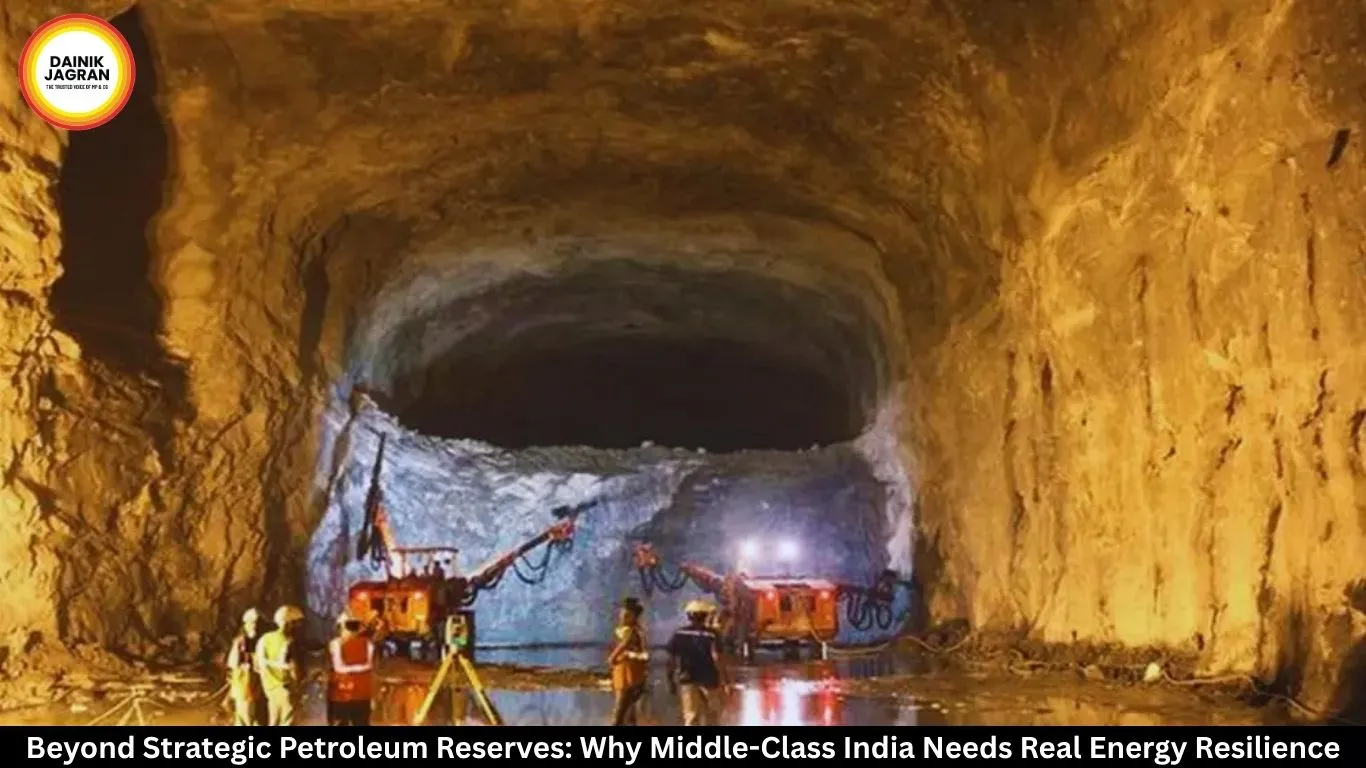
India's strategic petroleum reserves are an important first line of defence. The country's existing strategic storage capacity stands at 5.33 million metric tonnes of crude oil, equivalent to roughly 9.5 days of crude consumption when fully available. The government is also pursuing additional storage capacity, including an ONGC-backed plan for a 1.75-million-tonne strategic reserve.
But reserves alone cannot create energy resilience.
The real test comes when geopolitical tensions disrupt shipping routes, crude prices jump, freight costs rise and the consequences eventually reach household budgets. That is where India's energy strategy needs to become more directly connected to the economic reality of the middle class.
The Household Is the Real Stress Test
When international oil markets are disrupted, the first concern for policymakers is usually supply. For families, however, the concern is affordability.
A prolonged increase in crude prices can raise transportation costs, affect food distribution and increase the operating expenses of businesses. Even when petrol or diesel prices do not immediately rise by the same proportion as international crude, households can eventually feel the impact through higher prices across the economy.
The recent global energy turmoil has already demonstrated how quickly geopolitical events can become economic problems. India's vulnerability is significant because the country remains heavily dependent on imported crude.
That means energy resilience should ultimately be measured not only in barrels stored, but also in how much economic pain households experience during a disruption.
LPG Needs to Be Part of the Strategy
This is where the debate around strategic reserves becomes particularly important.
India has built strategic reserves for crude oil, but household energy security also depends heavily on LPG. A disruption in global supply can affect cooking fuel availability and prices, particularly for families that have limited room in their monthly budgets.
Recent reports indicate that the government has been considering a broader strategic fuel reserve covering LPG and LNG, potentially funded partly through a levy on consumers. The proposal illustrates an important policy shift: energy security cannot be limited to crude oil alone.
However, any such mechanism must be designed carefully.
A reserve intended to protect consumers should not become another recurring financial burden on those same consumers.
Diversification Is Better Than Stockpiling Alone
India has already been moving towards greater diversification of energy supplies.
Recent government data indicates that India now sources LNG from 15 countries, compared with six earlier, while crude oil sourcing has expanded to 41 countries from 27. Diversification reduces dependence on any single supplier or route and can provide greater flexibility during geopolitical disruptions.
This approach deserves greater emphasis.
A country cannot stockpile its way out of every energy crisis. Strategic reserves buy time. Diversified suppliers, multiple shipping routes, domestic production and alternative energy sources determine what happens after that time runs out.
Electricity Could Be the Biggest Buffer
The most important long-term opportunity may lie beyond oil and gas.
India's growing renewable-energy capacity, battery storage, electric mobility and expansion of domestic electricity infrastructure can gradually reduce the economy's exposure to imported fossil fuels.
That does not mean India can suddenly replace oil with electricity. Transport, aviation, petrochemicals and several industrial processes will continue to require hydrocarbons for years.
But every kilometre travelled in an electric vehicle, every household appliance powered by increasingly domestic electricity and every industrial process shifted towards cleaner indigenous energy reduces exposure to international fossil-fuel volatility.
Energy transition, therefore, should not be treated only as a climate policy. It is also an economic security policy.
Middle Class Needs Protection
There is another dimension that deserves greater attention: household preparedness.
Energy resilience should mean that a family does not have to completely restructure its monthly budget every time global oil markets become unstable.
That requires predictable fuel taxation, targeted support for vulnerable consumers, efficient public transport, affordable electric mobility, reliable electricity supply and policies that prevent temporary international shocks from becoming permanent domestic inflation.
The objective should not necessarily be to freeze prices indefinitely. It should be to prevent sudden energy shocks from disproportionately damaging household finances.
Resilience Must Reach the Last Mile
India's energy security architecture has traditionally been designed from the top down: strategic reserves, refineries, pipelines, shipping routes and national supply chains.
All of these remain essential.
But resilience ultimately has to reach the last mile.
A strategic reserve in an underground cavern cannot directly help a family struggling with a higher monthly LPG bill. A diversified crude supply cannot by itself protect a small business from a sudden increase in transport costs. And a national energy policy cannot be considered fully successful if households remain highly vulnerable to every international crisis.
The next phase of India's energy strategy should therefore combine strategic reserves with diversified imports, domestic production, renewable energy, storage, efficient transport and consumer protection.
The Bigger Question
India should continue expanding its strategic petroleum reserves. That is not a choice between reserves and renewable energy; the country needs both.
The larger question is what happens beyond the reserve.
Strategic stockpiles can provide breathing space during a crisis. Diversified imports can reduce supply risks. Renewable power and electrification can reduce long-term dependence on imported hydrocarbons. Stronger infrastructure can improve reliability. Sensible consumer policies can ensure that the cost of resilience does not fall disproportionately on households.
For middle-class India, real energy security is ultimately about predictability—knowing that a conflict thousands of kilometres away will not suddenly make cooking, commuting, electricity and everyday life unaffordable.
That should be the benchmark for India's next generation of energy policy.
Beyond Strategic Petroleum Reserves: Why India Needs Real Energy Resilience
Digital desk
India's strategic petroleum reserves are an important first line of defence. The country's existing strategic storage capacity stands at 5.33 million metric tonnes of crude oil, equivalent to roughly 9.5 days of crude consumption when fully available. The government is also pursuing additional storage capacity, including an ONGC-backed plan for a 1.75-million-tonne strategic reserve.
But reserves alone cannot create energy resilience.
The real test comes when geopolitical tensions disrupt shipping routes, crude prices jump, freight costs rise and the consequences eventually reach household budgets. That is where India's energy strategy needs to become more directly connected to the economic reality of the middle class.
The Household Is the Real Stress Test
When international oil markets are disrupted, the first concern for policymakers is usually supply. For families, however, the concern is affordability.
A prolonged increase in crude prices can raise transportation costs, affect food distribution and increase the operating expenses of businesses. Even when petrol or diesel prices do not immediately rise by the same proportion as international crude, households can eventually feel the impact through higher prices across the economy.
The recent global energy turmoil has already demonstrated how quickly geopolitical events can become economic problems. India's vulnerability is significant because the country remains heavily dependent on imported crude.
That means energy resilience should ultimately be measured not only in barrels stored, but also in how much economic pain households experience during a disruption.
LPG Needs to Be Part of the Strategy
This is where the debate around strategic reserves becomes particularly important.
India has built strategic reserves for crude oil, but household energy security also depends heavily on LPG. A disruption in global supply can affect cooking fuel availability and prices, particularly for families that have limited room in their monthly budgets.
Recent reports indicate that the government has been considering a broader strategic fuel reserve covering LPG and LNG, potentially funded partly through a levy on consumers. The proposal illustrates an important policy shift: energy security cannot be limited to crude oil alone.
However, any such mechanism must be designed carefully.
A reserve intended to protect consumers should not become another recurring financial burden on those same consumers.
Diversification Is Better Than Stockpiling Alone
India has already been moving towards greater diversification of energy supplies.
Recent government data indicates that India now sources LNG from 15 countries, compared with six earlier, while crude oil sourcing has expanded to 41 countries from 27. Diversification reduces dependence on any single supplier or route and can provide greater flexibility during geopolitical disruptions.
This approach deserves greater emphasis.
A country cannot stockpile its way out of every energy crisis. Strategic reserves buy time. Diversified suppliers, multiple shipping routes, domestic production and alternative energy sources determine what happens after that time runs out.
Electricity Could Be the Biggest Buffer
The most important long-term opportunity may lie beyond oil and gas.
India's growing renewable-energy capacity, battery storage, electric mobility and expansion of domestic electricity infrastructure can gradually reduce the economy's exposure to imported fossil fuels.
That does not mean India can suddenly replace oil with electricity. Transport, aviation, petrochemicals and several industrial processes will continue to require hydrocarbons for years.
But every kilometre travelled in an electric vehicle, every household appliance powered by increasingly domestic electricity and every industrial process shifted towards cleaner indigenous energy reduces exposure to international fossil-fuel volatility.
Energy transition, therefore, should not be treated only as a climate policy. It is also an economic security policy.
Middle Class Needs Protection
There is another dimension that deserves greater attention: household preparedness.
Energy resilience should mean that a family does not have to completely restructure its monthly budget every time global oil markets become unstable.
That requires predictable fuel taxation, targeted support for vulnerable consumers, efficient public transport, affordable electric mobility, reliable electricity supply and policies that prevent temporary international shocks from becoming permanent domestic inflation.
The objective should not necessarily be to freeze prices indefinitely. It should be to prevent sudden energy shocks from disproportionately damaging household finances.
Resilience Must Reach the Last Mile
India's energy security architecture has traditionally been designed from the top down: strategic reserves, refineries, pipelines, shipping routes and national supply chains.
All of these remain essential.
But resilience ultimately has to reach the last mile.
A strategic reserve in an underground cavern cannot directly help a family struggling with a higher monthly LPG bill. A diversified crude supply cannot by itself protect a small business from a sudden increase in transport costs. And a national energy policy cannot be considered fully successful if households remain highly vulnerable to every international crisis.
The next phase of India's energy strategy should therefore combine strategic reserves with diversified imports, domestic production, renewable energy, storage, efficient transport and consumer protection.
The Bigger Question
India should continue expanding its strategic petroleum reserves. That is not a choice between reserves and renewable energy; the country needs both.
The larger question is what happens beyond the reserve.
Strategic stockpiles can provide breathing space during a crisis. Diversified imports can reduce supply risks. Renewable power and electrification can reduce long-term dependence on imported hydrocarbons. Stronger infrastructure can improve reliability. Sensible consumer policies can ensure that the cost of resilience does not fall disproportionately on households.
For middle-class India, real energy security is ultimately about predictability—knowing that a conflict thousands of kilometres away will not suddenly make cooking, commuting, electricity and everyday life unaffordable.
That should be the benchmark for India's next generation of energy policy.
Recommended For You
--------
🚨 Beat the News Rush – Join Now!
Get breaking alerts, hot exclusives, and game-changing stories instantly on your phone. No delays, no fluff – just the edge you need. ⚡
Tap to join:
🟢 WhatsApp Channel: Dainik Jagran MP CG
Crave more?
🅕 Facebook: Dainik Jagran MP CG English
🅧 Twitter (X): Dainik Jagran MP CG
🅘 Instagram: Dainik Jagran MP CG
Share the fire – keep your crew ahead! 🗞️🔥