


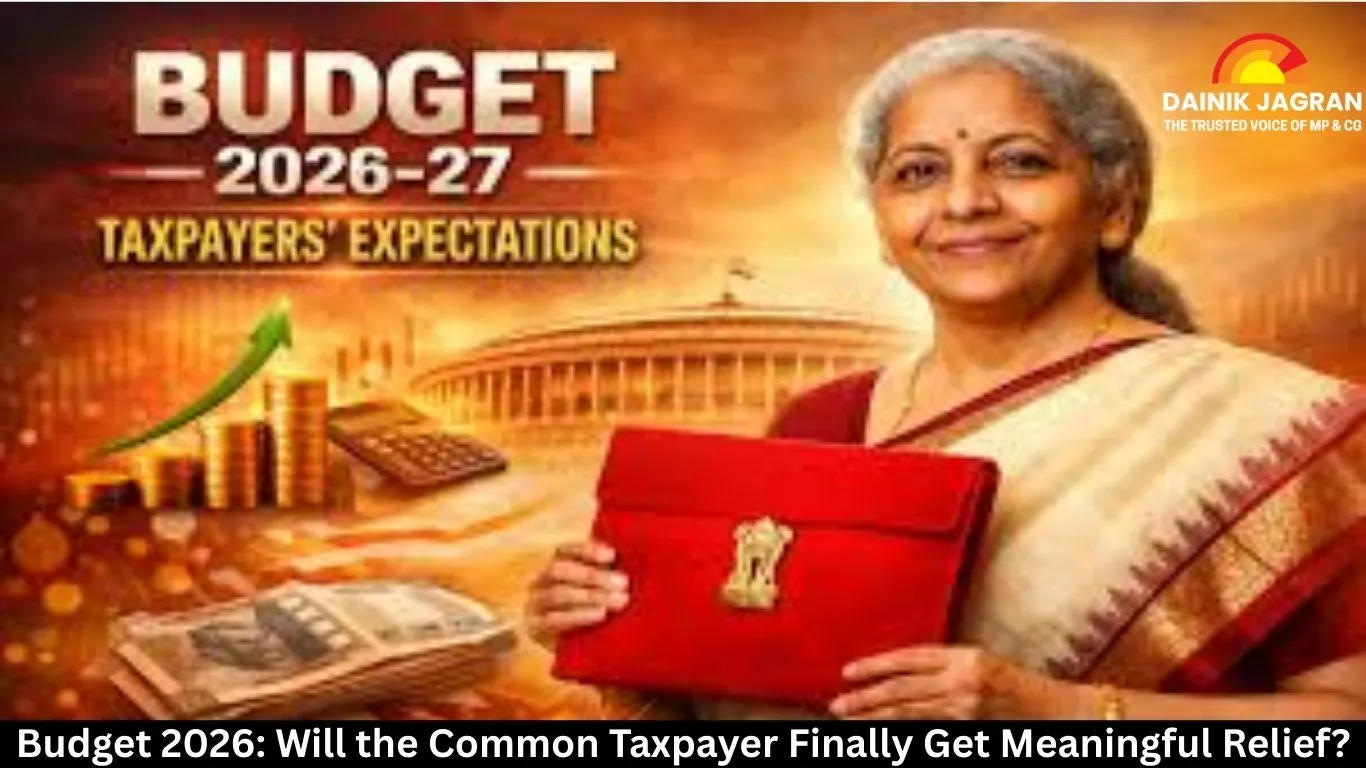
Budget 2026: Will the Common Taxpayer Finally Get Meaningful Relief?
Digital Desk
As Finance Minister Nirmala Sitharaman prepares to present her ninth consecutive Union Budget on February 1, 2026, the hopes of millions of salaried individuals and seniors are pinned on potential tax reforms. Against a global economic backdrop described by former RBI Governor Raghuram Rajan as a "very dangerous phase," this budget is anticipated to focus on fostering a more resilient and self-reliant Indian economy. For the average citizen, however, the pressing question remains: will this budget move beyond macro-economic vision to deliver tangible, pocket-friendly changes to the personal tax structure?
The Senior Citizens' Conundrum: Seeking Dignity and Security
A primary expectation from Budget 2026 is enhanced financial security for India's aging population. With nearly 15 crore Indians already above 60, a demographic shift that's rapidly growing, there is a strong advocacy for a higher basic exemption limit for seniors.
Currently, the tax-free income threshold stands at ₹3 lakh for individuals aged 60-80 and ₹5 lakh for those above 80. Proposals suggest raising this limit to a universal ₹5 lakh for all senior citizens, providing significant relief from tax on pension, interest, and other passive income. Furthermore, experts argue for increasing the deduction limit under Section 80TTB for interest income from savings accounts and fixed deposits from ₹50,000 to at least ₹1 lakh, acknowledging the rising cost of living and healthcare.
Taming the Medical Cost Monster: Time to Enhance Section 80D
The past decade, especially post-pandemic, has seen healthcare costs and insurance premiums skyrocket. However, the deduction limit under Section 80D for health insurance premiums has remained stagnant at ₹25,000 for individuals and ₹50,000 for seniors since its last revision years ago.
This disconnect between reality and policy is unsustainable. Budget 2026 is widely expected to address this by significantly raising the Section 80D limit. Such a move would serve a dual purpose: it would provide direct tax relief to families and incentivize more people to purchase health insurance, reducing the burden of out-of-pocket medical expenses. The government's own focus on extending social security to 95 crore Indians underscores the need for such supportive policies.
The Great Regime Divide: Bridging the Gap Between Old and New
A major point of contention has been the growing disparity between the old and new tax regimes. The new regime, with its lower slabs but fewer deductions, benefited significantly in the last budget with an increased standard deduction and a higher rebate under Section 87A. Those who stayed with the old regime for its deductions (like HRA, 80C, 80D) felt left behind, as the deduction limits have not been adjusted for inflation for years.
· Section 80C Limit: The ₹1.5 lakh limit, covering investments in PPF, ELSS, life insurance, and tuition fees, has lost much of its value. There is a compelling case to increase this limit to at least ₹2.5 lakh or index it to inflation.
· Home Loan Interest (Section 24): The deduction cap of ₹2 lakh on home loan interest has been unchanged since 2014, while property prices and loan amounts have multiplied. Raising this limit is crucial for supporting homebuyers.
For the new regime to become genuinely attractive to a broader section, especially those with legitimate high costs like home loans and insurance, the government may consider introducing a few select, targeted deductions into its framework.
Beyond Immediate Relief: The Case for Structural Reforms
While immediate hikes in limits are needed, long-term structural thinking is also in demand. The insurance sector, for instance, is advocating for better tax treatment of annuity products to make retirement planning more viable. Another forward-looking idea is the introduction of a "Family Taxation" regime, where the income of a non-working spouse could be clubbed to effectively provide a higher combined basic exemption limit, benefiting single-income households.
As the Economic Survey is set to be presented on January 29, a day earlier than usual, it will lay the groundwork for these discussions. It will provide the government's assessment of the economy and hint at the fiscal space available for such taxpayer-friendly measures.
What Taxpayers Can Do Now
As the countdown to February 1 begins, taxpayers should:
· Review their current regime: Assess if the old regime with its deductions still works better for you, despite the attractive slabs of the new regime.
· Hold major financial decisions: Wait for the budget announcements before making large investments tied to specific tax sections (like 80C or 80D).
· Focus on financial fundamentals: Regardless of budget outcomes, continue disciplined saving and investing for long-term goals like retirement, which may see supportive policy nudges.
Budget 2026 arrives at a critical juncture. While large, populist tax cuts may not be on the cards, there is a strong and justified expectation for targeted, empathetic adjustments that acknowledge the increased cost of living, healthcare, and homeownership. The test for this budget will be whether it can provide meaningful, structural relief to the common taxpayer while staying on the path of fiscal prudence.


.jpg)




