


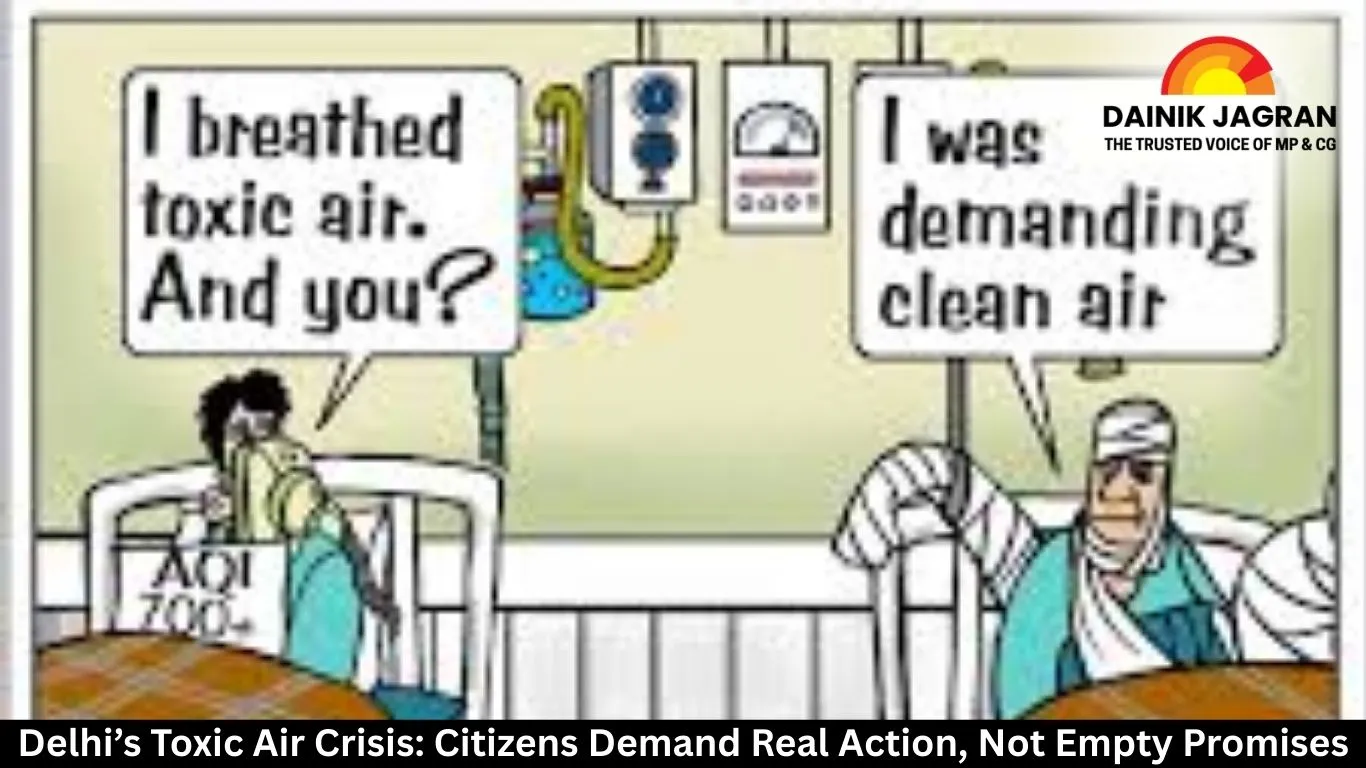
Delhi’s Toxic Air Crisis: Citizens Demand Real Action, Not Empty Promises
Digital Desk
Delhi’s winter smog has turned into a daily reminder of how fragile the “right to breathe” has become for millions in the National Capital Region. Even after a slight improvement, the city’s air is stuck in the “very poor” category, with days of thick haze and burning eyes now treated as normal weather rather than a public health emergency.
In late November, authorities lifted Stage 3 restrictions under the Graded Response Action Plan after AQI levels eased from “severe” to “very poor”.
This meant curbs on construction and older vehicles were relaxed just when many residents were still waking up to smog-filled mornings and using masks and purifiers at home. For people on the ground, the message was clear: the economy and convenience of polluters still outweigh the lungs of ordinary citizens.
That frustration quickly spilled onto the streets. On November 9, hundreds of parents, students and activists gathered at India Gate with placards asking for clean air, only to see many participants detained because the site is not an official protest zone. Later in the month, another demonstration saw dramatic scenes and police action, underlining how even peaceful mobilisation around air quality is treated with suspicion.
These protests have one simple demand: long-term, science-based solutions instead of seasonal band-aids. Citizens want serious investment in reliable, safe and affordable public transport across NCR so that people are not forced to depend on private vehicles for every commute.
They also seek strict enforcement on construction dust, industrial emissions and waste burning, which continue to push PM2.5 levels into dangerous zones year after year.
Another growing concern is trust in data. Notes placed before green bodies and courts have already raised questions about outdated plans and gaps in monitoring, while citizens complain that official averages often feel very different from what they see and breathe in their neighbourhoods.
When Stage 3 is revoked on the basis of marginal dips in AQI, people naturally ask whether the system is designed to protect their health or to manage headlines.
Delhi’s toxic air is not just an “environment story” any more; it is a governance test. Every winter now brings headlines of school closures, cancelled outdoor activities and packed respiratory clinics, while children and the elderly suffer the most. The protests, hashtags and human chains forming around the city are not signs of chaos but signs of a society that refuses to accept choking as destiny.
If leaders truly believe that clean air is a fundamental right, they must act like it—by making pollution control a year-round priority, not a seasonal talking point. Until then, Delhi’s residents will keep raising their voices through peaceful marches, social media and daily choices, turning every breath into a quiet but firm demand for accountability.




.jpg)




