

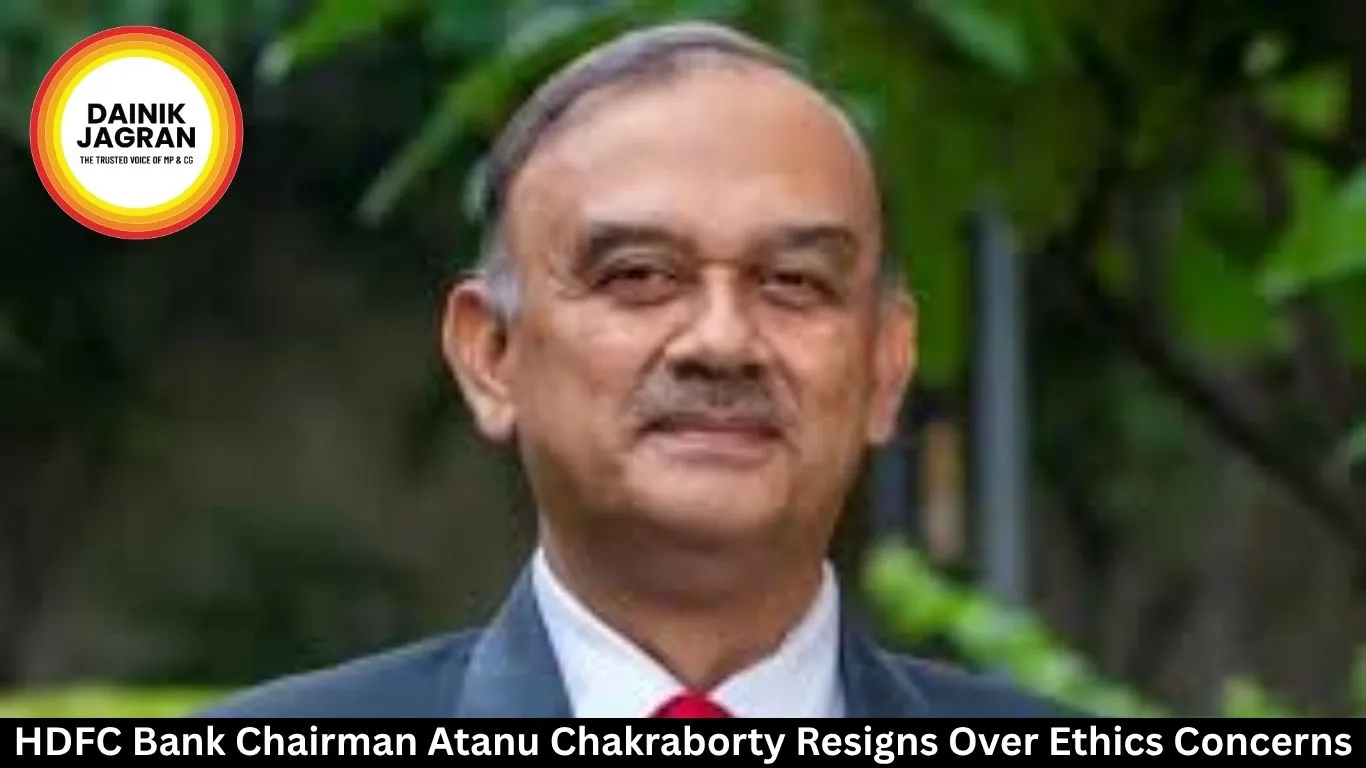
HDFC Bank Chairman Atanu Chakraborty Resigns Over Ethics Concerns

Digital Desk

HDFC Bank Chairman Atanu Chakraborty Resigns Over Ethics Concerns

HDFC Bank part-time chairman Atanu Chakraborty resigned on March 18, 2026, citing values and ethics differences. The move triggered an 8.7% stock crash and revived questions on post-merger challenges and Dubai branch issues at India's largest private lender. RBI backs bank's stability.

HDFC Bank Chairman Resigns Citing Values and Ethics Concerns

Atanu Chakraborty steps down as part-time chairman of India's largest private sector lender, triggering sharp stock sell-off and renewed scrutiny over governance and post-merger challenges.

HDFC Bank, India's largest private sector lender, faced fresh turbulence after its part-time chairman and independent director Atanu Chakraborty resigned on March 18, 2026, citing differences over certain practices observed over the past two years that were not in line with his personal values and ethics. The development sent shock waves through Dalal Street, with the bank's shares plunging as much as 8.7 per cent the next day and erasing over Rs 1 lakh crore in market capitalisation in a single session.

The resignation letter, dated March 17 and addressed to the board, highlighted a fundamental incongruence between observed “happenings and practices” at the bank and Chakraborty's ethical standards. He offered no specific details or examples, a vagueness that only deepened market unease. Keki Mistry, former HDFC Ltd CEO and current board member, was swiftly appointed as interim part-time chairman for three months, with Reserve Bank of India approval.

Leadership Transition Sparks Volatility

Shares of HDFC Bank tumbled sharply on March 19, hitting a 52-week low near Rs 750 levels before partial recovery. The stock's heavy weight in the Nifty 50 dragged the broader market lower by over 3 per cent on that day, marking one of the worst sessions since mid-2024. By late March, the scrip had slipped further amid lingering uncertainty, reflecting investor discomfort over potential governance signals from an independent director's abrupt exit.

The former chairman, a retired IAS officer and ex-finance secretary, later clarified in media interactions that his letter did not point to any financial wrongdoing or governance lapses. He described the differences as more ideological and value-based rather than instances of misconduct. However, the initial ambiguity fuelled speculation and a trust deficit in a sector where confidence remains paramount.

Background on the Resignation

Chakraborty had served as part-time chairman following the landmark merger of HDFC Ltd with HDFC Bank in July 2023. Sources indicated underlying tensions, including possible disagreements over management approaches and extension of the CEO's tenure. Reports pointed to differences with CEO Sashidhar Jagdishan, though both the bank and RBI have maintained there are no material concerns regarding governance or financial health. The regulator described the lender as well-capitalised and stable.

HDFC Bank has engaged external law firms to review the circumstances surrounding the resignation, signalling efforts to address investor concerns transparently.

AT1 Bonds Controversy Resurfaces

The resignation has revived questions around an earlier episode involving the bank's Dubai operations. Reports indicate that HDFC Bank's DIFC branch faced regulatory scrutiny from the Dubai Financial Services Authority over client onboarding and advisory practices. Allegations surfaced that some NRI clients were sold high-risk Credit Suisse Additional Tier-1 (AT1) perpetual bonds as relatively safe, high-yield instruments around 2021, before the Swiss bank's 2023 collapse led to a write-off of such bonds.

Following an internal probe, the bank reportedly took disciplinary action against several executives, including terminations and penalties for lapses in client due diligence and disclosure. Chakraborty reportedly viewed the bank's handling of accountability in such matters as falling short of expected ethical standards, contributing to his decision. The bank has maintained these were technical or compliance gaps rather than systemic fraud and has cooperated with regulators.

Post-Merger Integration Pressures

The 2023 merger integrated HDFC Ltd's large home loan portfolio into the bank, bringing scale but also operational challenges. HDFC Bank's net interest margin (NIM) compressed from pre-merger levels above 4 per cent to around 3.35 per cent in recent quarters. This decline stems from a shift in asset mix towards lower-yielding mortgages, slower growth in low-cost current and savings account (CASA) deposits, and higher reliance on costlier term deposits and borrowings to fund the expanded loan book.

The loan-to-deposit ratio, which spiked post-merger, has moderated towards 98-99 per cent but remains above the bank's comfort zone. Management has outlined a gradual glide path to bring it down further while aiming for system-aligned credit growth in FY26 and outperformance thereafter. Deposit mobilisation through branch expansion and cross-selling remains a focus area.

Market and Stakeholder Impact

The episode has wiped out significant investor wealth and raised broader questions about the evolving role and influence of independent directors in Indian boardrooms. Analysts note that while HDFC Bank maintains strong asset quality and capital adequacy, the leadership transition comes at a time when the sector grapples with deposit competition and margin pressures.

The RBI and the bank have reiterated that there are no underlying solvency or major governance issues. However, the market's sharp reaction underscores how even perceived ethical or cultural misalignment at the top can erode confidence in India's most valued private lender.

Outlook and Next Steps

HDFC Bank is scheduled to consider debt fundraising and announce Q4 results in mid-April. The board, now under interim chairman Keki Mistry, is expected to focus on stabilising sentiment, clarifying any review findings, and accelerating deposit franchise strengthening.

For India's banking sector, the episode serves as a reminder of the delicate balance between aggressive growth post-merger and maintaining robust governance standards. Investors will watch closely for signs of renewed stability in the coming quarters as the bank navigates this phase of transition.


 

--------

🚨 Beat the News Rush – Join Now!

Get breaking alerts, hot exclusives, and game-changing stories instantly on your phone. No delays, no fluff – just the edge you need. ⚡

Tap to join: 

🟢 WhatsApp Channel: Dainik Jagran MP CG

Crave more?

🅕 Facebook: Dainik Jagran MP CG English

🅧 Twitter (X): Dainik Jagran MP CG

🅘 Instagram: Dainik Jagran MP CG

Share the fire – keep your crew ahead! 🗞️🔥

english.dainikjagranmpcg.com
08 Apr 2026 By Abhishek Joshi

HDFC Bank Chairman Atanu Chakraborty Resigns Over Ethics Concerns

Digital Desk

HDFC Bank Chairman Resigns Citing Values and Ethics Concerns

Atanu Chakraborty steps down as part-time chairman of India's largest private sector lender, triggering sharp stock sell-off and renewed scrutiny over governance and post-merger challenges.

HDFC Bank, India's largest private sector lender, faced fresh turbulence after its part-time chairman and independent director Atanu Chakraborty resigned on March 18, 2026, citing differences over certain practices observed over the past two years that were not in line with his personal values and ethics. The development sent shock waves through Dalal Street, with the bank's shares plunging as much as 8.7 per cent the next day and erasing over Rs 1 lakh crore in market capitalisation in a single session.

The resignation letter, dated March 17 and addressed to the board, highlighted a fundamental incongruence between observed “happenings and practices” at the bank and Chakraborty's ethical standards. He offered no specific details or examples, a vagueness that only deepened market unease. Keki Mistry, former HDFC Ltd CEO and current board member, was swiftly appointed as interim part-time chairman for three months, with Reserve Bank of India approval.

Leadership Transition Sparks Volatility

Shares of HDFC Bank tumbled sharply on March 19, hitting a 52-week low near Rs 750 levels before partial recovery. The stock's heavy weight in the Nifty 50 dragged the broader market lower by over 3 per cent on that day, marking one of the worst sessions since mid-2024. By late March, the scrip had slipped further amid lingering uncertainty, reflecting investor discomfort over potential governance signals from an independent director's abrupt exit.

The former chairman, a retired IAS officer and ex-finance secretary, later clarified in media interactions that his letter did not point to any financial wrongdoing or governance lapses. He described the differences as more ideological and value-based rather than instances of misconduct. However, the initial ambiguity fuelled speculation and a trust deficit in a sector where confidence remains paramount.

Background on the Resignation

Chakraborty had served as part-time chairman following the landmark merger of HDFC Ltd with HDFC Bank in July 2023. Sources indicated underlying tensions, including possible disagreements over management approaches and extension of the CEO's tenure. Reports pointed to differences with CEO Sashidhar Jagdishan, though both the bank and RBI have maintained there are no material concerns regarding governance or financial health. The regulator described the lender as well-capitalised and stable.

HDFC Bank has engaged external law firms to review the circumstances surrounding the resignation, signalling efforts to address investor concerns transparently.

AT1 Bonds Controversy Resurfaces

The resignation has revived questions around an earlier episode involving the bank's Dubai operations. Reports indicate that HDFC Bank's DIFC branch faced regulatory scrutiny from the Dubai Financial Services Authority over client onboarding and advisory practices. Allegations surfaced that some NRI clients were sold high-risk Credit Suisse Additional Tier-1 (AT1) perpetual bonds as relatively safe, high-yield instruments around 2021, before the Swiss bank's 2023 collapse led to a write-off of such bonds.

Following an internal probe, the bank reportedly took disciplinary action against several executives, including terminations and penalties for lapses in client due diligence and disclosure. Chakraborty reportedly viewed the bank's handling of accountability in such matters as falling short of expected ethical standards, contributing to his decision. The bank has maintained these were technical or compliance gaps rather than systemic fraud and has cooperated with regulators.

Post-Merger Integration Pressures

The 2023 merger integrated HDFC Ltd's large home loan portfolio into the bank, bringing scale but also operational challenges. HDFC Bank's net interest margin (NIM) compressed from pre-merger levels above 4 per cent to around 3.35 per cent in recent quarters. This decline stems from a shift in asset mix towards lower-yielding mortgages, slower growth in low-cost current and savings account (CASA) deposits, and higher reliance on costlier term deposits and borrowings to fund the expanded loan book.

The loan-to-deposit ratio, which spiked post-merger, has moderated towards 98-99 per cent but remains above the bank's comfort zone. Management has outlined a gradual glide path to bring it down further while aiming for system-aligned credit growth in FY26 and outperformance thereafter. Deposit mobilisation through branch expansion and cross-selling remains a focus area.

Market and Stakeholder Impact

The episode has wiped out significant investor wealth and raised broader questions about the evolving role and influence of independent directors in Indian boardrooms. Analysts note that while HDFC Bank maintains strong asset quality and capital adequacy, the leadership transition comes at a time when the sector grapples with deposit competition and margin pressures.

The RBI and the bank have reiterated that there are no underlying solvency or major governance issues. However, the market's sharp reaction underscores how even perceived ethical or cultural misalignment at the top can erode confidence in India's most valued private lender.

Outlook and Next Steps

HDFC Bank is scheduled to consider debt fundraising and announce Q4 results in mid-April. The board, now under interim chairman Keki Mistry, is expected to focus on stabilising sentiment, clarifying any review findings, and accelerating deposit franchise strengthening.

For India's banking sector, the episode serves as a reminder of the delicate balance between aggressive growth post-merger and maintaining robust governance standards. Investors will watch closely for signs of renewed stability in the coming quarters as the bank navigates this phase of transition.

 

https://english.dainikjagranmpcg.com/opinion/hdfc-bank-chairman-atanu-chakraborty-resigns-over-ethics-concerns/article-16644

Latest News


