


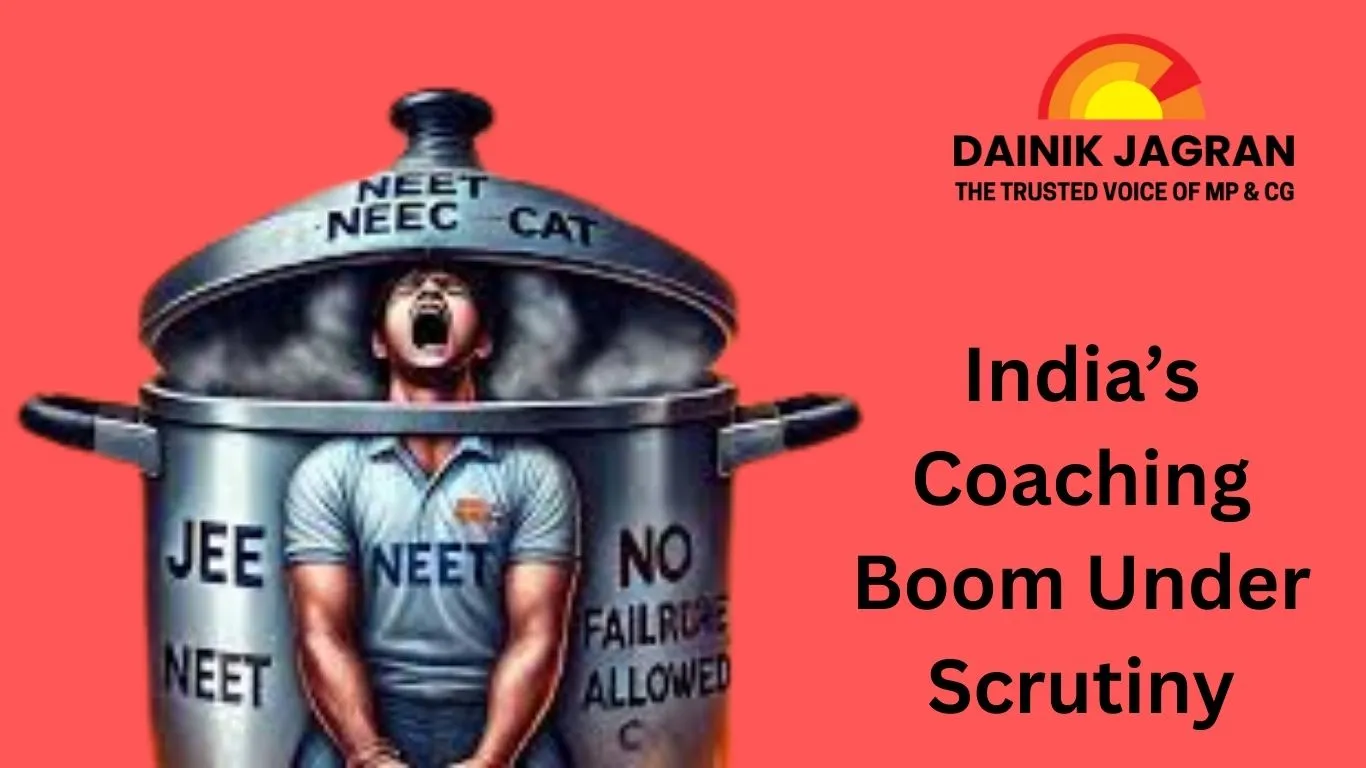
India’s Coaching Boom Under Scrutiny: Pathway to Merit or Growing Mental Health Concern?
Digital Desk
The issue affects millions of students preparing for entrance examinations such as NEET, JEE, UPSC and state-level tests. Coaching hubs in cities like Kota, Hyderabad, Delhi and Pune have become central to this ecosystem, promising structured guidance and higher success rates in an increasingly competitive education landscape.
Supporters of coaching institutes argue that they fill systemic gaps in formal schooling. Large class sizes, uneven teaching standards and syllabus overload often push families toward private coaching. Structured modules, frequent testing and exam-oriented strategies, they say, help level the playing field for students from diverse backgrounds.
However, critics point to the psychological cost of this model. Long study hours, constant assessments and the fear of failure have been linked to chronic stress, sleep disorders and depression among adolescents. Mental health experts warn that early exposure to extreme competition can affect emotional development and self-worth, particularly when academic performance becomes the sole measure of success.
Data from education boards and counselling centres indicate a steady rise in students seeking psychological support during exam seasons. While most coaching institutes have introduced counsellors and helplines, experts say these measures often remain reactive rather than preventive.
Parents play a key role in sustaining the culture. Aspirations for social mobility and job security drive families to invest heavily in coaching, sometimes at the cost of a child’s well-being. In many cases, students report limited autonomy in career choices, with coaching seen as a default path rather than an informed decision.
Regulatory oversight remains limited. Coaching centres operate largely as private entities, with no uniform national framework governing student welfare, academic claims or fee structures. Education policy analysts have called for stricter guidelines, mandatory mental health support and transparent performance reporting.
Some states have begun responding. Rajasthan, home to several major coaching hubs, has proposed regulations on working hours and counselling services. Educationists say such steps must be paired with broader school reforms to reduce dependence on parallel education systems.
As India prepares its youth for a competitive global economy, the coaching debate highlights a deeper question about how merit is defined and nurtured. Experts suggest that balancing academic rigor with emotional well-being will be critical to ensuring that preparation for success does not come at an irreversible personal cost.
.jpg)




