


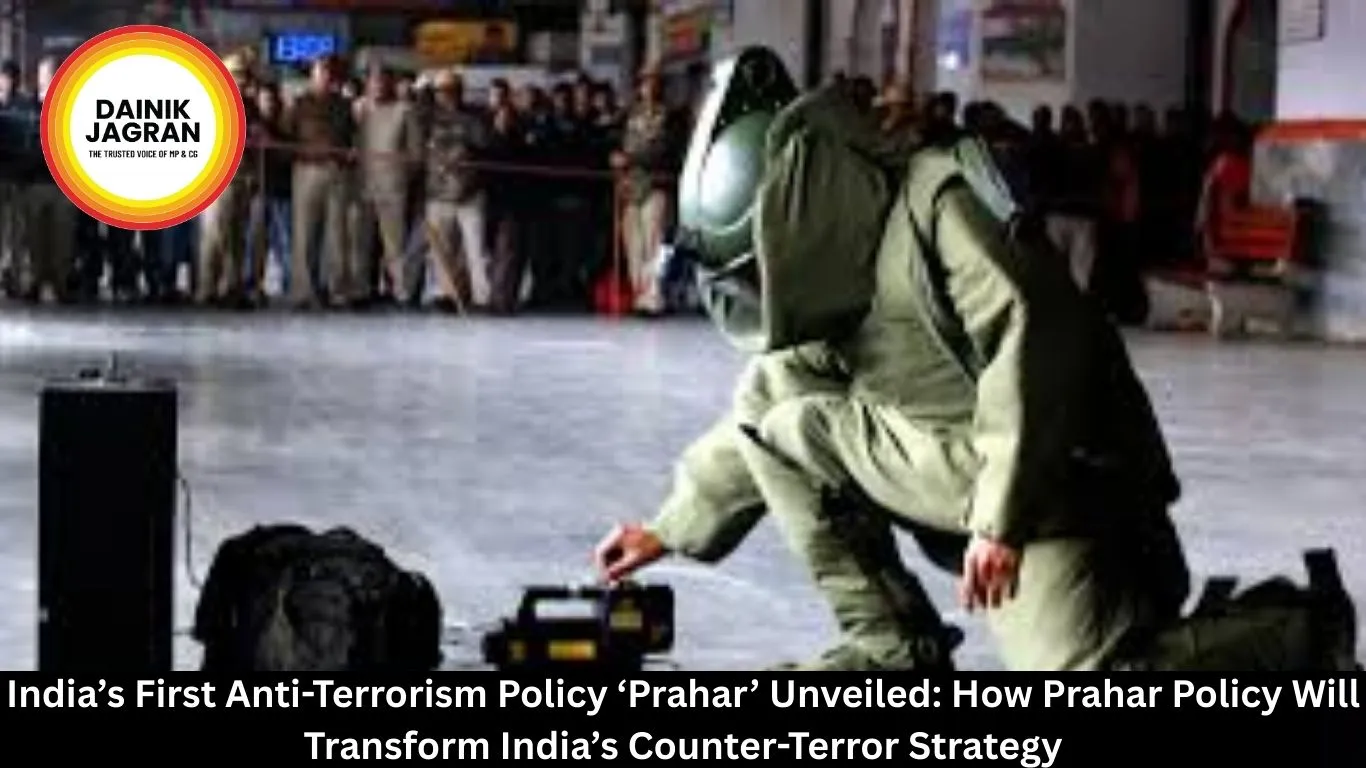
India’s First Anti-Terrorism Policy ‘Prahar’ Unveiled: How Prahar Policy Will Transform India’s Counter-Terror Strategy
Digital Desk
India’s First Anti-Terrorism Policy ‘Prahar’ Unveiled: A Structural Shift in National Security Doctrine
In a major development for India’s internal security framework, the Ministry of Home Affairs under Union Home Minister Amit Shahhas unveiled the country’s first comprehensive and publicly articulated anti-terror doctrine — the Prahar Policy. This landmark India Anti-Terrorism Policy marks a significant shift from a reactive approach to a structured, doctrine-driven Counter Terrorism Strategy.
At a time when cross-border terrorism, cyber threats, drone-based attacks, and radicalization are evolving rapidly, the Prahar Policy is being seen as a transformative step in strengthening India’s National Security Doctrine.
Why the Prahar Policy Matters Now
India has faced terrorism for decades — from cross-border infiltration to urban terror cells and left-wing extremism. However, until now, the country relied on legal tools like the Unlawful Activities Prevention Actand agency-specific mandates without a unified doctrinal framework.
The Prahar Policy fills this strategic vacuum.
Its philosophy is clear:
Strike early, strike decisively, and strike lawfully.
This doctrine emphasizes prevention before reaction — ensuring threats are neutralized before they reach execution stage.
With rising hybrid warfare tactics, encrypted communication, crypto financing, and cyber radicalization, India’s security thinking is being modernized to meet 21st-century threats.
The 7 Pillars of Prahar Policy Explained
The Prahar Policy is built on seven core pillars:
1. Prevention
Real-time intelligence fusion at national and state levels
Financial tracking of terror funding
Border surveillance modernization
Counter-drone monitoring systems
Early detection of radicalization
The goal is simple: stop terror before it strikes.
2. Response
A clearly defined operational hierarchy:
Local Police as first responders
State Anti-Terrorism Squads
Central Forces
Specialized units like the National Investigation Agencyand National Security Guard
This ensures rapid deployment and minimum inter-agency friction.
3. Aggregation of Capacities
Standardized training nationwide
Adoption of modern weapons and forensic upgrades
Cyber intelligence labs
Counter-drone systems
A whole-of-government approach strengthens operational readiness.
4. Human Rights & Rule of Law
Unlike authoritarian responses, Prahar embeds constitutional safeguards, judicial oversight, and due process — reinforcing India’s democratic character while combating terrorism.
5. Addressing Enabling Conditions
Counter-radicalization programs
Community policing
Youth engagement initiatives
Terrorism thrives on alienation. The strategy aims to reduce such vulnerabilities.
6. International Cooperation
Intelligence-sharing agreements
Extradition treaties
Joint operations
Leveraging platforms like the United Nations
Terrorism is transnational, and so must be the response.
7. Recovery & Resilience
Psychological counseling
Compensation mechanisms
Media engagement to prevent panic
Rapid restoration of normalcy
Terrorists aim for psychological impact. Recovery mechanisms deny them that victory.
Strategic Significance of Prahar Policy
The Prahar Policy formalizes India’s zero-tolerance stance on terrorism. It signals:
Institutional maturity in counter-terror governance
Modernization of India’s security architecture
Stronger global anti-terror diplomacy
Adaptation to hybrid warfare trends
With increasing concerns over cyber threats, infiltration attempts, and global instability, this policy arrives at a crucial geopolitical moment.
A Defining Shift in India’s Security Architecture
The Prahar Policy is more than just another security document. It represents a structural transformation in India’s Counter Terrorism Strategy — moving from fragmented responses to a unified National Security Doctrine.
If implemented effectively, Prahar could redefine how India prevents, responds to, and recovers from terrorism — ensuring that fear never triumphs over democracy.
As India strengthens its internal security framework, the Prahar Policy may well become a cornerstone of its 21st-century national defense strategy.

.jpg)
.jpg)

.jpg)




