


India’s Venezuela Stand Tests Its Global Balance Amid Trump’s Oil Warning
Digital Desk
India’s Venezuela Stand Tests Its Global Balance Amid Trump’s Oil Warning
In the first week of 2026, global geopolitics has turned dramatically tense — and India has landed at the center of it. After the U.S. orchestrated a controversial operation leading to the arrest of Venezuelan President Nicolás Maduro, countries across the world have split into opposing camps. While Russia, China, Brazil, and South Africa have condemned Washington’s move as a violation of international law, Western powers have remained largely silent.
India’s cautious diplomatic response — expressing “concern” and urging peaceful resolution through dialogue — has triggered heated debate at home. Critics accuse New Delhi of abandoning its anti-imperialist legacy, while foreign policy strategists call it a “calculated silence” essential for maintaining India’s multi-alignment approach in a polarized world.
India Walks the Tightrope
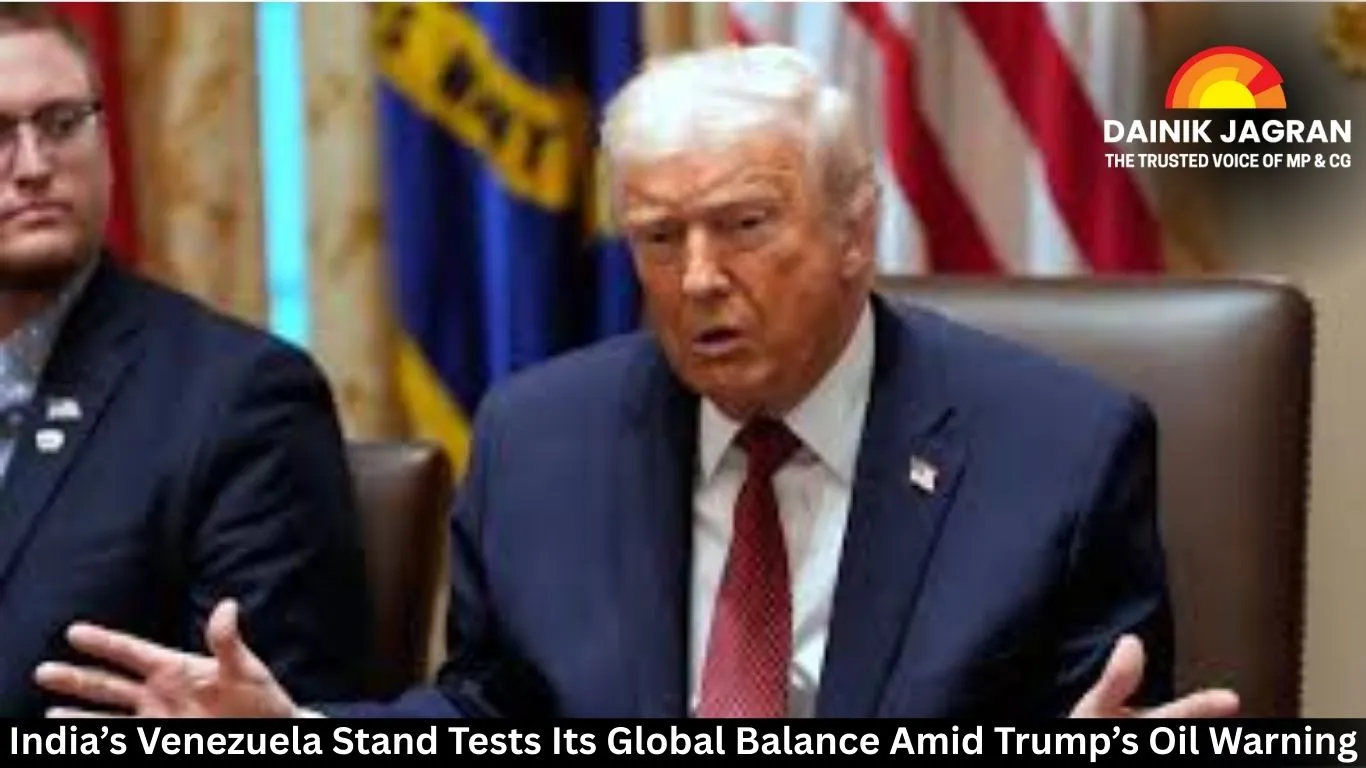
India’s stance comes at a delicate moment. Former U.S. President Donald Trump, now leading a resurgent America-first foreign agenda, has publicly warned India over its oil trade with Russia. In a recent statement, Trump praised PM Narendra Modi as a “good man” but hinted at tariff hikes if India did not further reduce crude imports from Moscow.
Experts interpret the message as both a compliment and a coercion. Strategic analyst Brahma Chellaney noted that India risks weakening its leadership image in the Global South by failing to condemn unilateral U.S. actions. Researcher Zorawar Daulet Singh added that such bland statements could normalize India’s diplomatic passivity, undermining its credibility as a neutral power.
Why India’s Response Matters
For India, energy security is at the heart of its restraint. Since American sanctions in 2018, Indian oil trade with Venezuela had already halted; now, with current disruptions, India’s dependence on Russian energy supplies has grown deeper. With Trump threatening 500% tariffs on nations continuing Russian oil or uranium imports, New Delhi needs to balance morality with economic realism.
Beyond oil, India’s upcoming role as BRICS chair adds another layer of complexity. As a self-declared voice of the “Global South,” India must navigate between supporting U.S. trade interests and preserving solidarity among emerging economies challenging Western dominance.
The Bigger Diplomatic Picture
Political observers see India’s position not as indecision, but as strategic patience. Staying silent allows space for negotiation — especially when both Washington and Moscow remain crucial to India’s larger goals: security cooperation, trade stability, and global influence.
Yet, the moral question looms. Can a nation aspiring to global leadership remain neutral when international laws are breached? As the world divides once again along Cold War lines, 2026 may demand from India something more than balance — it may demand conviction.
.jpg)




