


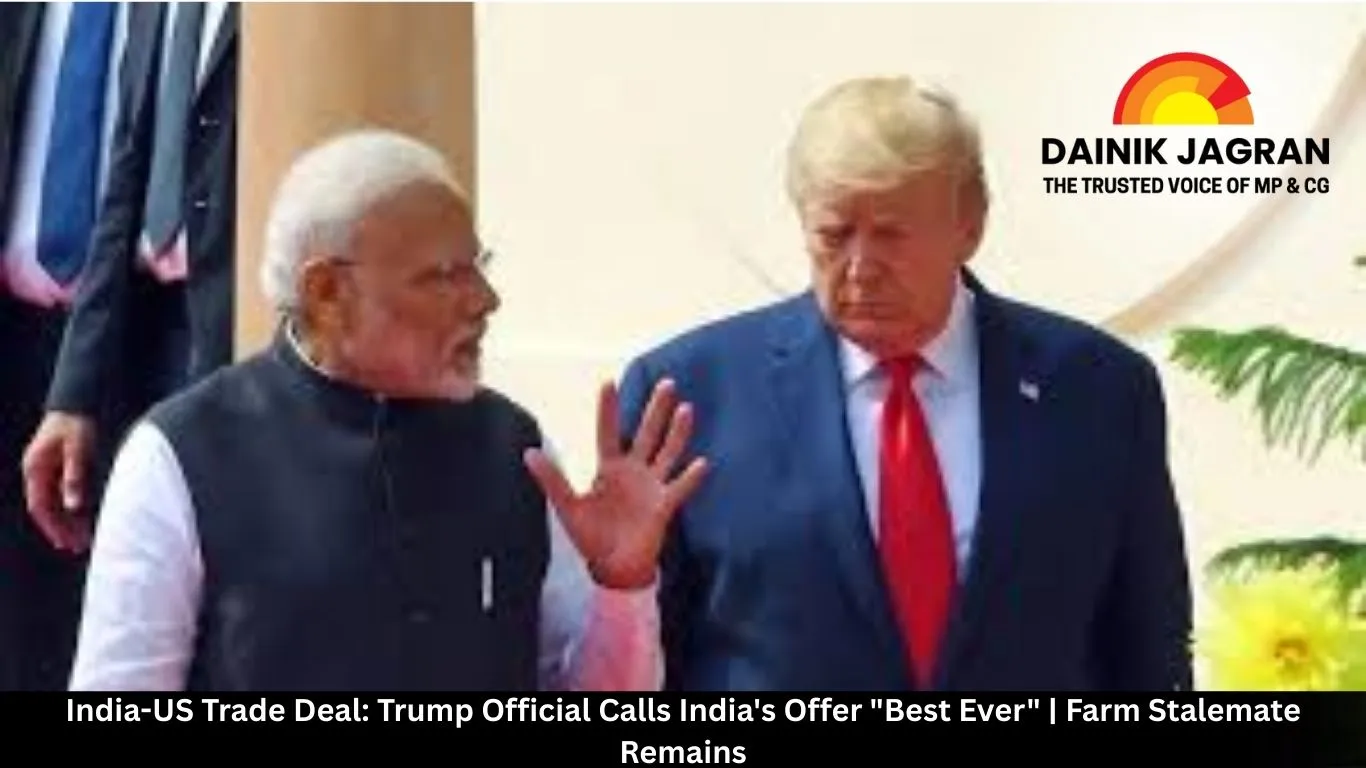
India-US Trade Deal: Trump Official Calls India's Offer "Best Ever" | Farm Stalemate Remains
Digital Desk
India Offers "Best Ever" Trade Deal to US, But Farm Protection Remains Sticky Point in Talks
A top US trade official has described India's latest proposal in ongoing trade talks as the "best offer" the US has ever received. This optimistic statement comes as high-level negotiations resumed in New Delhi this week, aiming to resolve a long-standing deadlock and potentially secure a deal by March 2026.
US Trade Representative Jamieson Greer, while testifying before a Senate committee in Washington, acknowledged that India remains a "very difficult nut to crack" in trade negotiations. He specifically pointed to India's resistance to opening its market to certain US agricultural products like row crops (corn, soybeans, wheat, cotton) and meats. However, he stated that India has recently been "quite forward-leaning," and its latest proposals represent a significant positive shift.
The current negotiations in Delhi, led by US Deputy Trade Representative Rick Switzer and Indian Commerce Ministry officials, are a critical effort to finalize a trade deal. These talks are happening under the shadow of significant trade tensions. In August 2025, the US imposed steep tariffs on Indian goods, bringing the total levy on many items to 50%. The Trump administration linked these punitive tariffs to India's continued purchase of Russian oil.
The Core of the Deadlock: Protecting India's Farmers
The primary hurdle for any comprehensive deal is agriculture, a politically sensitive sector in India. The US is pushing for greater access to India's massive market for its agricultural goods.
The table below outlines key US agricultural interests and India's protective stance:
| US Agricultural Export Interests | India's Protective Stance & Challenges |
| Grains & Oilseeds: Corn, Soybeans, Wheat | Farmer Livelihoods: Protecting millions of small-scale farmers from foreign competition is a major political priority. |
| Dairy Products | Domestic Dairy Sector: India's dairy industry is dominated by local cooperatives; allowing foreign brands could disrupt this model. |
| Meats & Poultry | Food Security & Self-Sufficiency: Policies are geared towards protecting domestic production capabilities. |
| Tree Nuts like Almonds | Sanitary/Phytosanitary Barriers: India has used health and safety regulations as non-tariff barriers to protect local markets. |
Indian officials have consistently emphasized that protecting farmers and the dairy sector is non-negotiable. This stance is reinforced by Prime Minister Narendra Modi's past assurances to farmers and cattle rearers that their interests would not be compromised.
A Potential Path Forward and Timeline
Despite these challenges, there is renewed momentum. India's Chief Economic Adviser, V. Anantha Nageswaran, expressed confidence that a deal could be sealed by the end of the current financial year in March 2026. He noted that most issues between the two countries have been resolved, though geopolitics also plays a role in the timing.
Commerce and Industry Minister Piyush Goyal also struck an optimistic note, stating that "talks are continuously progressing" and India is moving towards a bilateral trade agreement.
Analysts suggest that instead of a full-scale liberalization, a potential breakthrough could involve a more limited, phased agreement. This might include:
Tariff Reductions: A calibrated reduction of the steep 50% tariffs on Indian goods.
Limited Market Access: India may offer tariff-rate quotas (TRQs), allowing a set quantity of specific US agricultural products to enter at lower duties, rather than opening the floodgates.
Regulatory Easing: Some relaxation in sanitary and phytosanitary measures for targeted products.
As talks continue, both nations are balancing high economic stakes with complex domestic political realities, making the pursuit of a "best ever" deal a delicate and closely watched diplomatic endeavor.




.jpg)




