


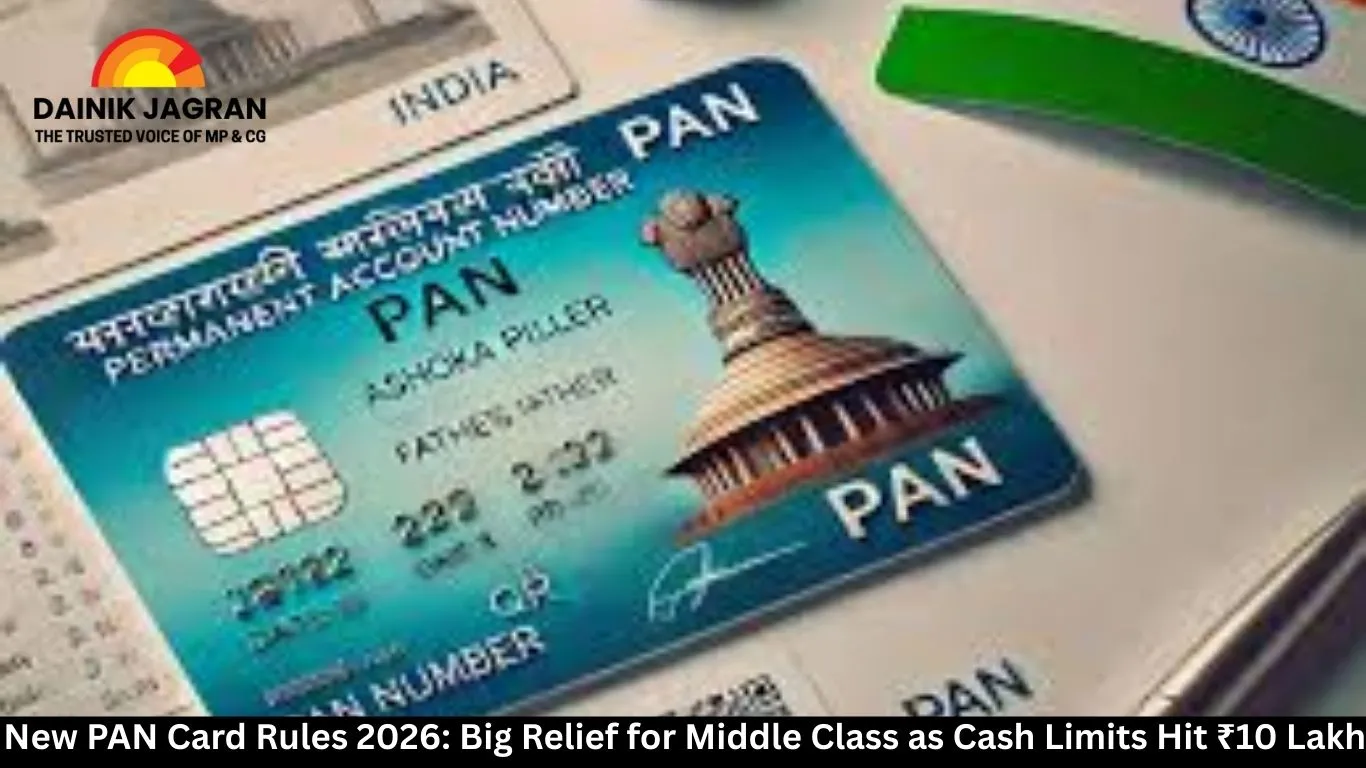
New PAN Card Rules 2026: Big Relief for Middle Class as Cash Limits Hit ₹10 Lakh
Digital Desk
The days of worrying about quoting your PAN for every small bank visit are numbered. In a significant move toward "Minimum Government, Maximum Governance," the Central Board of Direct Taxes (CBDT) has unveiled the Draft Income Tax Rules 2026. Designed to replace the aging 1962 framework, these rules—slated to take effect from April 1, 2026—signal a shift from micro-managing every transaction to high-tech, data-driven monitoring.
From Daily Hassles to Annual Aggregates
The most impactful change for the common man is the overhaul of cash transaction limits. Currently, a single cash deposit of ₹50,000 triggers a mandatory PAN requirement. Under the Draft Income Tax Rules 2026, the focus shifts to your "financial footprint" rather than daily activity.
-
The ₹10 Lakh Rule: PAN will now be mandatory only if your total cash deposits or withdrawals across one or more accounts exceed ₹10 lakh in a financial year.
-
Why this matters: Small shopkeepers, farmers, and households who occasionally deal in cash will no longer be trapped in compliance paperwork for routine transactions, provided they stay below the annual threshold.
Lifestyle Relief: Hotels, Property, and Vehicles
The government is acknowledging the reality of inflation by doubling the thresholds for lifestyle-related spending. This is a major relief for the middle class planning weddings or buying homes.
-
Hospitality & Events: The limit for quoting PAN on hotel and restaurant bills (including banquets and event management) is set to increase from ₹50,000 to ₹1 lakh.
-
Real Estate: Buying or selling property? The threshold is jumping from ₹10 lakh to ₹20 lakh.
-
Motor Vehicles: For the first time, a clear distinction for two-wheelers is emerging. While PAN was previously mandatory for almost all vehicle purchases, the new rules propose a ₹5 lakh threshold, which includes motorcycles but excludes tractors.
Insurance: The New Mandatory Zone
While most sectors are seeing a relaxation, the insurance sector is tightening up. Under the new regime, PAN will be mandatory for starting any account-based relationship with an insurer.
Previously, PAN was only needed for premiums exceeding ₹50,000. Now, the government views insurance as a long-term financial asset. By linking PAN at the onboarding stage, the system ensures your entire financial profile is integrated from day one.
AI-Powered Monitoring vs. Tax Evasion
Don’t mistake these higher limits for a "clean chit" for black money. The transition to New PAN Card Rules 2026 is backed by sophisticated AI and Data Analytics. With the Annual Information System (AIS) and GST data integration, the tax department already has eyes on your spending.
"The goal is to provide 'Ease of Compliance' for honest taxpayers while using deep data analysis to catch those trying to game the system," notes a policy expert.
Even if you stay below the ₹10 lakh cash limit, Sections 68 and 69 of the Income Tax Act still allow authorities to question "unexplained cash" if it doesn't match your declared income.
Conclusion: A Smart Tax Era
The Draft Income Tax Rules 2026 represent a more mature Indian economy. By reducing the compliance burden on the middle class and focusing on high-value annual aggregates, the government is betting on technology over paperwork. As we approach the April 1 deadline, these rules (currently open for public feedback until Feb 22) are set to redefine our relationship with the tax department.
.jpg)




