India's Youth Skill Gap: Why Education Must Move Beyond Rote Learning

Digital Desk

India's Youth Skill Gap: Why Education Must Move Beyond Rote Learning

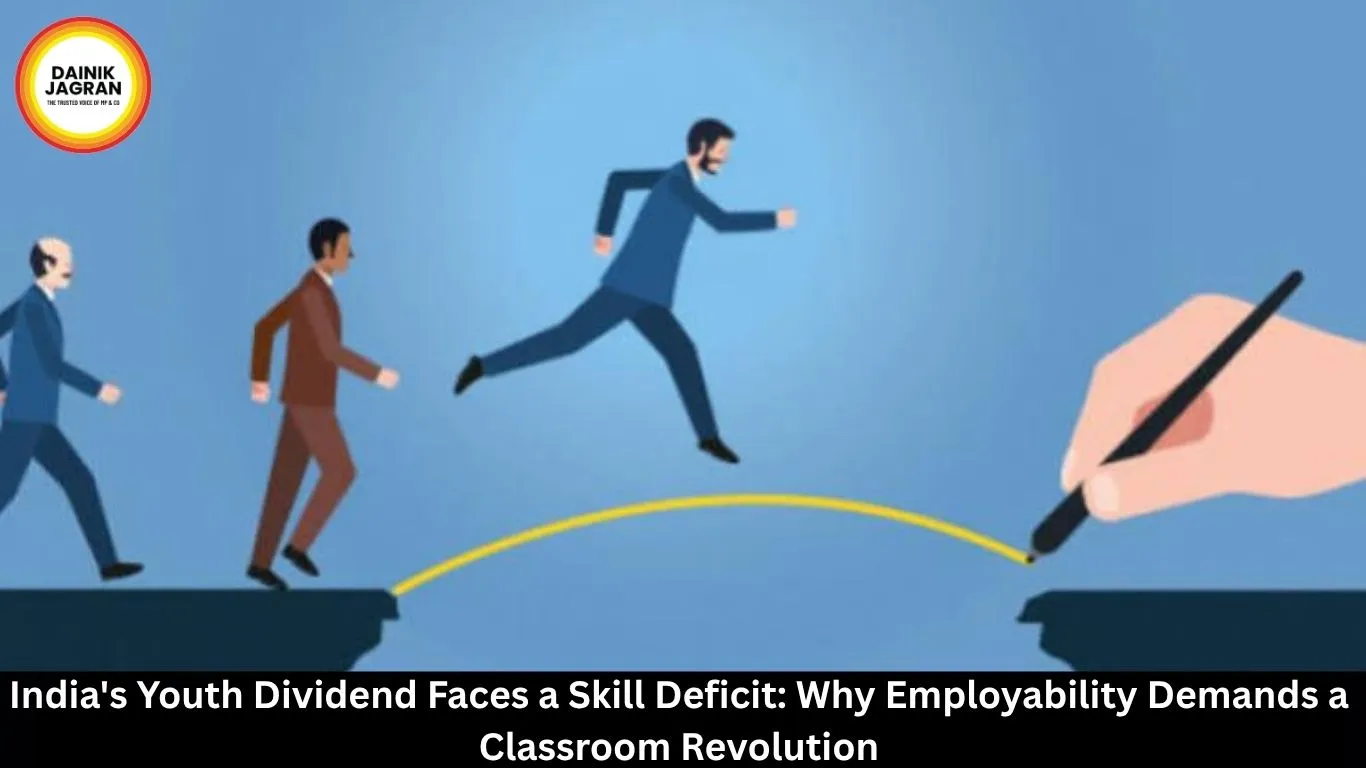
India's demographic dividend faces an employability challenge. Here's why vocational education, apprenticeships and practical learning are essential to bridge the country's growing skill gap.

India proudly calls itself the world's youngest major nation. With more than 65% of its population below the age of 35, the country possesses what economists describe as a once-in-a-century demographic dividend. On paper, this youthful workforce should be India's greatest economic advantage. In reality, however, a growing mismatch between education and industry expectations is turning this dividend into a challenge.

Every year, millions of students graduate from schools, colleges and universities carrying degrees that promise opportunity. Yet employers across sectors—from manufacturing and healthcare to information technology and retail—continue to report shortages of job-ready talent. The contradiction is striking: India has no shortage of educated youth, but it continues to face a shortage of employable professionals.

The heart of the problem lies not in the number of graduates but in the nature of education itself.

For decades, India's academic culture has been built around examinations, memorisation and marks. Success has often been measured by the ability to reproduce textbook answers rather than solve real-world problems. While this system may help students clear competitive examinations, it frequently leaves them underprepared for workplaces that increasingly value communication, adaptability, teamwork, digital literacy and critical thinking.

The consequences are visible during campus recruitment drives. Many graduates possess theoretical knowledge but struggle with practical application. Employers consequently invest significant time and resources in retraining new recruits before they become productive. Smaller businesses, unable to afford extensive training programmes, often prefer experienced workers over fresh graduates, creating another barrier for young job seekers.

This disconnect becomes even more evident outside metropolitan cities. Students from smaller towns frequently face limited exposure to industry, technology and professional environments. Even those with strong academic records often lack opportunities to develop practical competencies through internships, apprenticeships or hands-on projects.

India's education policy has already acknowledged these shortcomings. The National Education Policy (NEP) 2020 emphasises experiential learning, multidisciplinary education and vocational exposure from school onwards. It represents an important shift in philosophy. However, translating policy into classroom practice remains a long-term challenge that requires coordinated efforts from governments, educational institutions and industry.

Vocational education deserves far greater importance than it currently receives.

In many developed economies, technical education and apprenticeships enjoy social respect comparable to university degrees. Germany's dual vocational training model, Switzerland's apprenticeship system and several East Asian skill-development frameworks demonstrate that practical education can produce highly productive workforces while maintaining low youth unemployment.

India, by contrast, continues to attach disproportionate prestige to conventional academic degrees. Families often encourage engineering, medicine or government jobs while viewing vocational trades as second-choice careers. This mindset limits both individual potential and national productivity.

The future job market also demands a different set of skills than previous generations required. Automation, artificial intelligence, robotics and digital transformation are rapidly changing employment patterns. Routine tasks are increasingly being automated, while demand is rising for workers capable of creativity, problem-solving, innovation and continuous learning.

Educational institutions therefore need stronger partnerships with industry. Curricula should be updated regularly based on emerging economic needs. Internships, live projects, industry mentorships and mandatory apprenticeships should become integral components of higher education rather than optional additions. Students must experience workplaces before graduation, not after.

Equally important is strengthening career guidance. Many students pursue degrees without understanding labour market realities or future employment trends. Better counselling at school and college levels could help align educational choices with evolving economic opportunities.

Teachers also require continuous professional development. Modern classrooms cannot rely solely on lectures and textbooks. Project-based learning, collaborative assignments, digital tools and experiential education should become central to teaching methods across disciplines.

India's demographic advantage remains one of its greatest strategic strengths. But demographics alone do not guarantee economic success. A young population becomes an asset only when it possesses the skills, adaptability and confidence needed for a rapidly changing world.

The country's next education revolution should therefore move beyond merely increasing enrolment or graduation rates. The real measure of success will be whether students leave classrooms ready to contribute meaningfully in factories, laboratories, hospitals, startups, farms and global corporations.

Degrees may open doors, but skills determine whether young Indians can build sustainable careers behind them. Unless education shifts decisively from rote learning to practical competence, India risks producing millions of qualified graduates who remain disconnected from the jobs the economy actually needs.

The demographic dividend is still within reach. The question is whether India's classrooms can evolve quickly enough to unlock it.
 

--------

🚨 Beat the News Rush – Join Now!

Get breaking alerts, hot exclusives, and game-changing stories instantly on your phone. No delays, no fluff – just the edge you need. ⚡

Tap to join: 

🟢 WhatsApp Channel: Dainik Jagran MP CG

Crave more?

🅕 Facebook: Dainik Jagran MP CG English

🅧 Twitter (X): Dainik Jagran MP CG

🅘 Instagram: Dainik Jagran MP CG

Share the fire – keep your crew ahead! 🗞️🔥

english.dainikjagranmpcg.com
18 Jul 2026 By Abhishek Joshi

India's Youth Skill Gap: Why Education Must Move Beyond Rote Learning

Digital Desk

India proudly calls itself the world's youngest major nation. With more than 65% of its population below the age of 35, the country possesses what economists describe as a once-in-a-century demographic dividend. On paper, this youthful workforce should be India's greatest economic advantage. In reality, however, a growing mismatch between education and industry expectations is turning this dividend into a challenge.

Every year, millions of students graduate from schools, colleges and universities carrying degrees that promise opportunity. Yet employers across sectors—from manufacturing and healthcare to information technology and retail—continue to report shortages of job-ready talent. The contradiction is striking: India has no shortage of educated youth, but it continues to face a shortage of employable professionals.

The heart of the problem lies not in the number of graduates but in the nature of education itself.

For decades, India's academic culture has been built around examinations, memorisation and marks. Success has often been measured by the ability to reproduce textbook answers rather than solve real-world problems. While this system may help students clear competitive examinations, it frequently leaves them underprepared for workplaces that increasingly value communication, adaptability, teamwork, digital literacy and critical thinking.

The consequences are visible during campus recruitment drives. Many graduates possess theoretical knowledge but struggle with practical application. Employers consequently invest significant time and resources in retraining new recruits before they become productive. Smaller businesses, unable to afford extensive training programmes, often prefer experienced workers over fresh graduates, creating another barrier for young job seekers.

This disconnect becomes even more evident outside metropolitan cities. Students from smaller towns frequently face limited exposure to industry, technology and professional environments. Even those with strong academic records often lack opportunities to develop practical competencies through internships, apprenticeships or hands-on projects.

India's education policy has already acknowledged these shortcomings. The National Education Policy (NEP) 2020 emphasises experiential learning, multidisciplinary education and vocational exposure from school onwards. It represents an important shift in philosophy. However, translating policy into classroom practice remains a long-term challenge that requires coordinated efforts from governments, educational institutions and industry.

Vocational education deserves far greater importance than it currently receives.

In many developed economies, technical education and apprenticeships enjoy social respect comparable to university degrees. Germany's dual vocational training model, Switzerland's apprenticeship system and several East Asian skill-development frameworks demonstrate that practical education can produce highly productive workforces while maintaining low youth unemployment.

India, by contrast, continues to attach disproportionate prestige to conventional academic degrees. Families often encourage engineering, medicine or government jobs while viewing vocational trades as second-choice careers. This mindset limits both individual potential and national productivity.

The future job market also demands a different set of skills than previous generations required. Automation, artificial intelligence, robotics and digital transformation are rapidly changing employment patterns. Routine tasks are increasingly being automated, while demand is rising for workers capable of creativity, problem-solving, innovation and continuous learning.

Educational institutions therefore need stronger partnerships with industry. Curricula should be updated regularly based on emerging economic needs. Internships, live projects, industry mentorships and mandatory apprenticeships should become integral components of higher education rather than optional additions. Students must experience workplaces before graduation, not after.

Equally important is strengthening career guidance. Many students pursue degrees without understanding labour market realities or future employment trends. Better counselling at school and college levels could help align educational choices with evolving economic opportunities.

Teachers also require continuous professional development. Modern classrooms cannot rely solely on lectures and textbooks. Project-based learning, collaborative assignments, digital tools and experiential education should become central to teaching methods across disciplines.

India's demographic advantage remains one of its greatest strategic strengths. But demographics alone do not guarantee economic success. A young population becomes an asset only when it possesses the skills, adaptability and confidence needed for a rapidly changing world.

The country's next education revolution should therefore move beyond merely increasing enrolment or graduation rates. The real measure of success will be whether students leave classrooms ready to contribute meaningfully in factories, laboratories, hospitals, startups, farms and global corporations.

Degrees may open doors, but skills determine whether young Indians can build sustainable careers behind them. Unless education shifts decisively from rote learning to practical competence, India risks producing millions of qualified graduates who remain disconnected from the jobs the economy actually needs.

The demographic dividend is still within reach. The question is whether India's classrooms can evolve quickly enough to unlock it.
 

https://english.dainikjagranmpcg.com/opinion/indias-youth-skill-gap-why-education-must-move-beyond-rote/article-22649

Trending News