Mandatory Voting in Democracies: Debate Intensifies Over Citizen Responsibility

Digital Desk

Mandatory Voting in Democracies: Debate Intensifies Over Citizen Responsibility

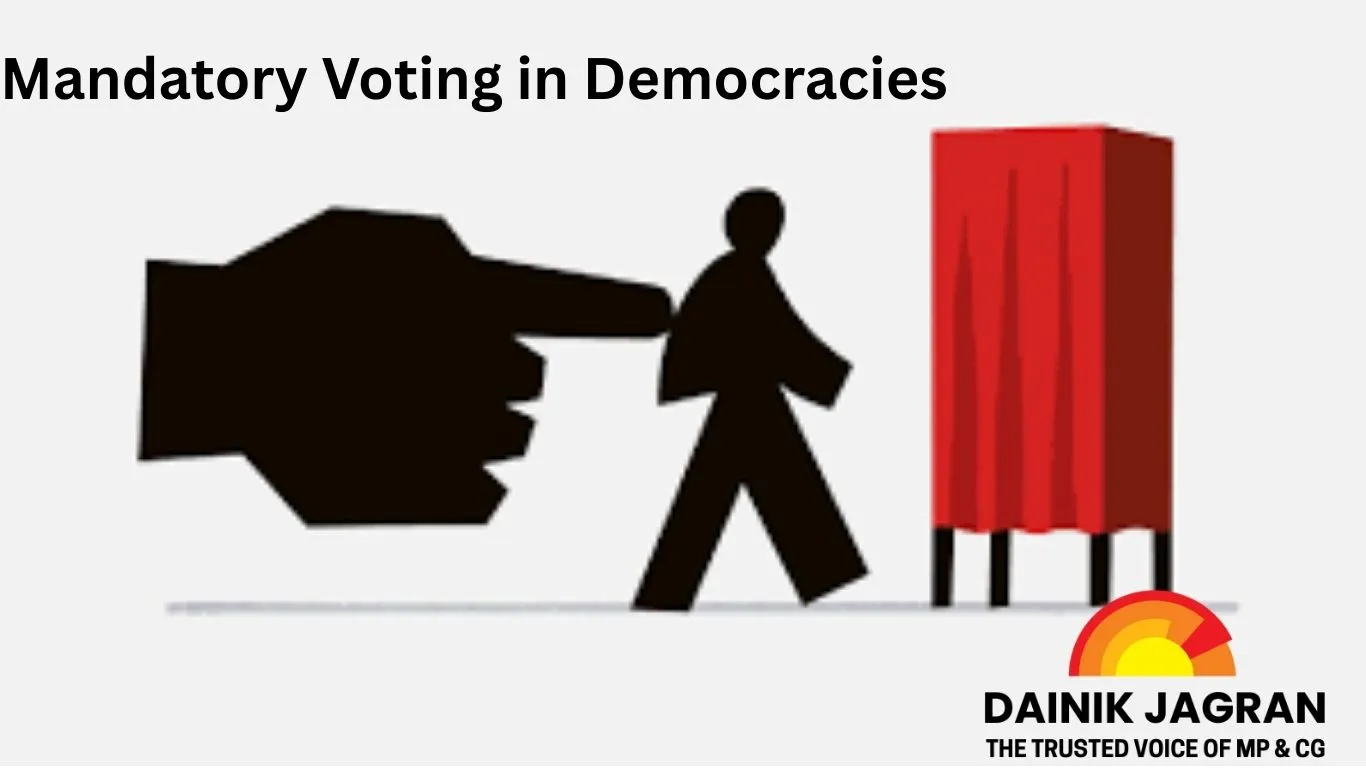
The question of whether voting should be made compulsory in democratic countries has resurfaced as political analysts, lawmakers, and civil society groups weigh in on improving electoral participation. Advocates argue that mandatory voting strengthens democracy, while critics question its feasibility and implications on individual freedom

What and Why:
Mandatory voting refers to legal requirements for eligible citizens to cast their vote in elections, often accompanied by penalties for non-compliance. Proponents contend that low voter turnout undermines democratic legitimacy and skews policy decisions toward the interests of a small, active voter base. “Voting is not just a right; it is a civic duty. Citizens must participate to ensure a government truly reflects the will of the people,” said Dr. Ramesh Gupta, a political science professor at Delhi University.

Where and When:
Globally, several countries, including Australia, Belgium, and Brazil, have implemented compulsory voting, achieving voter turnout rates of over 90% in national elections. By contrast, countries like the United States and India report turnout rates below 70% in general elections, sparking debates on citizen engagement.

Who is involved:
Electoral commissions, policymakers, and political parties are key stakeholders in this discussion. Civil society organizations, meanwhile, emphasize voter education and awareness campaigns as alternatives to legally enforcing participation.

How it could work:
Mandatory voting can be enforced through fines, community service obligations, or restrictions on government benefits for non-participation. Some experts suggest a more flexible approach, combining incentives for voting with robust voter education, rather than punitive measures. Critics argue that forcing citizens to vote could lead to uninformed or arbitrary choices, potentially diluting the quality of electoral outcomes.

Public Opinion and Challenges:
A recent survey conducted by the Centre for Policy Research found that 62% of respondents supported mandatory voting in principle, while 38% expressed concerns about government overreach. Legal experts highlight constitutional challenges, emphasizing that the right to vote also includes the right not to vote, complicating any move toward enforcement.

As democracies grapple with declining voter participation, the debate over mandatory voting underscores a fundamental question: Should civic responsibility be enforced by law, or encouraged through awareness and education? Policymakers face the challenge of balancing democratic engagement with individual freedoms, a dilemma that could shape the future of electoral processes worldwide.


--------

🚨 Beat the News Rush – Join Now!

Get breaking alerts, hot exclusives, and game-changing stories instantly on your phone. No delays, no fluff – just the edge you need. ⚡

Tap to join: 

🟢 WhatsApp Channel: Dainik Jagran MP CG

Crave more?

🅕 Facebook: Dainik Jagran MP CG English

🅧 Twitter (X): Dainik Jagran MP CG

🅘 Instagram: Dainik Jagran MP CG

Share the fire – keep your crew ahead! 🗞️🔥

english.dainikjagranmpcg.com
15 Dec 2025 By Nitin Trivedi

Mandatory Voting in Democracies: Debate Intensifies Over Citizen Responsibility

Digital Desk

What and Why:
Mandatory voting refers to legal requirements for eligible citizens to cast their vote in elections, often accompanied by penalties for non-compliance. Proponents contend that low voter turnout undermines democratic legitimacy and skews policy decisions toward the interests of a small, active voter base. “Voting is not just a right; it is a civic duty. Citizens must participate to ensure a government truly reflects the will of the people,” said Dr. Ramesh Gupta, a political science professor at Delhi University.

Where and When:
Globally, several countries, including Australia, Belgium, and Brazil, have implemented compulsory voting, achieving voter turnout rates of over 90% in national elections. By contrast, countries like the United States and India report turnout rates below 70% in general elections, sparking debates on citizen engagement.

Who is involved:
Electoral commissions, policymakers, and political parties are key stakeholders in this discussion. Civil society organizations, meanwhile, emphasize voter education and awareness campaigns as alternatives to legally enforcing participation.

How it could work:
Mandatory voting can be enforced through fines, community service obligations, or restrictions on government benefits for non-participation. Some experts suggest a more flexible approach, combining incentives for voting with robust voter education, rather than punitive measures. Critics argue that forcing citizens to vote could lead to uninformed or arbitrary choices, potentially diluting the quality of electoral outcomes.

Public Opinion and Challenges:
A recent survey conducted by the Centre for Policy Research found that 62% of respondents supported mandatory voting in principle, while 38% expressed concerns about government overreach. Legal experts highlight constitutional challenges, emphasizing that the right to vote also includes the right not to vote, complicating any move toward enforcement.

As democracies grapple with declining voter participation, the debate over mandatory voting underscores a fundamental question: Should civic responsibility be enforced by law, or encouraged through awareness and education? Policymakers face the challenge of balancing democratic engagement with individual freedoms, a dilemma that could shape the future of electoral processes worldwide.

https://english.dainikjagranmpcg.com/opinion/mandatory-voting-in-democracies-debate-intensifies-over-citizen-responsibility/article-10257
Tags:

Trending News