


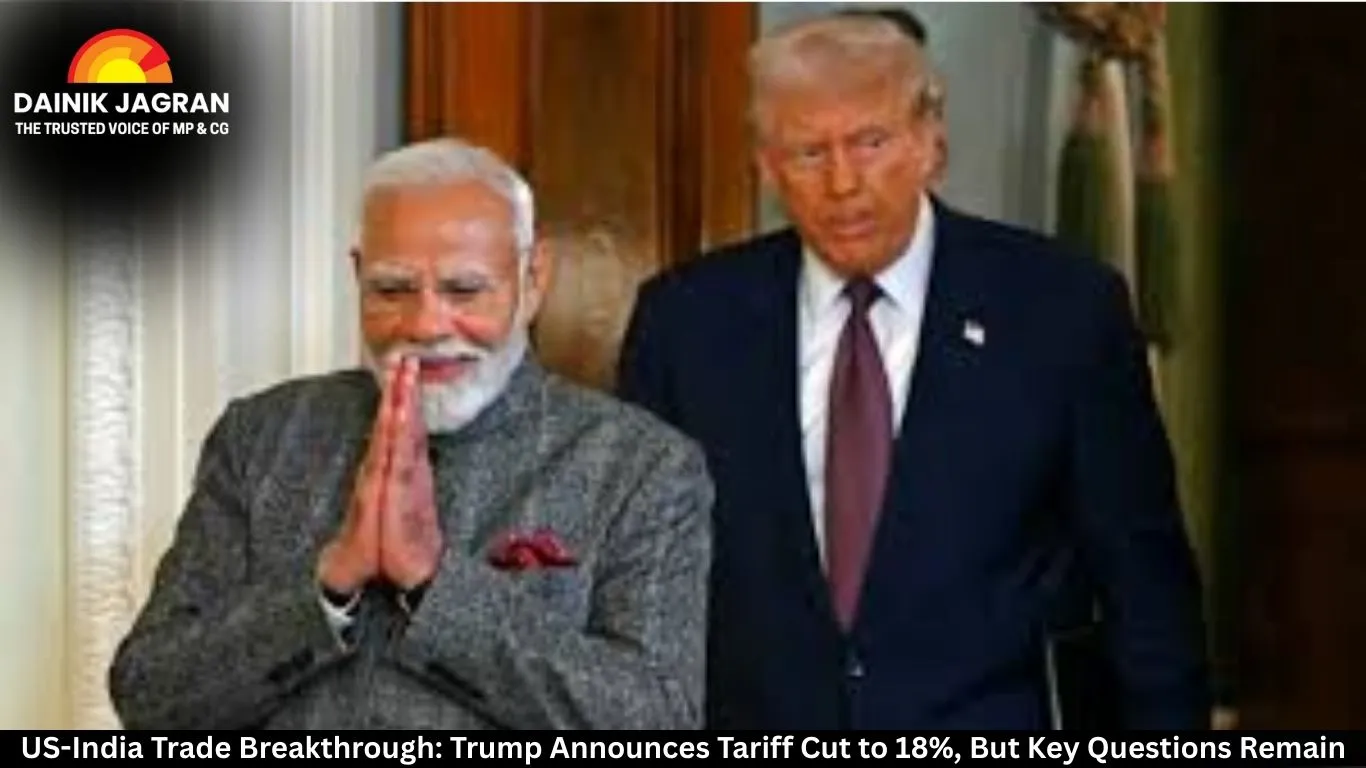
US-India Trade Breakthrough: Trump Announces Tariff Cut to 18%, But Key Questions Remain
Digital Desk
US-India Trade Breakthrough: Trump Announces Tariff Cut to 18%, But Key Questions Remain
In a sudden late-night announcement that could reshape economic ties, former and potential future US President Donald Trump declared a pivotal trade agreement with India. The deal, reportedly finalized during a phone conversation with Prime Minister Narendra Modi, promises to significantly ease trade tensions that had been simmering for over a year.
The Core of the Deal: A Major Tariff Reduction
The centerpiece of the announcement is a drastic reduction in US tariffs on Indian goods. Previously, India faced a compounded 50% tariff—25% labeled as a "reciprocal" levy on Indian products and an additional 25% imposed due to India's continued import of Russian oil. According to Trump's statement, the reciprocal portion will be immediately reduced from 25% to 18%. Crucially, the additional 25% tariff linked to Russian oil imports is set to be completely waived.
In return, Trump claims India has agreed to "remove most tariff and non-tariff barriers" and levy zero tariffs on a majority of US goods. He also stated India pledged to purchase $500 billion worth of American energy, technology, agriculture, and machinery products.
A Strategic Shift Following the EU Deal
Analysts see this swift agreement as a direct geopolitical and economic maneuver. It comes just days after India inked a separate trade deal with the European Union (EU). That agreement had drawn sharp criticism from Trump's camp, who argued it primarily benefited India and would divert Indian exports away from the US market. The new US-India deal appears to be a strategic counterpunch to ensure American economic interests aren't sidelined.
"Every economy acts in its national self-interest," notes a trade policy observer. "The EU deal likely triggered a sense of urgency in Washington. Losing the Indian market to European competitors was a risk the US couldn't afford."
Unconfirmed Claims and the Russian Oil Question
While Prime Minister Modi confirmed the conversation and celebrated the reduced tariffs for "Made in India" products, his statement did not verify several of Trump's specific claims. This creates a zone of ambiguity around two major points:
1. Cessation of Russian Oil Imports: Trump asserted that India agreed to stop buying Russian oil and would instead source more from the US and Venezuela. India has made no such official confirmation. Given Russia's status as a long-term, reliable partner and a key supplier of discounted oil, a sudden, complete halt seems improbable. Experts suggest India may reduce imports marginally, but a total cutoff is unlikely and may represent political messaging for Trump's domestic audience.
2. The $500 Billion Purchase Pledge: The massive commitment to buy American goods also remains unconfirmed by New Delhi. The specifics of this pledge, including the timeline and sectors, are unclear and will be critical in assessing the deal's balance.
Potential Impact on India: A Competitive Edge
If implemented as outlined, the tariff reduction could be a substantial boost for key Indian export sectors.
Immediate Export Boost: Slashing the effective tariff from 50% to 18% will make Indian products like gems & jewellery, textiles, leather goods, and machinery far more competitive in the US market.
Gaining Advantage: Compared to competitors like Vietnam, Cambodia, Indonesia, and Pakistan—which face US tariffs around 19-20%—India's new 18% rate could provide a valuable competitive edge.
Investment Inflow: The de-escalation of trade tensions is likely to restore investor confidence, potentially reversing recent foreign investment outflows and boosting Indian stock markets.
What to Watch Next: The Devil in the Details
The announcement is a headline; the real substance will be in the fine print. Key details are still awaited, including:
Sector-specific commitments and phase-out schedules.
The exact nature of tariff reductions India will offer on US goods.
Clarifications on services trade and non-tariff barriers.
Official confirmation (or denial) of the Russian oil and $500 billion purchase claims.
A Step Forward, With Caveats
The US-India trade deal announcement marks a significant diplomatic thaw after a period of strain and positions India as a nation skillfully navigating between major global powers. While it offers tangible benefits for Indian exporters, the unverified elements introduce a note of caution. The coming days, as more details emerge, will reveal whether this is a fully balanced agreement or a deal where the public pronouncements and private commitments may not entirely align. For now, it underscores a mutual recognition: in today's fragmented global economy, neither the US nor India can afford prolonged economic discord.


.jpg)




