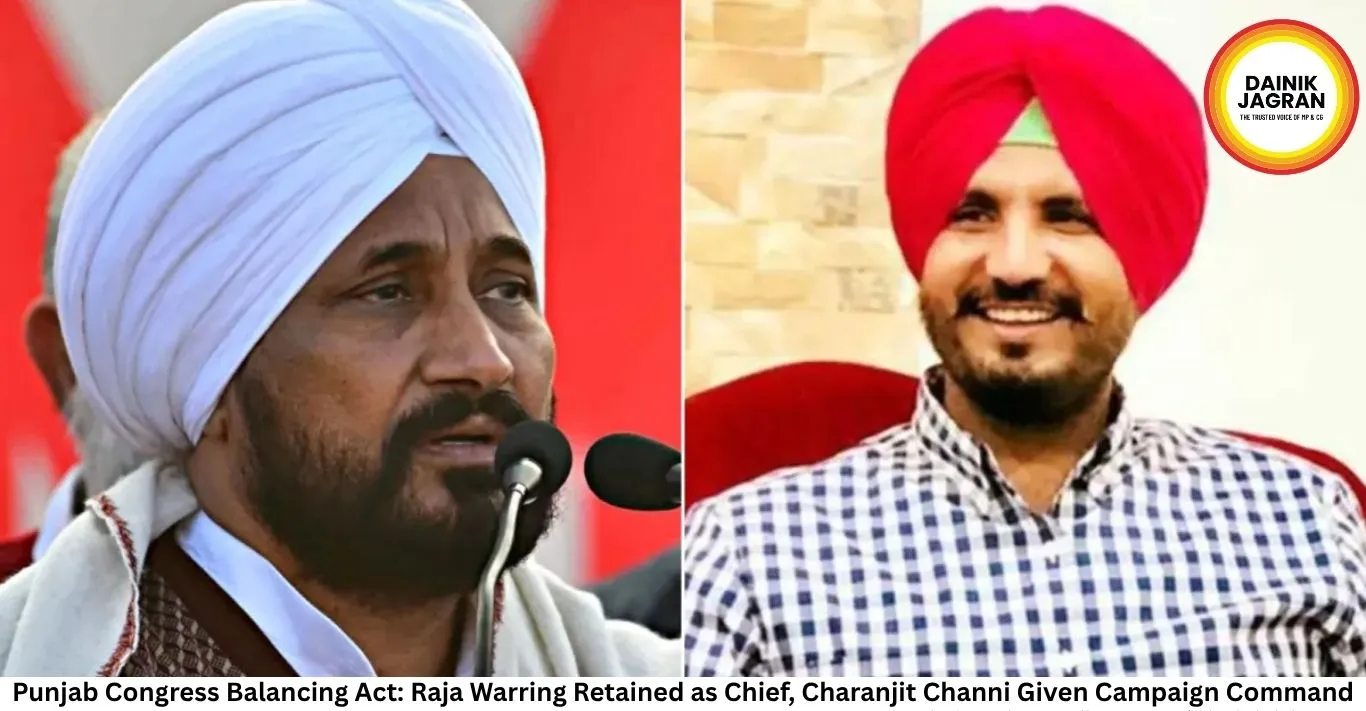
Punjab Congress Balancing Act: Raja Warring Retained as Chief, Charanjit Channi Given Campaign Command
Digital desk
The Congress leadership has attempted a delicate balancing act in Punjab by retaining Raja Warring as the state party president while assigning former Chief Minister Charanjit Singh Channi a major role in the party’s election campaign machinery. The move, however, has sparked fresh political discussion over whether the party has resolved internal differences or merely managed them temporarily.
The latest organisational decisions come at a crucial time for the Congress as it prepares for future electoral battles in Punjab, a state where factional rivalries have repeatedly affected the party's performance. Party leaders have publicly projected the changes as a sign of unity, but political observers are closely watching how the new arrangement functions on the ground.
Raja Warring will continue to lead the Punjab Congress organisation, a position he has held during a challenging period marked by electoral setbacks and efforts to rebuild the party's grassroots network. By retaining him, the Congress high command appears to have signalled confidence in his ability to manage the organisation and maintain continuity within the state unit.
At the same time, Charanjit Singh Channi has been entrusted with a prominent campaign-related responsibility. The decision gives the former chief minister a significant role in shaping the party’s outreach strategy and election messaging, ensuring that he remains one of the key faces of the Congress in Punjab.
The arrangement is being viewed by many within political circles as an attempt to accommodate multiple power centres within the state unit. Punjab Congress has witnessed leadership disputes and competing factions over the years, with disagreements often becoming public and impacting the party's image.
Congress leaders have maintained that the latest structure is aimed at strengthening the organisation rather than reflecting any internal compromise. According to party insiders, the leadership wants to utilise the strengths of both leaders—Warring's organisational experience and Channi's mass appeal among voters.
The decision also reflects lessons learned from previous episodes in Punjab politics. In the past, leadership tussles involving senior Congress figures often escalated into prolonged conflicts, creating uncertainty ahead of important elections. The party appears keen to avoid a repeat of those situations by distributing responsibilities among influential leaders.
Political analysts note that while the move may help maintain short-term stability, its success will ultimately depend on cooperation between various factions. If leaders work together effectively, the Congress could present a more united front against its political rivals. However, any signs of renewed rivalry could quickly revive questions about internal cohesion.
The development is significant because Punjab remains one of the few states where Congress continues to have a substantial political base despite recent electoral challenges. Strengthening the state unit is seen as critical for the party’s broader national strategy.
Meanwhile, reactions from party workers have been mixed. Some view the arrangement as a practical solution that recognises the contributions of both leaders. Others believe it may lead to overlapping authority unless responsibilities are clearly defined.
For now, the Congress leadership has sought to send a message of unity and collective responsibility. Whether the latest formula ends factional tensions or simply postpones them is likely to become clearer as the party begins preparations for upcoming elections and campaign activities across Punjab.
The coming months are expected to provide a clearer picture of how the new leadership structure functions and whether it succeeds in consolidating the Congress organisation in the state.
--------
🚨 Beat the News Rush – Join Now!
Get breaking alerts, hot exclusives, and game-changing stories instantly on your phone. No delays, no fluff – just the edge you need. ⚡
Tap to join:
🟢 WhatsApp Channel: Dainik Jagran MP CG
Crave more?
🅕 Facebook: Dainik Jagran MP CG English
🅧 Twitter (X): Dainik Jagran MP CG
🅘 Instagram: Dainik Jagran MP CG
Share the fire – keep your crew ahead! 🗞️🔥
Punjab Congress Balancing Act: Raja Warring Retained as Chief, Charanjit Channi Given Campaign Command
Digital desk
The latest organisational decisions come at a crucial time for the Congress as it prepares for future electoral battles in Punjab, a state where factional rivalries have repeatedly affected the party's performance. Party leaders have publicly projected the changes as a sign of unity, but political observers are closely watching how the new arrangement functions on the ground.
Raja Warring will continue to lead the Punjab Congress organisation, a position he has held during a challenging period marked by electoral setbacks and efforts to rebuild the party's grassroots network. By retaining him, the Congress high command appears to have signalled confidence in his ability to manage the organisation and maintain continuity within the state unit.
At the same time, Charanjit Singh Channi has been entrusted with a prominent campaign-related responsibility. The decision gives the former chief minister a significant role in shaping the party’s outreach strategy and election messaging, ensuring that he remains one of the key faces of the Congress in Punjab.
The arrangement is being viewed by many within political circles as an attempt to accommodate multiple power centres within the state unit. Punjab Congress has witnessed leadership disputes and competing factions over the years, with disagreements often becoming public and impacting the party's image.
Congress leaders have maintained that the latest structure is aimed at strengthening the organisation rather than reflecting any internal compromise. According to party insiders, the leadership wants to utilise the strengths of both leaders—Warring's organisational experience and Channi's mass appeal among voters.
The decision also reflects lessons learned from previous episodes in Punjab politics. In the past, leadership tussles involving senior Congress figures often escalated into prolonged conflicts, creating uncertainty ahead of important elections. The party appears keen to avoid a repeat of those situations by distributing responsibilities among influential leaders.
Political analysts note that while the move may help maintain short-term stability, its success will ultimately depend on cooperation between various factions. If leaders work together effectively, the Congress could present a more united front against its political rivals. However, any signs of renewed rivalry could quickly revive questions about internal cohesion.
The development is significant because Punjab remains one of the few states where Congress continues to have a substantial political base despite recent electoral challenges. Strengthening the state unit is seen as critical for the party’s broader national strategy.
Meanwhile, reactions from party workers have been mixed. Some view the arrangement as a practical solution that recognises the contributions of both leaders. Others believe it may lead to overlapping authority unless responsibilities are clearly defined.
For now, the Congress leadership has sought to send a message of unity and collective responsibility. Whether the latest formula ends factional tensions or simply postpones them is likely to become clearer as the party begins preparations for upcoming elections and campaign activities across Punjab.
The coming months are expected to provide a clearer picture of how the new leadership structure functions and whether it succeeds in consolidating the Congress organisation in the state.