Odisha Textbook Row: ‘Nimbuda Nimbuda’ Song Found in Class 5 English Book, Sparks Questions Over Review Process
Digital desk
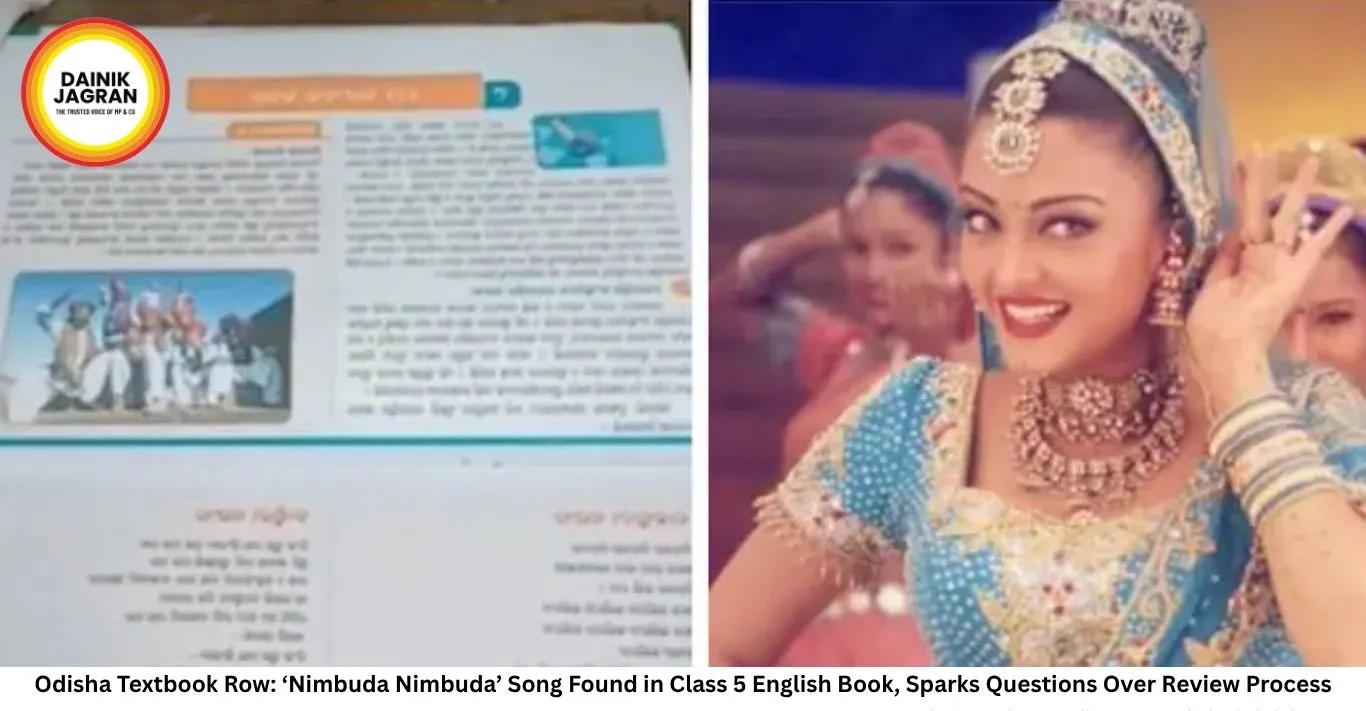
A controversy has erupted in Odisha after a Class 5 English textbook reportedly carried the lyrics of the popular song Nimbuda Nimbuda, drawing criticism from educators, parents and social media users over the quality checks followed in school textbook publication.
The issue came to light when pages from the government-prescribed English textbook began circulating online. Users pointed out that a chapter in the book appeared to contain the lyrics associated with the iconic song featured in the 1999 Bollywood film Hum Dil De Chuke Sanam. The song, picturised on actress Aishwarya Rai, remains one of the most recognisable musical numbers from the film.
As screenshots spread across social media platforms, questions were raised about how such content found its way into a textbook meant for primary school students. The development has triggered a wider debate on textbook review mechanisms and editorial oversight within the education system.
The song itself is based on a traditional Rajasthani folk composition and has long been part of India's cultural landscape. However, critics argue that its appearance in a Class 5 English textbook without clear educational context points to a possible publishing or editorial lapse.
Education experts say textbooks undergo multiple stages of drafting, review, editing and approval before reaching classrooms. Because of this process, the incident has led many to wonder whether the content was mistakenly inserted during compilation, printing or final proofreading.
Several educators have expressed concern over the incident, saying primary school textbooks play a crucial role in shaping foundational learning. They argue that every lesson included in such books should be carefully evaluated for academic relevance, language development and age appropriateness before publication.
The controversy has also drawn attention to the broader issue of textbook quality control. Parents and teachers have questioned whether adequate scrutiny was conducted before the books were distributed to students across schools.
At the centre of the debate is not merely the inclusion of a popular song but the possibility that established review procedures may have failed. Education observers note that school textbooks are expected to meet strict curricular objectives and align with learning outcomes prescribed by academic authorities.
The matter gained further traction online as users shared humorous reactions alongside criticism of the apparent error. While some treated the incident as a light-hearted publishing mistake, others described it as a serious lapse that warrants investigation.
So far, no official clarification has been issued by the Odisha School and Mass Education Department regarding how the content appeared in the textbook. Authorities have also not publicly indicated whether a review of the book has been ordered or whether corrective measures are being considered.
The absence of an official response has only intensified public curiosity about the circumstances surrounding the publication. Education stakeholders are now awaiting clarification from the department regarding the origin of the content and whether revised copies of the textbook will be issued.
The incident comes at a time when states across the country are focusing on improving foundational literacy and learning outcomes under various educational reforms. As a result, any concerns related to textbook accuracy tend to attract significant public attention.
Further details are awaited, and officials are yet to comment on the controversy.
--------
🚨 Beat the News Rush – Join Now!
Get breaking alerts, hot exclusives, and game-changing stories instantly on your phone. No delays, no fluff – just the edge you need. ⚡
Tap to join:
🟢 WhatsApp Channel: Dainik Jagran MP CG
Crave more?
🅕 Facebook: Dainik Jagran MP CG English
🅧 Twitter (X): Dainik Jagran MP CG
🅘 Instagram: Dainik Jagran MP CG
Share the fire – keep your crew ahead! 🗞️🔥
Odisha Textbook Row: ‘Nimbuda Nimbuda’ Song Found in Class 5 English Book, Sparks Questions Over Review Process
Digital desk
The issue came to light when pages from the government-prescribed English textbook began circulating online. Users pointed out that a chapter in the book appeared to contain the lyrics associated with the iconic song featured in the 1999 Bollywood film Hum Dil De Chuke Sanam. The song, picturised on actress Aishwarya Rai, remains one of the most recognisable musical numbers from the film.
As screenshots spread across social media platforms, questions were raised about how such content found its way into a textbook meant for primary school students. The development has triggered a wider debate on textbook review mechanisms and editorial oversight within the education system.
The song itself is based on a traditional Rajasthani folk composition and has long been part of India's cultural landscape. However, critics argue that its appearance in a Class 5 English textbook without clear educational context points to a possible publishing or editorial lapse.
Education experts say textbooks undergo multiple stages of drafting, review, editing and approval before reaching classrooms. Because of this process, the incident has led many to wonder whether the content was mistakenly inserted during compilation, printing or final proofreading.
Several educators have expressed concern over the incident, saying primary school textbooks play a crucial role in shaping foundational learning. They argue that every lesson included in such books should be carefully evaluated for academic relevance, language development and age appropriateness before publication.
The controversy has also drawn attention to the broader issue of textbook quality control. Parents and teachers have questioned whether adequate scrutiny was conducted before the books were distributed to students across schools.
At the centre of the debate is not merely the inclusion of a popular song but the possibility that established review procedures may have failed. Education observers note that school textbooks are expected to meet strict curricular objectives and align with learning outcomes prescribed by academic authorities.
The matter gained further traction online as users shared humorous reactions alongside criticism of the apparent error. While some treated the incident as a light-hearted publishing mistake, others described it as a serious lapse that warrants investigation.
So far, no official clarification has been issued by the Odisha School and Mass Education Department regarding how the content appeared in the textbook. Authorities have also not publicly indicated whether a review of the book has been ordered or whether corrective measures are being considered.
The absence of an official response has only intensified public curiosity about the circumstances surrounding the publication. Education stakeholders are now awaiting clarification from the department regarding the origin of the content and whether revised copies of the textbook will be issued.
The incident comes at a time when states across the country are focusing on improving foundational literacy and learning outcomes under various educational reforms. As a result, any concerns related to textbook accuracy tend to attract significant public attention.
Further details are awaited, and officials are yet to comment on the controversy.