Anant Singh Names Son Abhishek as Political Successor, Signals Generational Shift in Mokama Politics

Digital desk

Anant Singh Names Son Abhishek as Political Successor, Signals Generational Shift in Mokama Politics

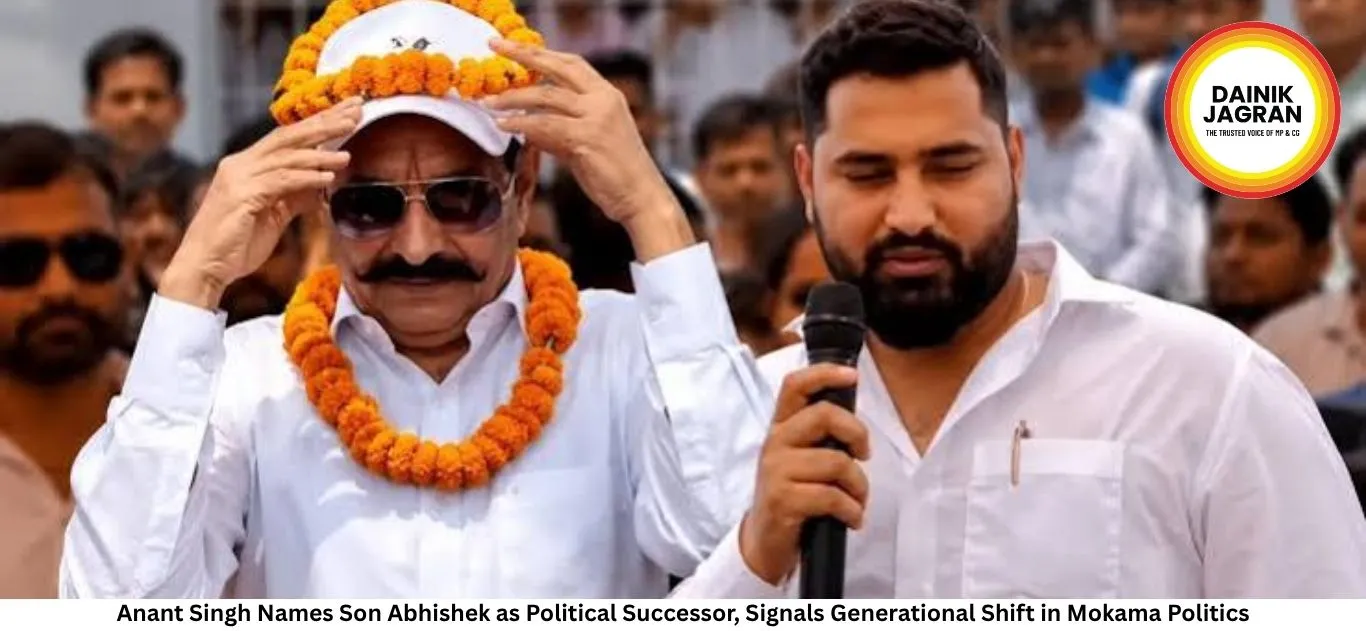
Mokama MLA Anant Singh has formally announced that his elder son Abhishek Singh will be his political successor and contest future Assembly elections from the Mokama constituency, bringing an important transition in one of Bihar’s most closely watched political families.

The announcement was made during a Janata Dal (United) workers’ felicitation programme held at the Ghoswari block auditorium in Patna district’s Barh subdivision on Sunday. The event was attended by local party leaders, supporters and workers, while Abhishek Singh was also present on the stage alongside his father.

Anant Singh, popularly known as “Chhote Sarkar” in the region, has repeatedly indicated in recent months that he does not intend to contest another Assembly election himself. On Sunday, he gave the clearest indication yet about the future leadership of his political camp.

Addressing party workers, Singh said his son would carry forward the responsibility of representing the constituency. He added that he would continue to remain available whenever the people of Mokama needed him and would stay connected with local issues despite stepping back from electoral politics.

The announcement comes at a significant time for Bihar politics, with political parties already beginning groundwork ahead of the next Assembly election cycle.

Speaking after the event, Abhishek Singh said he intends to spend the coming years working closely with residents and understanding local concerns before formally entering the electoral arena.

He said public acceptance would ultimately determine his political future and stressed that education and healthcare would be among his key priorities if given an opportunity to represent the constituency.

The move marks the latest chapter in the long and often controversial political journey of Anant Singh, one of Bihar’s most recognised regional strongmen-turned-politicians.

Born in Patna district’s Nadwan village, Singh rose to prominence in the 1990s and gradually built a powerful political network across Mokama and the surrounding Barh region. Over the years, he became known for his influence in local politics, his close association with major state leaders and his ability to retain electoral support despite numerous legal and political challenges.

His political rise coincided with a turbulent period in Bihar’s history when caste-based mobilisation, criminal networks and regional power centres played a significant role in shaping electoral outcomes.

Singh first entered the Bihar Assembly on a JD(U) ticket and went on to become one of the most influential political figures in central Bihar. He maintained a strong voter base in Mokama across multiple elections, winning contests under different political circumstances and alliances.

His career, however, has also been marked by legal battles, arrests and high-profile criminal cases that repeatedly placed him at the centre of public debate. Despite those controversies, Singh continued to remain a significant electoral force in the constituency.

The decision to project Abhishek Singh as his successor suggests a deliberate effort to preserve the family’s political influence in the region while preparing for a generational transition.

Political observers note that family succession remains a common feature of Indian politics, particularly in constituencies where individual leaders have built strong personal networks over decades. In such cases, political capital is often transferred to the next generation through sustained public engagement and organisational support.

For JD(U), the development is also noteworthy because Mokama remains an important constituency in the Patna region. The party will be keen to retain its influence there amid changing political equations in Bihar.

Whether Abhishek Singh can replicate his father’s electoral appeal remains to be seen, but Sunday’s announcement has effectively launched his public political journey.

With several years still remaining before the next Assembly election, attention is now likely to shift toward how actively he engages with voters and whether he can establish an independent political identity beyond the legacy of one of Bihar’s most talked-about political figures.

--------

🚨 Beat the News Rush – Join Now!

Get breaking alerts, hot exclusives, and game-changing stories instantly on your phone. No delays, no fluff – just the edge you need. ⚡

Tap to join: 

🟢 WhatsApp Channel: Dainik Jagran MP CG

Crave more?

🅕 Facebook: Dainik Jagran MP CG English

🅧 Twitter (X): Dainik Jagran MP CG

🅘 Instagram: Dainik Jagran MP CG

Share the fire – keep your crew ahead! 🗞️🔥

english.dainikjagranmpcg.com
19 Jul 2026 By Priyanshu.Jha

Anant Singh Names Son Abhishek as Political Successor, Signals Generational Shift in Mokama Politics

Digital desk

The announcement was made during a Janata Dal (United) workers’ felicitation programme held at the Ghoswari block auditorium in Patna district’s Barh subdivision on Sunday. The event was attended by local party leaders, supporters and workers, while Abhishek Singh was also present on the stage alongside his father.

Anant Singh, popularly known as “Chhote Sarkar” in the region, has repeatedly indicated in recent months that he does not intend to contest another Assembly election himself. On Sunday, he gave the clearest indication yet about the future leadership of his political camp.

Addressing party workers, Singh said his son would carry forward the responsibility of representing the constituency. He added that he would continue to remain available whenever the people of Mokama needed him and would stay connected with local issues despite stepping back from electoral politics.

The announcement comes at a significant time for Bihar politics, with political parties already beginning groundwork ahead of the next Assembly election cycle.

Speaking after the event, Abhishek Singh said he intends to spend the coming years working closely with residents and understanding local concerns before formally entering the electoral arena.

He said public acceptance would ultimately determine his political future and stressed that education and healthcare would be among his key priorities if given an opportunity to represent the constituency.

The move marks the latest chapter in the long and often controversial political journey of Anant Singh, one of Bihar’s most recognised regional strongmen-turned-politicians.

Born in Patna district’s Nadwan village, Singh rose to prominence in the 1990s and gradually built a powerful political network across Mokama and the surrounding Barh region. Over the years, he became known for his influence in local politics, his close association with major state leaders and his ability to retain electoral support despite numerous legal and political challenges.

His political rise coincided with a turbulent period in Bihar’s history when caste-based mobilisation, criminal networks and regional power centres played a significant role in shaping electoral outcomes.

Singh first entered the Bihar Assembly on a JD(U) ticket and went on to become one of the most influential political figures in central Bihar. He maintained a strong voter base in Mokama across multiple elections, winning contests under different political circumstances and alliances.

His career, however, has also been marked by legal battles, arrests and high-profile criminal cases that repeatedly placed him at the centre of public debate. Despite those controversies, Singh continued to remain a significant electoral force in the constituency.

The decision to project Abhishek Singh as his successor suggests a deliberate effort to preserve the family’s political influence in the region while preparing for a generational transition.

Political observers note that family succession remains a common feature of Indian politics, particularly in constituencies where individual leaders have built strong personal networks over decades. In such cases, political capital is often transferred to the next generation through sustained public engagement and organisational support.

For JD(U), the development is also noteworthy because Mokama remains an important constituency in the Patna region. The party will be keen to retain its influence there amid changing political equations in Bihar.

Whether Abhishek Singh can replicate his father’s electoral appeal remains to be seen, but Sunday’s announcement has effectively launched his public political journey.

With several years still remaining before the next Assembly election, attention is now likely to shift toward how actively he engages with voters and whether he can establish an independent political identity beyond the legacy of one of Bihar’s most talked-about political figures.

https://english.dainikjagranmpcg.com/politics/anant-singh-names-son-abhishek-as-political-successor-signals-generational/article-22814

Trending News