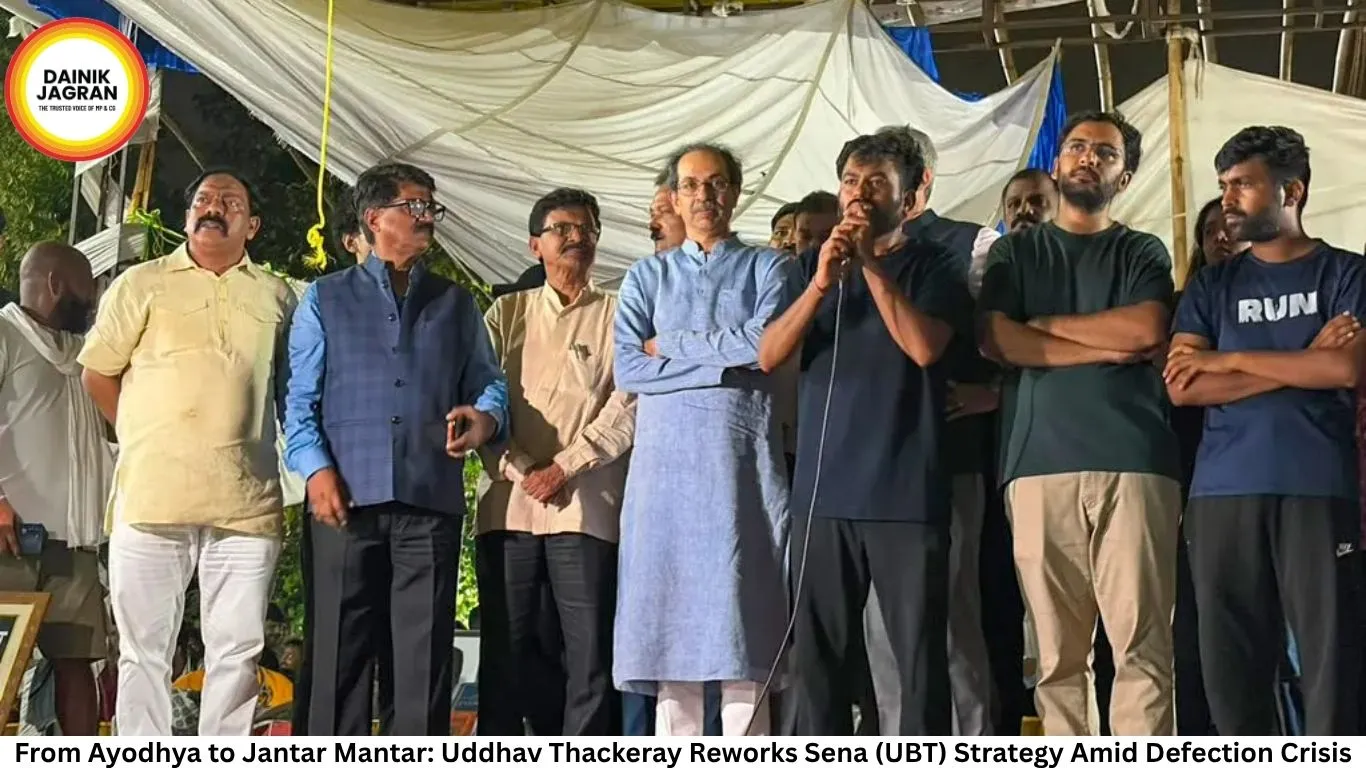
From Ayodhya to Jantar Mantar: Uddhav Thackeray Reworks Sena (UBT) Strategy Amid Defection Crisis
Digital Desk
Facing a major political setback after six Lok Sabha MPs joined the Eknath Shinde-led Shiv Sena, Uddhav Thackeray has unveiled a three-pronged strategy to revive Shiv Sena (UBT). From challenging the BJP over the Ram Temple narrative and backing NEET protesters at Jantar Mantar to pursuing legal action against rebel MPs and strengthening regional alliances, the party is attempting to regain political momentum ahead of key elections.
Facing one of the biggest challenges since the split in the Shiv Sena, Uddhav Thackeray has launched a multi-pronged political strategy to revive the Shiv Sena (UBT) after six Lok Sabha MPs defected to the Eknath Shinde-led Shiv Sena. Instead of remaining on the defensive, the former Maharashtra Chief Minister is attempting to reposition his party through ideological campaigns, youth outreach, legal action, and regional political consolidation.
Three-Pronged Strategy to Revive Sena (UBT)
Political observers say Thackeray's strategy rests on three key pillars:
- Reclaiming the Hindutva narrative
- Mobilising youth through public issues
- Pursuing constitutional and legal challenges against defectors
The move comes as the party battles questions over its organisational strength following high-profile defections.
Challenging BJP on the Ram Temple Narrative
In an effort to reclaim political space on the Hindutva plank, Thackeray has launched the "Ram Raksha" campaign and a "BJP-Free Ram Movement."
The campaign questions alleged financial irregularities in donations made for the Ayodhya Ram Temple, including concerns over the handling of silver brick donations. By raising these issues, Thackeray is seeking to challenge the BJP on an issue traditionally associated with the party's core support base.
Political analysts believe this is also aimed at reassuring traditional Shiv Sena supporters that the UBT faction has not abandoned its ideological roots despite aligning with opposition parties.
From Ayodhya to Jantar Mantar
Alongside the ideological campaign, Thackeray has expanded his political messaging to include governance and youth-centric issues.
His visit to Jantar Mantar to express solidarity with students protesting over the alleged NEET paper leak marked a shift in strategy. He criticised the police action against protesters, compared the government's approach to colonial-era governance, and announced legal assistance for affected students.
The move is seen as an attempt to connect with young, urban and middle-class voters by highlighting concerns over examination integrity, education, and democratic accountability.
Legal Battle Against Rebel MPs
The Shiv Sena (UBT) has also intensified its legal challenge against the six MPs who joined the Shinde faction.
Although the Supreme Court declined to grant an interim stay on July 22, it issued notices to the Maharashtra Assembly Speaker, the Assembly Secretariat and the rebel legislators. The case is expected to examine the application of the anti-defection law and whether the legislators' actions constitute a valid merger or defection.
The legal battle also serves a political purpose by portraying the defectors as leaders who abandoned the mandate on which they were elected.
Possible Reunion with Raj Thackeray
Another significant element of Uddhav Thackeray's strategy is improving ties with Raj Thackeray.
Political observers believe closer coordination between the Shiv Sena (UBT) and the Maharashtra Navnirman Sena (MNS) could consolidate Marathi votes, particularly in Mumbai, Thane and the Konkan region, ahead of upcoming civic body and state elections.
Challenges Remain
Despite the renewed political push, the Shiv Sena (UBT) continues to face several hurdles.
The departure of elected MPs has weakened the party's grassroots organisational network, while balancing a strong Hindutva message with its alliance partners in the opposition remains politically delicate.
In addition, the legal proceedings over the defections could take considerable time, meaning any judicial outcome may come only after key electoral contests.
Even so, Uddhav Thackeray's recent political initiatives indicate an effort to reposition the Shiv Sena (UBT) as a party focused not only on regional identity but also on democratic accountability, governance, and youth issues, while continuing its battle against the BJP-led Mahayuti government.

--------
๐จ Beat the News Rush โ Join Now!
Get breaking alerts, hot exclusives, and game-changing stories instantly on your phone. No delays, no fluff โ just the edge you need. โก
Tap to join:ย
๐ข WhatsApp Channel: Dainik Jagran MP CG
Crave more?
๐ Facebook: Dainik Jagran MP CG English
๐ ง Twitter (X): Dainik Jagran MP CG
๐ Instagram: Dainik Jagran MP CG
Share the fire โ keep your crew ahead! ๐๏ธ๐ฅ
From Ayodhya to Jantar Mantar: Uddhav Thackeray Reworks Sena (UBT) Strategy Amid Defection Crisis
Digital Desk
Facing one of the biggest challenges since the split in the Shiv Sena, Uddhav Thackeray has launched a multi-pronged political strategy to revive the Shiv Sena (UBT) after six Lok Sabha MPs defected to the Eknath Shinde-led Shiv Sena. Instead of remaining on the defensive, the former Maharashtra Chief Minister is attempting to reposition his party through ideological campaigns, youth outreach, legal action, and regional political consolidation.
Three-Pronged Strategy to Revive Sena (UBT)
Political observers say Thackeray's strategy rests on three key pillars:
- Reclaiming the Hindutva narrative
- Mobilising youth through public issues
- Pursuing constitutional and legal challenges against defectors
The move comes as the party battles questions over its organisational strength following high-profile defections.
Challenging BJP on the Ram Temple Narrative
In an effort to reclaim political space on the Hindutva plank, Thackeray has launched the "Ram Raksha" campaign and a "BJP-Free Ram Movement."
The campaign questions alleged financial irregularities in donations made for the Ayodhya Ram Temple, including concerns over the handling of silver brick donations. By raising these issues, Thackeray is seeking to challenge the BJP on an issue traditionally associated with the party's core support base.
Political analysts believe this is also aimed at reassuring traditional Shiv Sena supporters that the UBT faction has not abandoned its ideological roots despite aligning with opposition parties.
From Ayodhya to Jantar Mantar
Alongside the ideological campaign, Thackeray has expanded his political messaging to include governance and youth-centric issues.
His visit to Jantar Mantar to express solidarity with students protesting over the alleged NEET paper leak marked a shift in strategy. He criticised the police action against protesters, compared the government's approach to colonial-era governance, and announced legal assistance for affected students.
The move is seen as an attempt to connect with young, urban and middle-class voters by highlighting concerns over examination integrity, education, and democratic accountability.
Legal Battle Against Rebel MPs
The Shiv Sena (UBT) has also intensified its legal challenge against the six MPs who joined the Shinde faction.
Although the Supreme Court declined to grant an interim stay on July 22, it issued notices to the Maharashtra Assembly Speaker, the Assembly Secretariat and the rebel legislators. The case is expected to examine the application of the anti-defection law and whether the legislators' actions constitute a valid merger or defection.
The legal battle also serves a political purpose by portraying the defectors as leaders who abandoned the mandate on which they were elected.
Possible Reunion with Raj Thackeray
Another significant element of Uddhav Thackeray's strategy is improving ties with Raj Thackeray.
Political observers believe closer coordination between the Shiv Sena (UBT) and the Maharashtra Navnirman Sena (MNS) could consolidate Marathi votes, particularly in Mumbai, Thane and the Konkan region, ahead of upcoming civic body and state elections.
Challenges Remain
Despite the renewed political push, the Shiv Sena (UBT) continues to face several hurdles.
The departure of elected MPs has weakened the party's grassroots organisational network, while balancing a strong Hindutva message with its alliance partners in the opposition remains politically delicate.
In addition, the legal proceedings over the defections could take considerable time, meaning any judicial outcome may come only after key electoral contests.
Even so, Uddhav Thackeray's recent political initiatives indicate an effort to reposition the Shiv Sena (UBT) as a party focused not only on regional identity but also on democratic accountability, governance, and youth issues, while continuing its battle against the BJP-led Mahayuti government.