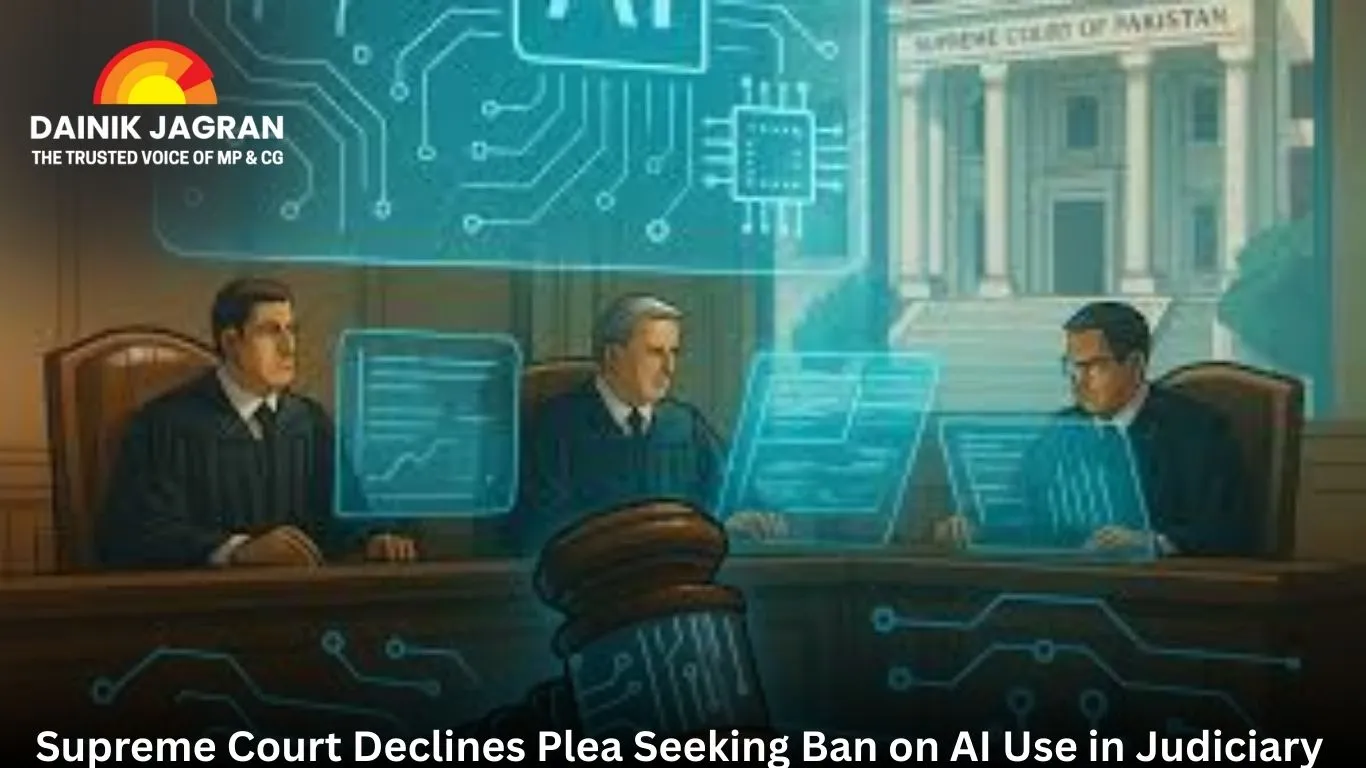
Supreme Court Declines Plea Seeking Ban on AI Use in Judiciary, Says Issue Requires Administrative Action
Digital Desk
The PIL, filed by advocate Anupam Lal Das, argued that AI tools were producing fabricated judicial precedents and orders, some of which had reportedly been cited by lawyers and even found their way into lower court rulings. The plea also referred to recommendations made by the Kerala High Court and the Supreme Court’s own white paper outlining the opportunities and risks associated with AI in the justice delivery system.
During the hearing, the Chief Justice acknowledged the gravity of the issue but maintained that a judicial directive was not the appropriate remedy. “We do not want AI to dominate the judicial process,” he said, adding that the system was alert to the challenges posed by AI-generated misinformation. He emphasised that the matter should act as a reminder to both judges and members of the bar to exercise caution in verifying citations.
The CJI noted that instances of fabricated references created by AI tools had been detected in some proceedings, underscoring the need for enhanced judicial training. He informed the petitioner that training programmes had already been initiated to ensure judges are better equipped to identify and address such risks.
Warning lawyers against reliance on AI-generated material without verification, the Chief Justice said such conduct could amount to professional misconduct. The Court ultimately dismissed the petition, reiterating that safeguarding the judicial process from AI misuse is a matter for internal regulation and capacity-building, not judicial prohibition.
The decision places the responsibility on institutional vigilance and highlights the judiciary’s preference for evolving safeguards over sweeping bans as AI tools become increasingly accessible within the legal ecosystem.
.jpg)