


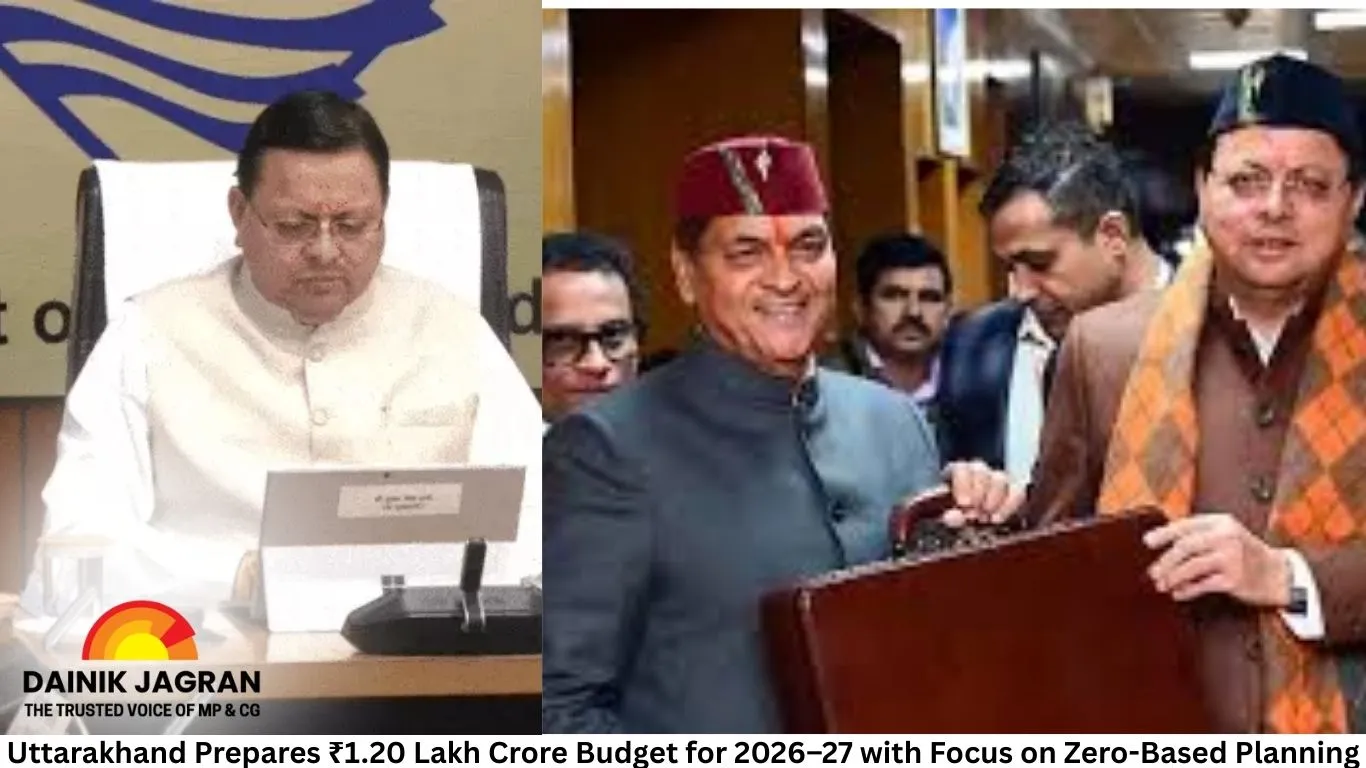
Uttarakhand Prepares ₹1.20 Lakh Crore Budget for 2026–27 with Focus on Zero-Based Planning
Digital Desk
The anticipated budget reflects a 14–19 per cent rise over the 2025–26 financial year, when the state’s total allocation was ₹1.01 lakh crore. Excluding debt repayments, the government’s actual expenditure was roughly ₹75,000 crore. Officials indicate that rising expenditures relative to own tax revenue necessitate careful planning to maintain fiscal balance.
To ensure effective use of funds, the government is adopting Zero-Based Budgeting for the first time. Under this approach, every scheme must justify its relevance and utility; obsolete or inefficient programs are likely to be discontinued. Departments are also required to explain measures taken to enhance revenue generation, including revisions of fee structures and strengthening non-tax revenue collection. Third-party audits are being considered for ongoing schemes to create fiscal space for new initiatives.
The February 7 dialogue will include approximately 200 participants, such as District Panchayat Presidents, representatives of local bodies, Self-Help Groups, progressive farmers, industrialists, hotel associations, and Chartered Accountants. Finance Secretary Dilip Jawalkar emphasised that the initiative aims to make budget-making a participatory exercise, reflecting public needs and local realities rather than being confined to government offices.
Department-wise review meetings are underway at Vishwakarma Bhawan and Vikas Bhawan. Each department secretary is required to submit allocation proposals and justify previous expenditures by February 10. Reviews for departments including Food, Stamp and Registration, Social Welfare, Panchayati Raj, Forest, Electrical Safety, Higher Education, Disaster Management, and the Council of Ministers have either concluded or are scheduled.
The 2026–27 budget will also place special focus on Research and Development (R&D) and gender-focused initiatives. Departments have been instructed to provide separate data on R&D expenditure and schemes benefiting women, reflecting the government’s aim to prioritize socio-economic impact alongside financial growth.
With the 2027 Assembly elections approaching, the budget is seen as both a financial statement and a roadmap for development, employment, and social welfare, balancing fiscal prudence with grassroots priorities.
.jpg)




