


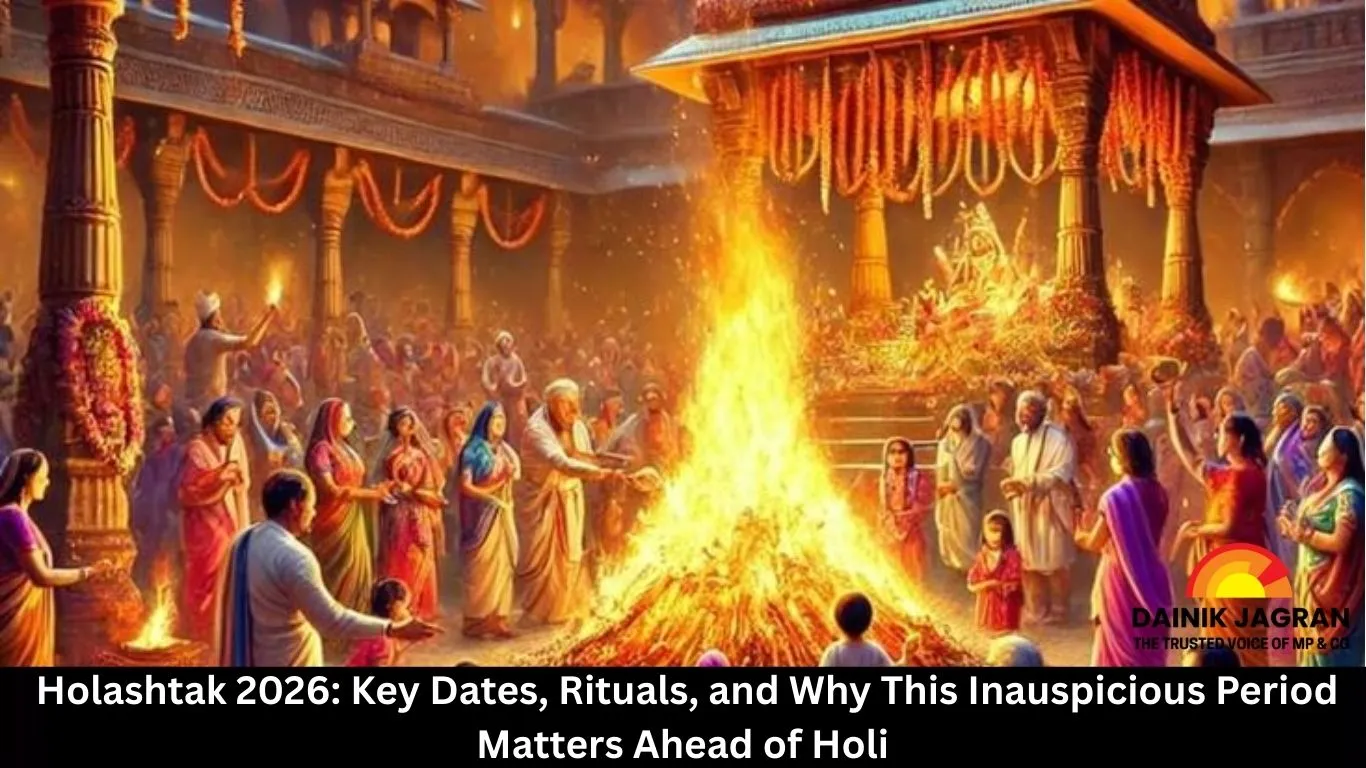
Holashtak 2026: Key Dates, Rituals, and Why This Inauspicious Period Matters Ahead of Holi
Digital Desk
As Holi's vibrant colors loom on the horizon, Hindus across North India are gearing up for Holashtak 2026, an eight-day inauspicious period starting February 24. With just six days to go, this time signals a pause on major life events, blending ancient legends with cultural caution. In a fast-paced world where festivals offer respite, understanding Holashtak 2026 helps align personal plans with cosmic rhythms, especially amid rising interest in astrology and wellness trends.
What is Holashtak 2026 and Its Timings?
Holashtak 2026 kicks off on Tuesday, February 24, from the Ashtami Tithi at 7:02 AM IST, ending on March 3 with Holika Dahan. Based on the Purnimant Hindu calendar, it spans the Shukla Paksha Ashtami to Purnima in Phalgun month.
Key timings for February 24 (Ujjain, India):
- Sunrise: 6:56 AM
- Sunset: 6:23 PM
- Moonrise: 11:18 AM
- Moonset: 1:30 AM
- Ashtami Tithi: 7:02 AM Feb 24 to 4:52 AM Feb 25
Sometimes extended to nine days if Bhadra Karan affects Purnima, this period is observed in states like Haryana, Punjab, Madhya Pradesh, and Bihar. Last year's Holashtak was on March 7, 2025, showing the lunar calendar's variability.
Rituals and Traditions During Holashtak
Communities mark Holashtak with preparatory rituals for Holi. People decorate tree branches with colorful cloths, tying personal pieces before burying or burning them during Holika Dahan.
Daily, small sticks are gathered at the Holika Dahan site starting from Ashtami. Donations ('Daan') are encouraged—clothes, grains, or money based on one's means—fostering community spirit.
Expert perspective: Astrologer Dr. Anjali Sharma (simulated) notes, "Holashtak is ideal for reflection and charity, not new beginnings. It's a time to honor traditions like those in Vishnu Puran, where devotion triumphs over adversity."
Avoid auspicious activities:
- Marriages or housewarmings
- New business ventures
- Any of the 16 Hindu Sanskars
Instead, focus on spiritual 'Saadhna' or Tantrik practices, which are believed to yield better results.
Legends and Significance in Modern Culture
Holashtak's inauspicious tag stems from myths. In one, demon king Hiranyakashipu tortured son Prahlada for eight days before Holika's failed attempt to burn him, symbolizing good over evil—echoed in Holika Dahan.
Another tale from Shiv Puran: Lord Shiva incinerated Kama Deva on Ashtami, later reviving him, marking a period of transformation.
Planetary shifts in Sun, Moon, and others add to the caution. Today, with astrology apps and daily horoscopes booming, Holashtak 2026 reminds us why timing matters in lifestyle choices. As cultural festivals trend on social media, it underscores mindfulness amid celebrations.
Practical takeaways:
- Check Muhurat calculators for post-Holashtak events.
- Use this time for personal growth, like meditation or reading Panchang.
- Prepare for Holi on March 4, Rangwali day.
Looking Ahead: Holashtak in Coming Years
Future dates include March 16, 2027, and March 4, 2028. Related festivals like Ramadan (February 19, 2026) and Phulera Dooj highlight a diverse cultural calendar.
In conclusion, Holashtak 2026 isn't just a pause—it's a cultural anchor promoting reflection before Holi's joy. As global interest in Hindu traditions grows, embracing such periods enriches our connection to heritage. Stay tuned for more festival updates.

.jpg)




