


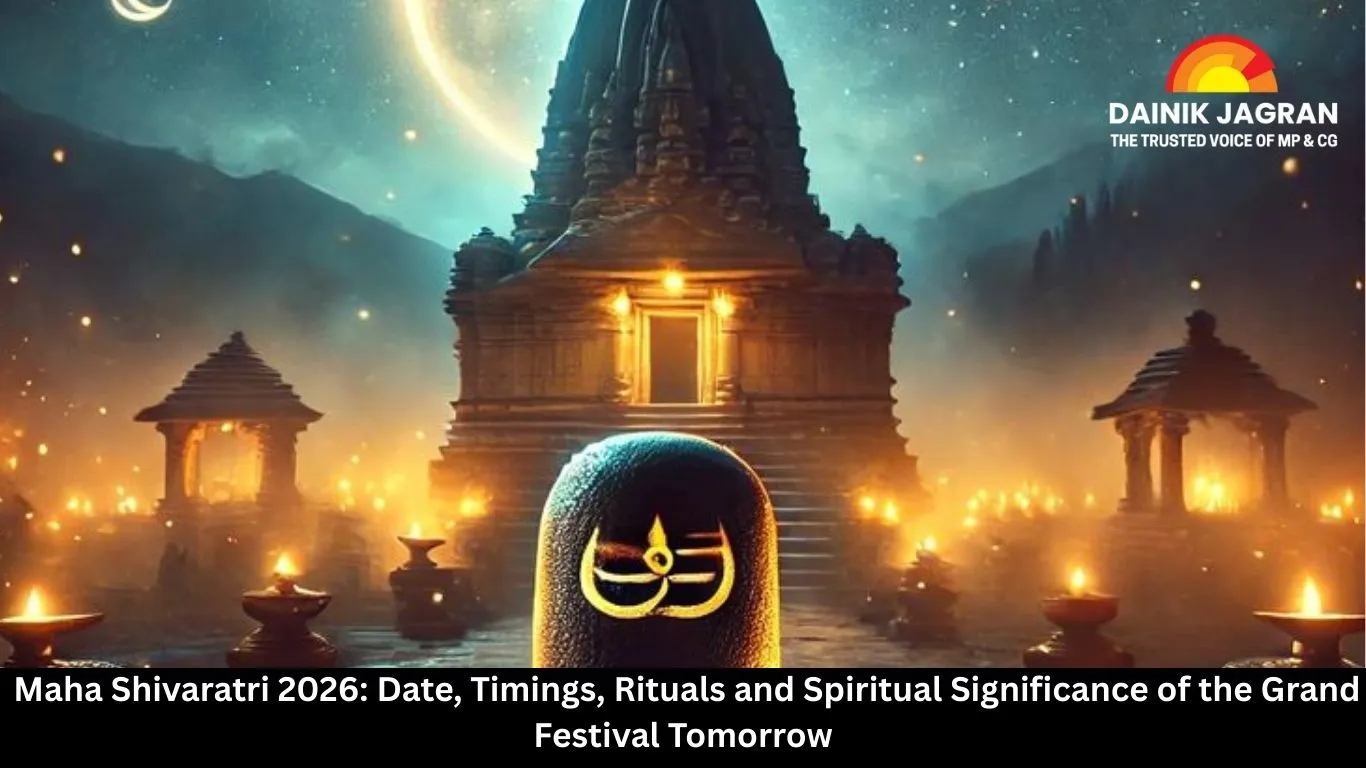
Maha Shivaratri 2026: Date, Timings, Rituals and Spiritual Significance of the Grand Festival Tomorrow
Digital Desk
Maha Shivaratri 2026: Tomorrow is the Great Night of Lord Shiva
Millions of devotees across India and the world are preparing to celebrate Maha Shivaratri 2026 tomorrow, on Sunday, February 15. Considered the most auspicious night in the Hindu calendar, this festival honors Lord Shiva, the destroyer of evil and the embodiment of cosmic consciousness. As the Chaturdashi Tithi begins tomorrow evening, devotees will observe fasting, night-long vigils, and special pujas to seek the blessings of Mahadev.
This year's Maha Shivaratri holds special significance as it falls on a Sunday, allowing families and communities to participate in the sacred observances with full devotion. The festival arrives just one year after Maha Shivaratri 2025, which was celebrated on February 26.
Exact Maha Shivaratri 2026 Timings: When to Perform Puja
For devotees planning to observe the fast and rituals, knowing the precise timings is essential. Based on the Phalgun Krishna Paksha Chaturdashi tithi, here are the critical timings for Maha Shivaratri 2026 (all timings in IST for Ujjain, India):
- Chaturdashi Tithi Start: February 15, 2026 – 05:05 PM
- Chaturdashi Tithi End: February 16, 2026 – 05:34 PM
- Maha Shivaratri Parana Time: February 16 – 07:02 AM to 05:34 PM
- Nishita Kaal Puja Time: February 16 – 12:15 AM to 01:06 AM
- Sunrise on Shivaratri: February 15 – 07:03 AM
- Sunset on Shivaratri: February 15 – 06:18 PM
- Moonrise: February 15 – 05:29 AM
- Moonset: February 15 – 04:25 PM
The Four Prahar Puja Timings
The night of Maha Shivaratri is divided into four Prahar (periods), each with its own significance. Devotees perform special worship during each Prahar:
| Prahar | Time Duration |
| First Prahar | February 15, 06:18 PM – 09:29 PM |
| Second Prahar | February 15, 09:29 PM – February 16, 12:40 AM |
| Third Prahar | February 16, 12:40 AM – 03:51 AM |
| Fourth Prahar | February 16, 03:51 AM – 07:02 AM |
Why Maha Shivaratri Matters: The Spiritual Significance
The spiritual significance of Maha Shivaratri transcends mere ritual observance. According to ancient Hindu scriptures, this sacred night marks several momentous events:
The Neelkanth Legend: During the Samudra Manthan (churning of the cosmic ocean), a pot of deadly poison emerged. Lord Shiva consumed the poison to protect the universe, holding it in his throat with the help of a snake. His throat turned blue, earning him the name Neelkanth. Maha Shivaratri commemorates this act of cosmic preservation.
Divine Reunion: This day is also celebrated as the reunion of Lord Shiva and Goddess Parvati. After Goddess Sati's self-immolation, she was reborn as Parvati and through intense penance, reunited with Shiva. Married women observe fast on this day to pray for their husbands' long life and marital harmony.
Jyotirlinga Manifestation: Maha Shivaratri marks the appearance of Lord Shiva's divine manifestation as the Jyotirlinga—a formless, infinite pillar of light representing his transcendental nature.
Maha Shivaratri 2026 Rituals: How Devotees Will Observe the Sacred Day
Fasting and Dietary Observances
Devotees observing the Shivaratri vrat will maintain a day-long fast, consuming only fruits, milk, and sattvik (pure) foods. Some observe a nirjala (waterless) fast, while others consume light meals once during the day. The fast is broken the next morning during the Parana time after performing the final rituals.
The Four-Prahar Puja
Temples and homes will witness elaborate worship throughout the night. During each Prahar, devotees perform:
- Rudrabhishekam: The ceremonial bathing of the Shiva Lingam with milk, water, honey, curd, ghee, and sugar
- Offering of Bel Patra: Bilva leaves, considered extremely sacred to Lord Shiva, are offered with devotion
- Chanting: The powerful mantra "Om Namah Shivaya" is recited throughout the night
- Meditation: Devotees stay awake, meditating on the formless aspect of Lord Shiva
Temple Celebrations Across India
Different states have unique traditions for celebrating Maha Shivaratri 2026:
Andhra Pradesh: At the Kalahasteswara Temple, night-long abhishekam and special bhajans will be organized.
Assam: The Umananda Temple on Peacock Island will offer extended darshan hours for devotees.
Madhya Pradesh: At the Matangeshwar Temple in Khajuraho, sacred ritual bathing of the Shiva Lingam will be followed by grand evening puja ceremonies.
West Bengal: Tarakeshwar Temple will host special evening aarti and Maha Shivaratri observances.
Kashmir: Kashmiri Pandits will perform traditional Hayrath/Vatuk Puja at home, accompanied by customary gift exchanges among family members.
Rajasthan: The magnificent Statue of Belief (Vishwas Swaroopam) in Nathdwara—the world's tallest Lord Shiva statue at 369 feet—will attract thousands of devotees for special darshan.
Maha Shivaratri Festival Dates: 2020-2030
For planning purposes, here are the Maha Shivaratri dates for the coming years:
| Year | Date |
| 2020 | Friday, February 21 |
| 2021 | Thursday, March 11 |
| 2022 | Tuesday, March 1 |
| 2023 | Saturday, February 18 |
| 2024 | Friday, March 8 |
| 2025 | Wednesday, February 26 |
| 2026 | Sunday, February 15 |
| 2027 | Saturday, March 6 |
| 2028 | Wednesday, February 23 |
| 2029 | Sunday, February 11 |
| 2030 | Saturday, March 2 |
How to Observe Maha Shivaratri 2026 at Home
For those unable to visit temples, here are practical ways to observe the festival at home:
1. Take a ritual bath before sunrise and wear clean, preferably traditional clothes
2. Set up a clean puja space with an image or idol of Lord Shiva
3. Observe the fast according to your capacity—fruits and milk are acceptable
4. Perform abhishekam at each Prahar if possible, or at least once during Nishita Kaal
5. Chant "Om Namah Shivaya" or read the Shiv Chalisa
6. Stay awake through the night, meditating or listening to devotional music
7. Join online temple streams—many major temples broadcast their pujas live
The Deeper Message of Maha Shivaratri
Beyond the rituals, Maha Shivaratri carries a profound spiritual message. The darkness of the night symbolizes the ignorance that shrouds human consciousness. By staying awake and vigilant, devotees symbolically overcome the darkness of ignorance and awaken to the light of knowledge.
Lord Shiva represents the destroyer not just of external evil, but of internal demons—ego, desire, anger, and attachment. The festival reminds us that true devotion leads to inner transformation and the realization of our divine nature.
As the Maha Shivaratri 2026 celebrations begin tomorrow evening, millions will unite in prayer, meditation, and devotion, seeking the blessings of the Adiyogi—the first yogi—for peace, prosperity, and spiritual awakening.
Har Har Mahadev!
.jpg)




