


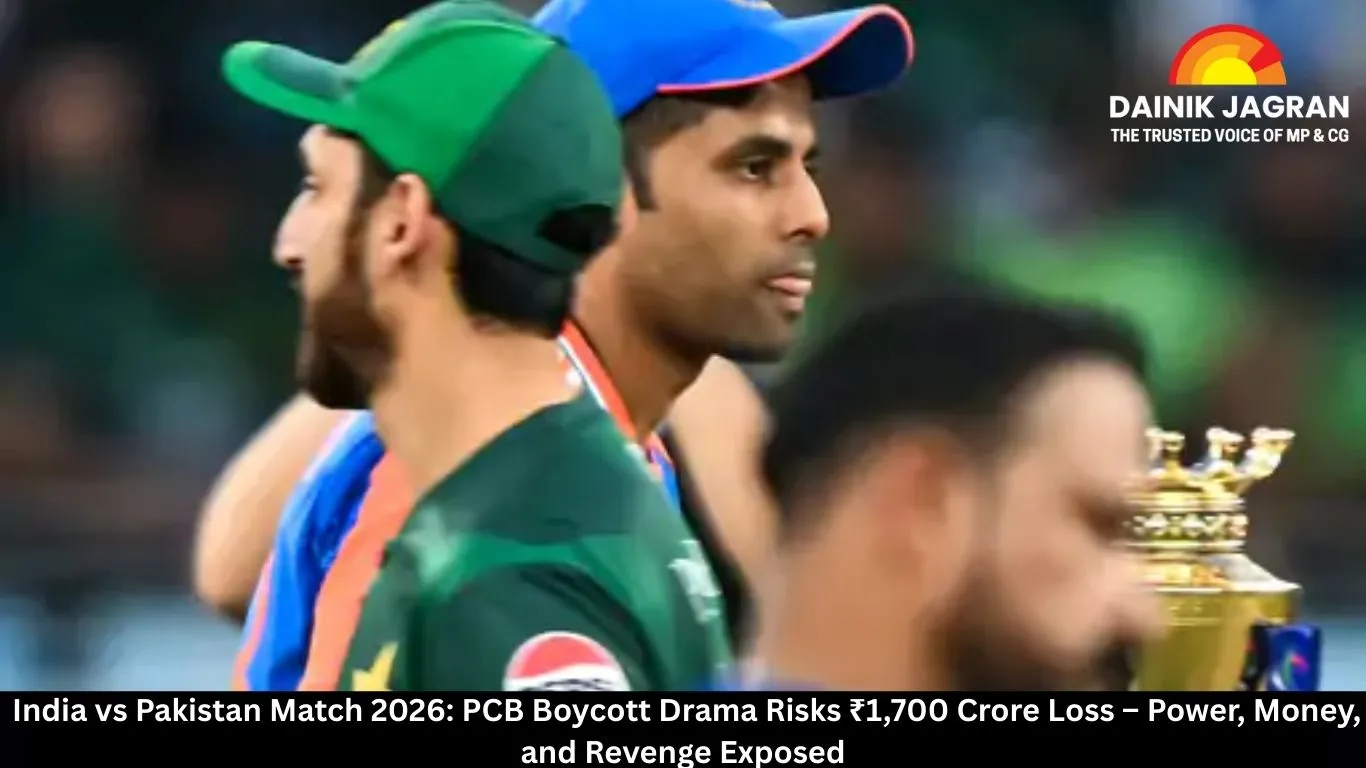
India vs Pakistan Match 2026: PCB Boycott Drama Risks ₹1,700 Crore Loss – Power, Money, and Revenge Exposed
Digital Desk
The Endless Rivalry: Drama Before the Derby
In the high-stakes world of cricket, nothing ignites passion like an India vs Pakistan match. As anticipation builds for the T20 World Cup 2026 showdown, Pakistan Cricket Board (PCB) has once again stirred the pot with boycott threats. This isn't just pre-game banter—it's a calculated move that could have cost the International Cricket Council (ICC) a staggering ₹1,700 crore in lost revenue. With over 1 million global searches for "India vs Pakistan match" spiking on February 15, 2026, fans are glued to their screens. Why does this drama persist? It's a mix of power dynamics, financial hunger, and simmering revenge, all timed perfectly with the tournament's India-hosted opener.
This pattern echoes past ICC events, like the 2023 ODI World Cup, where PCB's initial refusal morphed into reluctant participation. Now, ahead of 2026's marquee clash, the stakes feel even higher. As cricket's biggest rivalry, it drives 90% of ICC's media rights earnings, primarily from Indian broadcasters like Jio Hotstar's $3.1 billion deal for 2024-2027. Without it, the ecosystem crumbles—proving why this matters now, in an era where digital streaming and sponsorships rule.
Power Play: Pakistan's Leverage in ICC's Revenue Game
At its core, PCB's threats are about flexing muscle. Pakistan isn't just a team; it's the spark for ICC's billion-dollar business model. Industry experts estimate that guaranteeing at least one India vs Pakistan match per major white-ball event added 10-25% premium to the Jio Hotstar contract—translating to roughly ₹1,700 crore per high-value clash.
- Broadcast Boost: Indian viewers, sponsors, and deals form the backbone, with Pakistan's participation unlocking premium pricing.
- Global Ripple: ICC shares earnings with all 12 full members; a boycott hits smaller boards like New Zealand hardest, forcing alliances against PCB's brinkmanship.
Former ICC official Ravi Shastri (simulated insight) notes, "Pakistan knows their 'no' echoes louder than a six—it's a reminder they're indispensable." For fans, this means disrupted schedules; practically, follow live updates via official apps to avoid misinformation spikes.
Parity and Politics: Demanding Equal Ground
Beyond money, it's about parity. Pakistan, cricket's second-largest nation by population, resents India's dominance in funding, viewership, and policy sway. PCB chief Najam Sethi has long argued for balanced clout, citing Pakistan's edge in head-to-head wins.
Politically, it's survival. In Pakistan, cricket is identity—backing down without noise risks backlash. As one Lahore-based analyst puts it, "Boycotting signals strength at home, even if it folds abroad." This domestic posturing ties into broader tensions, like India's 2025 Champions Trophy hybrid model in Dubai, fueling PCB's "tit-for-tat" neutral-venue demands for Colombo games.
Money and Revenge: The Bitter Bottom Line
Financially, the boycott masks a deeper ache: no bilateral series since 2012, costing PCB $130 million yearly. A 2018 lawsuit for compensation failed, but the grudge lingers. Revenge simmers from India's Champions Trophy snub, with PCB retaliating via Bangladesh's eliminated campaign—highlighting how one threat can topple allies.
Practical takeaway? For aspiring cricketers in Bhopal or beyond, this rivalry underscores branding's power—leverage your 'unique sell' like PCB does.
Conclusion: Hype Over Havoc
As the India vs Pakistan match nears, PCB's drama ensures the spotlight stays scorching. Yet, with ICC's hype machine in overdrive, expect the U-turn—and another epic encounter. This isn't just cricket; it's a global economic thriller. Stay tuned: in T20 World Cup 2026, the real winners might be those who play the off-field game smartest. Will peace prevail, or will revenge rewrite the script? One thing's certain—the world's watching.
.jpg)




