Ashadha Gupt Navratri 2026: Navami Observed Today, Know the Rituals for Worshipping Goddess Durga and Kanya Pujan

Digital Desk

Ashadha Gupt Navratri 2026: Navami Observed Today, Know the Rituals for Worshipping Goddess Durga and Kanya Pujan

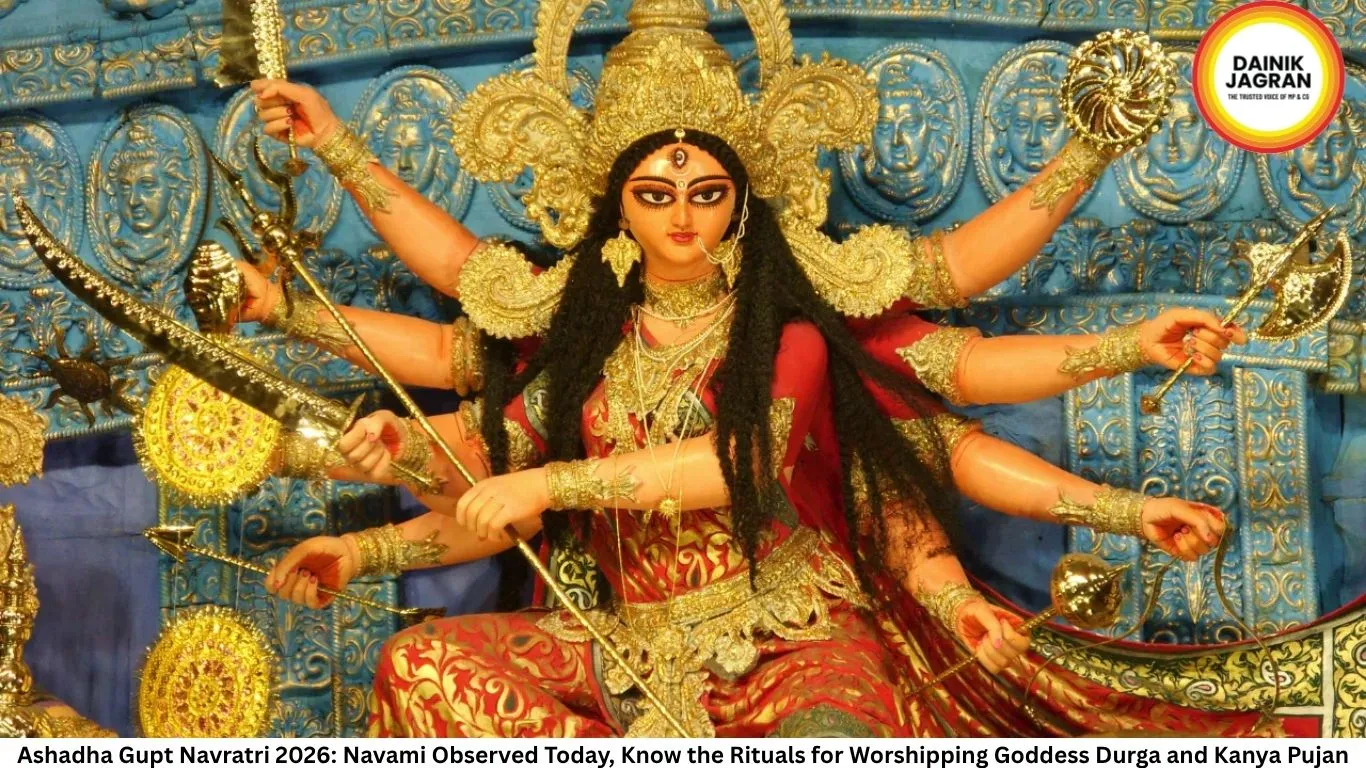
The Navami Tithi of Ashadha Gupt Navratri 2026 is being observed today. Devotees perform special worship of Goddess Durga, conduct havan, and offer prayers to young girls through Kanya Pujan, a ritual believed to invoke the blessings of the Divine Mother.

The Navami Tithi of Ashadha Gupt Navratri 2026 is being observed today, marking the concluding day of the nine-day festival dedicated to the Divine Mother. According to the Drik Panchang, this day holds special significance for devotees who have observed the Gupt Navratri fast and spiritual practices.

Unlike the widely celebrated Chaitra and Shardiya Navratri, Ashadha Gupt Navratri is associated with the worship of the Ten Mahavidyas—the ten powerful manifestations of Goddess Shakti. While the festival is known for its esoteric and spiritual practices, the Navami Tithi is also considered highly auspicious for performing Durga Puja, Havan, and Kanya Pujan.

Religious traditions hold that sincere worship on this day can bring peace, prosperity, spiritual growth, and the blessings of Goddess Durga.

Significance of Ashadha Gupt Navratri Navami

Gupt Navratri is observed primarily by spiritual seekers and devotees who perform dedicated worship and meditation in a private and disciplined manner. The word "Gupt," meaning "hidden" or "secret," reflects the belief that spiritual practices undertaken discreetly during these nine days are especially powerful.

While many devotees focus on the worship of the Ten Mahavidyas throughout the festival, the Navami Tithi is traditionally dedicated to Goddess Durga. It is also the day when Kanya Pujan—the ceremonial worship of young girls as embodiments of the Divine Mother—is performed.

According to Hindu beliefs, honoring young girls on this day symbolizes reverence for feminine divinity and is believed to attract the blessings of Goddess Durga.

Durga Puja Rituals on Navami

Devotees are advised to begin the day early by taking a bath and wearing clean clothes before commencing the rituals.

The worship generally begins with the preparation of a Havan (sacred fire ritual), during which offerings are made while chanting sacred mantras dedicated to Goddess Durga. After the havan, devotees perform a traditional puja by offering flowers, incense, lamps, fruits, sweets, and other sacred offerings.

Reciting Durga mantras, offering bhog to the Goddess, and concluding the worship with the Durga Aarti are considered important parts of the Navami observance.

How to Perform Kanya Pujan

Kanya Pujan is regarded as one of the most significant rituals performed on the final day of Gupt Navratri.

According to traditional customs, devotees invite nine young girls, usually between the ages of 2 and 10 years, along with one young boy, who symbolically represents Bhairav, a divine guardian associated with Goddess Durga.

The ritual includes washing the feet of the children as a gesture of respect before seating them on clean mats or chairs. Their foreheads are marked with roli (vermilion) and akshat (rice grains), and a sacred thread (mauli) is tied around their wrists.

If available, a decorative chunari may be offered to the girls as a mark of devotion. The children are then served a traditional meal consisting of puri, black chickpeas (chana), halwa, kheer, vegetables, fruits, or other festive dishes.

After the meal, devotees present them with gifts or dakshina (offerings) and seek their blessings before concluding the ritual.

Spiritual Importance of the Ritual

In Hindu tradition, young girls are believed to represent the pure and divine energy of Goddess Durga. Worshipping them during Navami symbolizes respect for feminine power, purity, and compassion.

The rituals performed on this day are believed to help devotees seek divine grace, inner strength, and prosperity. Many also consider Navami an ideal occasion to conclude fasting and complete any spiritual observances undertaken during Gupt Navratri.

A Traditional Belief

The customs associated with Gupt Navratri are rooted in Hindu religious traditions and scriptures. While many devotees observe these rituals with deep faith, practices and beliefs may vary across regions and family traditions.

--------

🚨 Beat the News Rush – Join Now!

Get breaking alerts, hot exclusives, and game-changing stories instantly on your phone. No delays, no fluff – just the edge you need. ⚡

Tap to join: 

🟢 WhatsApp Channel: Dainik Jagran MP CG

Crave more?

🅕 Facebook: Dainik Jagran MP CG English

🅧 Twitter (X): Dainik Jagran MP CG

🅘 Instagram: Dainik Jagran MP CG

Share the fire – keep your crew ahead! 🗞️🔥

english.dainikjagranmpcg.com
23 Jul 2026 By Rishita

Ashadha Gupt Navratri 2026: Navami Observed Today, Know the Rituals for Worshipping Goddess Durga and Kanya Pujan

Digital Desk

The Navami Tithi of Ashadha Gupt Navratri 2026 is being observed today, marking the concluding day of the nine-day festival dedicated to the Divine Mother. According to the Drik Panchang, this day holds special significance for devotees who have observed the Gupt Navratri fast and spiritual practices.

Unlike the widely celebrated Chaitra and Shardiya Navratri, Ashadha Gupt Navratri is associated with the worship of the Ten Mahavidyas—the ten powerful manifestations of Goddess Shakti. While the festival is known for its esoteric and spiritual practices, the Navami Tithi is also considered highly auspicious for performing Durga Puja, Havan, and Kanya Pujan.

Religious traditions hold that sincere worship on this day can bring peace, prosperity, spiritual growth, and the blessings of Goddess Durga.

Significance of Ashadha Gupt Navratri Navami

Gupt Navratri is observed primarily by spiritual seekers and devotees who perform dedicated worship and meditation in a private and disciplined manner. The word "Gupt," meaning "hidden" or "secret," reflects the belief that spiritual practices undertaken discreetly during these nine days are especially powerful.

While many devotees focus on the worship of the Ten Mahavidyas throughout the festival, the Navami Tithi is traditionally dedicated to Goddess Durga. It is also the day when Kanya Pujan—the ceremonial worship of young girls as embodiments of the Divine Mother—is performed.

According to Hindu beliefs, honoring young girls on this day symbolizes reverence for feminine divinity and is believed to attract the blessings of Goddess Durga.

Durga Puja Rituals on Navami

Devotees are advised to begin the day early by taking a bath and wearing clean clothes before commencing the rituals.

The worship generally begins with the preparation of a Havan (sacred fire ritual), during which offerings are made while chanting sacred mantras dedicated to Goddess Durga. After the havan, devotees perform a traditional puja by offering flowers, incense, lamps, fruits, sweets, and other sacred offerings.

Reciting Durga mantras, offering bhog to the Goddess, and concluding the worship with the Durga Aarti are considered important parts of the Navami observance.

How to Perform Kanya Pujan

Kanya Pujan is regarded as one of the most significant rituals performed on the final day of Gupt Navratri.

According to traditional customs, devotees invite nine young girls, usually between the ages of 2 and 10 years, along with one young boy, who symbolically represents Bhairav, a divine guardian associated with Goddess Durga.

The ritual includes washing the feet of the children as a gesture of respect before seating them on clean mats or chairs. Their foreheads are marked with roli (vermilion) and akshat (rice grains), and a sacred thread (mauli) is tied around their wrists.

If available, a decorative chunari may be offered to the girls as a mark of devotion. The children are then served a traditional meal consisting of puri, black chickpeas (chana), halwa, kheer, vegetables, fruits, or other festive dishes.

After the meal, devotees present them with gifts or dakshina (offerings) and seek their blessings before concluding the ritual.

Spiritual Importance of the Ritual

In Hindu tradition, young girls are believed to represent the pure and divine energy of Goddess Durga. Worshipping them during Navami symbolizes respect for feminine power, purity, and compassion.

The rituals performed on this day are believed to help devotees seek divine grace, inner strength, and prosperity. Many also consider Navami an ideal occasion to conclude fasting and complete any spiritual observances undertaken during Gupt Navratri.

A Traditional Belief

The customs associated with Gupt Navratri are rooted in Hindu religious traditions and scriptures. While many devotees observe these rituals with deep faith, practices and beliefs may vary across regions and family traditions.

https://english.dainikjagranmpcg.com/religion/ashadha-gupt-navratri-2026-navami-observed-today-know-the-rituals/article-23216

Trending News