


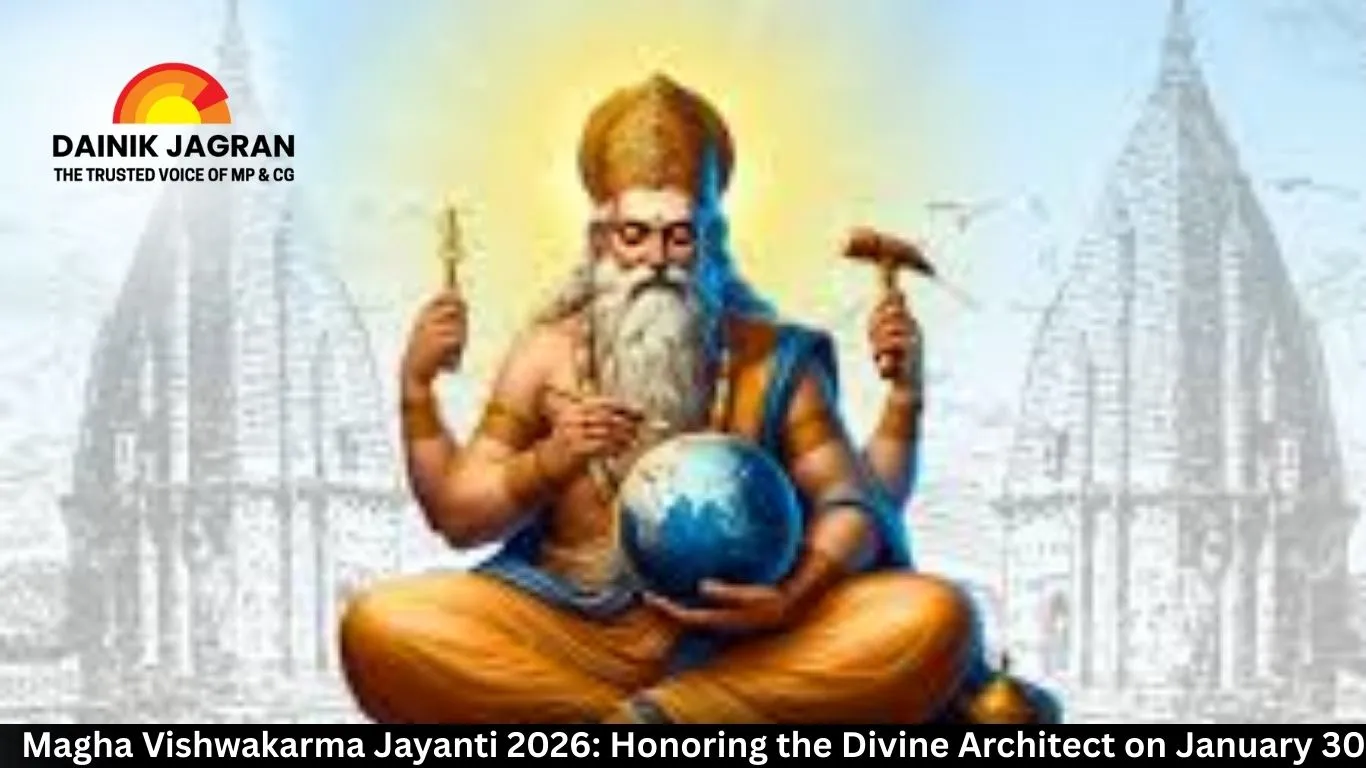
Magha Vishwakarma Jayanti 2026: Honoring the Divine Architect on January 30
Digital Desk
On Friday, January 30, 2026, a significant yet distinct observance for millions of artisans, craftspeople, and engineers will take place: Magha Vishwakarma Jayanti. This festival, dedicated to Lord Vishwakarma—the divine architect of the universe—follows the lunar calendar, setting it apart from the more widely recognized solar observance later in the year.
This Magha lunar celebration emphasizes personal devotion, familial traditions, and the sanctification of one's tools and creative spirit at home and in small workshops.
The Lunar Date: Magha Trayodashi
The date is precisely determined by the Hindu lunisolar calendar:
· Month: Magha (one of the holiest months in the Hindu calendar).
· Tithi (Lunar Day): Trayodashi (the 13th day of the waxing or waning moon phase).
· Reason for Observance: This Trayodashi in the Magha month is specifically earmarked in various regional Panchangams (Hindu almanacs) for the worship of Vishwakarma, focusing on invoking blessings for skill, safety, and success in one's vocation.
Two Festivals, One Deity: Lunar vs. Solar Observance
It is crucial to understand that Vishwakarma is honored on two major dates, each with its own character:
Aspect Magha Vishwakarma Jayanti (Lunar) Vishwakarma Puja (Solar - Kanya Sankranti)
2026 Date January 30, 2026 September 17, 2026
Primary Basis Tithi (Lunar day) in Magha month Sun's transit into Virgo (Kanya)
Scale of Celebration Often domestic, personal, and community-focused Large-scale public and industrial holiday
Common Regions Observed by families and communities following lunar calendars Prominently celebrated in factories across E. & N. India
Think of it this way: The January observance (Magha) is like a deep, personal prayer for your craft, while the September observance (Kanya Sankranti) is a large community festival celebrating industry as a whole.
Rituals and Observances on Magha Vishwakarma Jayanti
The core of the day is the "Shilpa Puja" or the worship of craft. The rituals are intimate and focused on the tools of one's trade:
1. Purification and Decoration: The day begins with cleaning the home, workspace, and tools. These tools—whether a hammer, loom, computer, or cooking utensil—are then washed, smeared with sandalwood paste, and adorned with flowers and garlands.
2. The Tool Puja: The central ritual involves offering prayers, lighting a diya (lamp), burning incense, and applying a tilak (vermilion mark) to the tools. Devotees seek blessings for the tools to function flawlessly and for themselves to work with wisdom and safety.
3. Prayers and Prasad: Special hymns and stotras dedicated to Lord Vishwakarma are chanted. The session concludes with the distribution of prasad, often including fruits and traditional sweets, among family and neighbors.
The Enduring Relevance of the Divine Craftsman
In today's world, the message of Magha Vishwakarma Jayanti is profoundly relevant. Lord Vishwakarma symbolizes:
· Innovation and Design: He is the original engineer, reminding us that thoughtful design and skilled execution are divine acts.
· Dignity of All Professions: The festival honors every form of work, from traditional carpentry and welding to modern software engineering and design.
· Mindful Work: By worshiping our tools, we cultivate gratitude, responsibility, and a mindful approach to our daily work, transforming it into a form of worship.
Celebrating on Magha Trayodashi, January 30, 2026, offers a moment of quiet reflection at the start of the year to bless our hands, our minds, and the instruments we use to build our lives and society.


.jpg)




