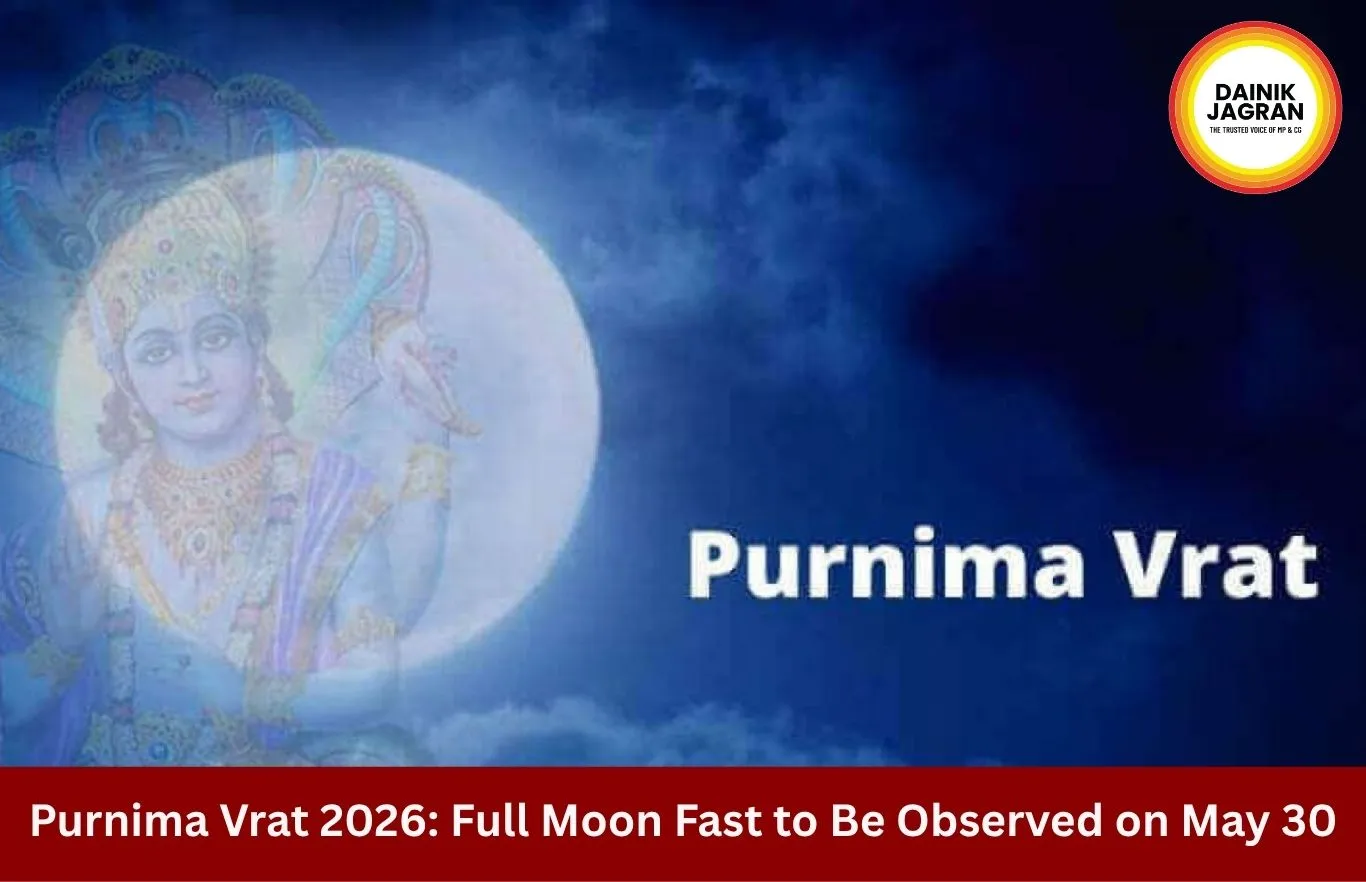
Purnima Vrat 2026: Sacred Full Moon Fast to Be Observed on May 30, Know Timings, Significance and Rituals
Religion Desk
Purnima Vrat or Pournami Vratam falls on the full moon day of Shukla Paksha and is dedicated to devotion, fasting, and spiritual purification with special prayers to Lord Vishnu and Lord Shiva.
Purnima Vrat, also known as Pournami Vratam, is one of the most significant fasting observances in the Hindu lunar calendar, marked on the full moon day or “Purnima” of the Shukla Paksha. In 2026, the Purnima Vrat in the month of May will be observed on May 30, Saturday, drawing devotees across India and other parts of the world to engage in fasting, prayer, and spiritual reflection.
According to the Hindu calendar system, Purnima is the final day of the bright half of the lunar month, when the moon appears in its fullest and brightest form. This day holds immense religious importance as it is believed that divine energies are at their peak, making it highly auspicious for worship, charity, and spiritual practices.
Purnima Vrat 2026 Timings
For May 2026, the Purnima Tithi begins at 11:58 AM on May 30 and continues until 2:15 PM on May 31. Based on traditional observance practices, devotees may begin their fast either on the morning of Purnima or, in some cases, from the previous day’s Chaturdashi tithi depending on the timing of the lunar cycle. Devotees typically conclude their fast after sighting the full moon and performing evening prayers.
Religious Significance of Purnima Vrat
Purnima Vrat holds a special place in Hindu tradition as it is associated with prosperity, peace, and spiritual upliftment. It is believed that observing this vrat with devotion helps purify the mind and body while bringing good fortune and happiness into one’s life. On this day, devotees primarily worship Lord Vishnu and Lord Shiva. In many households, Satyanarayan Puja is performed, which is considered one of the most sacred rituals dedicated to Lord Vishnu. Devotees believe that performing this puja on Purnima amplifies its benefits and brings divine blessings for health, wealth, and harmony. The day is also considered ideal for charity and helping the needy. Offering food, clothes, and donations to Brahmins and the underprivileged is believed to bring spiritual merit and reduce negative karma.
Health and Spiritual Benefits
Beyond its religious importance, Purnima Vrat is also associated with physical and mental well-being. According to traditional beliefs, the full moon has a strong influence on the human body and mind due to its gravitational pull. It is said to enhance emotional balance and mental clarity. Fasting on this day is believed to detoxify the body and improve digestive health. Many followers also believe that observing the vrat helps in stabilizing metabolism and reducing stress levels, thereby promoting overall wellness.
Rituals and Method of Observance
The observance of Purnima Vrat begins early in the morning with a ritual bath, symbolizing purification of the body and soul. Devotees maintain a fast throughout the day, which may range from strict abstinence from food and water to partial fasting depending on personal capacity and tradition. In many households, devotees refrain from consuming salt, grains, or pulses during the fast. Instead, they consume fruits and milk-based foods.
As evening approaches and the moon rises, devotees perform special prayers to their chosen deity. Lord Vishnu and Lord Shiva are commonly worshipped, along with recitation of sacred mantras and scriptures. One of the most important rituals performed on this day is the Satyanarayan Puja. During this ceremony, devotees prepare offerings such as fruits, sweets, and flowers. A sacred lamp is lit, and prayers are offered with complete devotion. After the puja, devotees break their fast by consuming prasad, which is considered blessed food offered to the deity.
Cultural Importance Across India
Purnima Vrat is observed widely across different regions of India, though customs may vary. In North India, Satyanarayan Katha is commonly narrated in homes, while in South India, special Vishnu temples see large gatherings of devotees performing prayers. In some regions, devotees also perform meditation and night-long vigils, chanting hymns and devotional songs in praise of the divine.
Purnima Vrat on May 30, 2026, offers devotees an opportunity to reconnect with spirituality, practice self-discipline, and seek divine blessings. Whether observed strictly or in a simplified form, the essence of the vrat lies in devotion, purity of intention, and gratitude. As the full moon lights up the sky, devotees across the country will once again come together in faith, marking a day of peace, reflection, and spiritual awakening.

--------
🚨 Beat the News Rush – Join Now!
Get breaking alerts, hot exclusives, and game-changing stories instantly on your phone. No delays, no fluff – just the edge you need. ⚡
Tap to join:
🟢 WhatsApp Channel: Dainik Jagran MP CG
Crave more?
🅕 Facebook: Dainik Jagran MP CG English
🅧 Twitter (X): Dainik Jagran MP CG
🅘 Instagram: Dainik Jagran MP CG
Share the fire – keep your crew ahead! 🗞️🔥
Purnima Vrat 2026: Sacred Full Moon Fast to Be Observed on May 30, Know Timings, Significance and Rituals
Religion Desk
Purnima Vrat, also known as Pournami Vratam, is one of the most significant fasting observances in the Hindu lunar calendar, marked on the full moon day or “Purnima” of the Shukla Paksha. In 2026, the Purnima Vrat in the month of May will be observed on May 30, Saturday, drawing devotees across India and other parts of the world to engage in fasting, prayer, and spiritual reflection.
According to the Hindu calendar system, Purnima is the final day of the bright half of the lunar month, when the moon appears in its fullest and brightest form. This day holds immense religious importance as it is believed that divine energies are at their peak, making it highly auspicious for worship, charity, and spiritual practices.
Purnima Vrat 2026 Timings
For May 2026, the Purnima Tithi begins at 11:58 AM on May 30 and continues until 2:15 PM on May 31. Based on traditional observance practices, devotees may begin their fast either on the morning of Purnima or, in some cases, from the previous day’s Chaturdashi tithi depending on the timing of the lunar cycle. Devotees typically conclude their fast after sighting the full moon and performing evening prayers.
Religious Significance of Purnima Vrat
Purnima Vrat holds a special place in Hindu tradition as it is associated with prosperity, peace, and spiritual upliftment. It is believed that observing this vrat with devotion helps purify the mind and body while bringing good fortune and happiness into one’s life. On this day, devotees primarily worship Lord Vishnu and Lord Shiva. In many households, Satyanarayan Puja is performed, which is considered one of the most sacred rituals dedicated to Lord Vishnu. Devotees believe that performing this puja on Purnima amplifies its benefits and brings divine blessings for health, wealth, and harmony. The day is also considered ideal for charity and helping the needy. Offering food, clothes, and donations to Brahmins and the underprivileged is believed to bring spiritual merit and reduce negative karma.
Health and Spiritual Benefits
Beyond its religious importance, Purnima Vrat is also associated with physical and mental well-being. According to traditional beliefs, the full moon has a strong influence on the human body and mind due to its gravitational pull. It is said to enhance emotional balance and mental clarity. Fasting on this day is believed to detoxify the body and improve digestive health. Many followers also believe that observing the vrat helps in stabilizing metabolism and reducing stress levels, thereby promoting overall wellness.
Rituals and Method of Observance
The observance of Purnima Vrat begins early in the morning with a ritual bath, symbolizing purification of the body and soul. Devotees maintain a fast throughout the day, which may range from strict abstinence from food and water to partial fasting depending on personal capacity and tradition. In many households, devotees refrain from consuming salt, grains, or pulses during the fast. Instead, they consume fruits and milk-based foods.
As evening approaches and the moon rises, devotees perform special prayers to their chosen deity. Lord Vishnu and Lord Shiva are commonly worshipped, along with recitation of sacred mantras and scriptures. One of the most important rituals performed on this day is the Satyanarayan Puja. During this ceremony, devotees prepare offerings such as fruits, sweets, and flowers. A sacred lamp is lit, and prayers are offered with complete devotion. After the puja, devotees break their fast by consuming prasad, which is considered blessed food offered to the deity.
Cultural Importance Across India
Purnima Vrat is observed widely across different regions of India, though customs may vary. In North India, Satyanarayan Katha is commonly narrated in homes, while in South India, special Vishnu temples see large gatherings of devotees performing prayers. In some regions, devotees also perform meditation and night-long vigils, chanting hymns and devotional songs in praise of the divine.
Purnima Vrat on May 30, 2026, offers devotees an opportunity to reconnect with spirituality, practice self-discipline, and seek divine blessings. Whether observed strictly or in a simplified form, the essence of the vrat lies in devotion, purity of intention, and gratitude. As the full moon lights up the sky, devotees across the country will once again come together in faith, marking a day of peace, reflection, and spiritual awakening.