


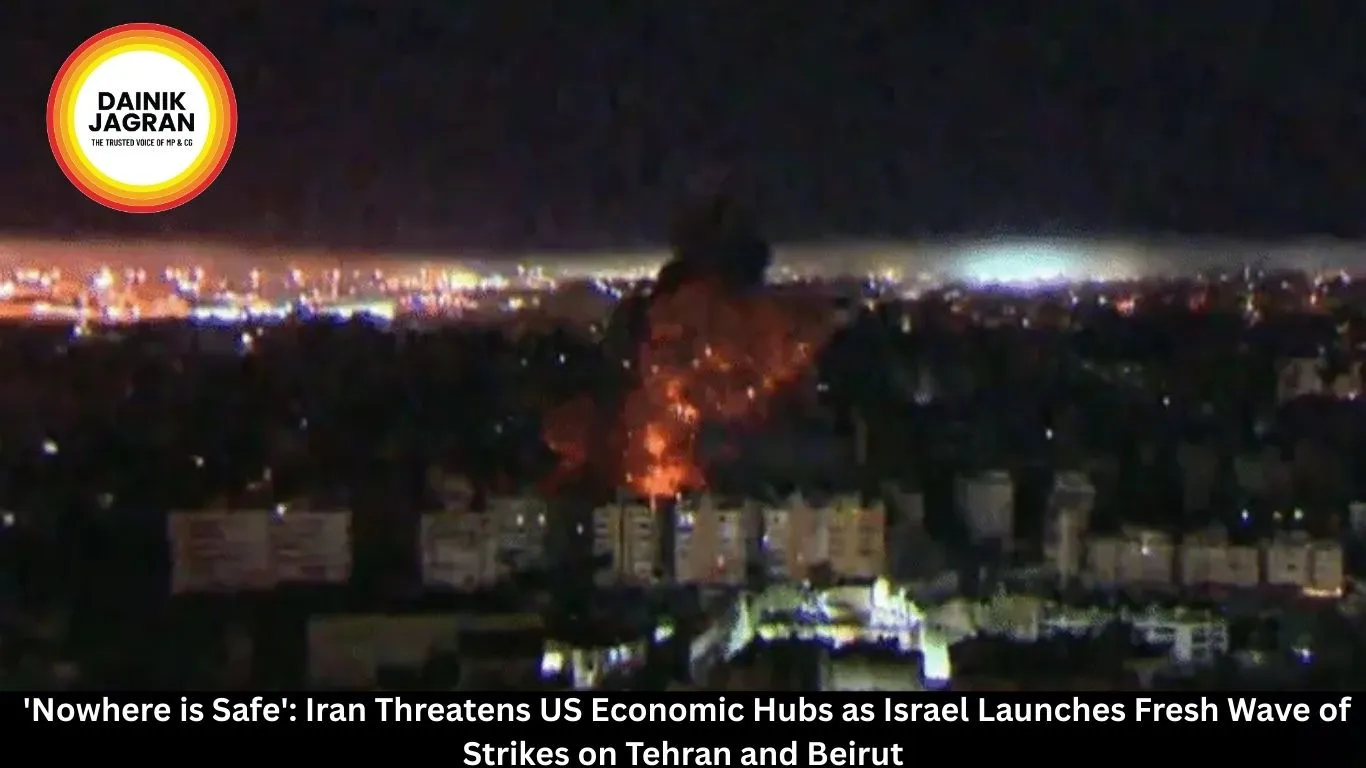
'Nowhere is Safe': Iran Threatens US Economic Hubs as Israel Launches Fresh Wave of Strikes on Tehran and Beirut
Digital Desk
The Middle East stands on the brink of a wider regional conflagration this morning as the Israel Iran war enters its 12th day with unprecedented escalation. Israeli Defense Forces launched waves of extensive strikes targeting infrastructure across Iran and pro-Iranian Hezbollah positions in Beirut overnight, while Tehran now threatens to hit US economic centers—including banks and tech company offices—across the Gulf region.
Iran's New Threat: Targeting American Economic Power
In a significant escalation, Iran's Khatam al-Anbiya military headquarters has warned that US and Israeli "economic centres and banks in the region" are now in its crosshairs. The warning comes after what Tehran describes as a US-Israeli attack on a bank in the Iranian capital.
"The enemy left our hands open to targeting economic centres and banks belonging to the United States and the Zionist regime in the region," a spokesperson declared, dramatically advising civilians across the Middle East to "stay at least a kilometer away from banks."
Iranian media reports suggest potential targets could include offices and data centers of American tech giants Google, Amazon, Microsoft, Nvidia, IBM, and Oracle operating in Israel, Dubai, and Abu Dhabi.
Israel's Overnight Campaign
The Israeli military confirmed it carried out simultaneous strikes at multiple locations in Tehran and Tabriz. Targets included a special unit command center in Tabriz, the "Imam Hassan" security unit military compound in Tehran, and command centers linked to ballistic missile operations.
Beirut also came under heavy fire, with two large airstrikes rocking the southern suburbs—collectively known as Dahiyeh—after midnight. Lebanese health officials report the death toll from recent Israeli attacks has climbed to 570, with approximately 780,000 people now displaced within Lebanon.
Global Economic Shockwaves
The escalating conflict sent oil prices surging more than five percent on Wednesday, with Brent crude jumping to $92.23 per barrel. The Strait of Hormuz—through which about 20% of global oil passes—has become a flashpoint, with the UK Maritime Trade Operations reporting 13 ships attacked since hostilities began.
In a significant development, Saudi Arabia has begun diverting oil exports through the Red Sea's Yanbu Port, bypassing the strategic waterway amid fears Iran could attempt to block the strait.
Diplomatic Push at the UN
The UN Security Council is expected to vote today on two competing resolutions. The first, proposed by Gulf nations, condemns Iranian attacks on Bahrain, Kuwait, Oman, Qatar, Saudi Arabia, the UAE, and Jordan. A second Russian-drafted resolution calls for cessation of hostilities without directly naming any party.
Qatar's Minister of State for Foreign Affairs told Al Jazeera that Doha would only consider mediation once fighting stops, emphasizing that "Gulf security is not just about regional security, but about global security."
Regional Fallout Intensifies
Gulf nations are scrambling to respond:
- UAE air defenses engaged incoming threats near Dubai, where drone debris injured four people near the international airport
- Kuwait shot down eight drones and activated emergency sirens
- Bahrain reported multiple explosions and urged residents to seek shelter
- Qatar intercepted fresh missile attacks and briefly issued an "elevated" threat alert
In a sign of growing nuclear anxiety, Gulf countries—led by Bahrain—have begun preparing for possible radiological emergencies, contacting an Indian pharmaceutical company about producing Prussian Blue capsules used to treat internal radiation contamination.
What Comes Next?
With the United States confirming it has struck 16 Iranian mine-laying vessels near the Strait of Hormuz and approximately 140 US soldiers now reported injured, the conflict shows no signs of de-escalation. Iran claims to have launched its "most intense and heaviest operation" since the war began, while the international community watches anxiously as the world's most critical energy artery becomes a war zone.
.jpg)




