


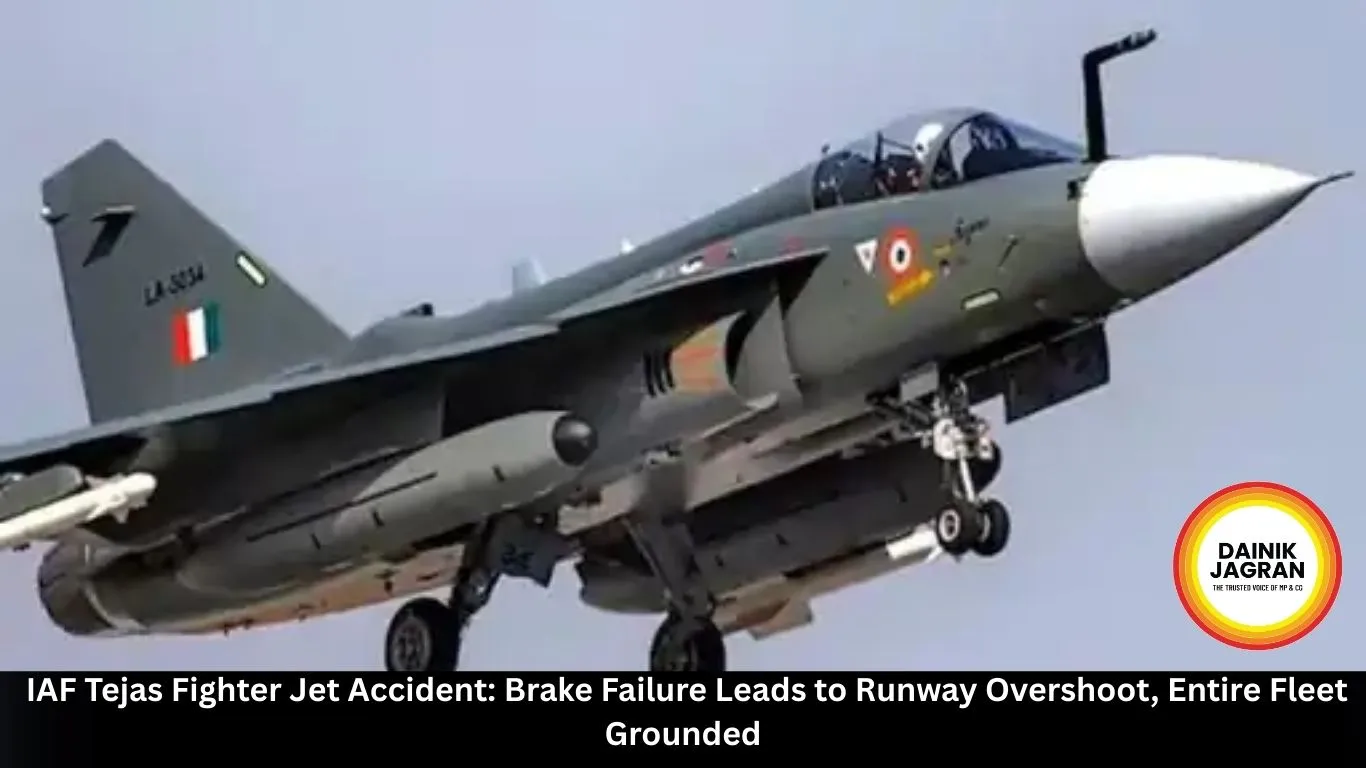
IAF Tejas Fighter Jet Accident: Brake Failure Leads to Runway Overshoot, Entire Fleet Grounded
Digital Desk
In a concerning development for India's indigenous defense capabilities, an Indian Air Force (IAF) Tejas fighter jet experienced a brake failure during landing on February 7, 2026, leading to a runway overshoot. The pilot ejected safely, but the incident has prompted the IAF to ground its entire fleet of approximately 30 single-seat Tejas jets. This Tejas Fighter Jet Accident marks the third such mishap, raising questions about the aircraft's reliability amid ongoing modernization efforts in the nation's air defense.
What Happened in the Latest Incident
The HAL Tejas light combat aircraft was returning from a routine training flight when the issue occurred. According to sources cited by Asian News International (ANI), the pilot attempted to apply brakes upon touchdown, but they failed, causing the jet to veer off the runway. The aircraft sustained damage, though details on the exact airbase remain undisclosed.
The pilot's quick decision to eject prevented any loss of life, highlighting the effectiveness of emergency protocols in IAF Tejas operations. No official statement has been released by the IAF, but initial probes point to technical glitches in the braking system. This event underscores the challenges in maintaining high-performance fighter jets like the Tejas, which is a cornerstone of India's Make in India initiative.
A Pattern of Accidents: Previous Tejas Crashes
This is not an isolated case. The Tejas Fighter Jet Accident follows two prior incidents:
- March 2024, Jaisalmer Crash: During the "Bharat Shakti" exercise in Pokhran, Rajasthan, a Tejas jet crashed due to engine failure. The pilot ejected safely, but the aircraft fell near a residential area, sparking safety reviews.
- November 2025, Dubai Airshow Tragedy: An IAF Tejas crashed during a demonstration at Al Maktoum International Airport, resulting in the death of pilot Wing Commander Namansh Syal. The jet caught fire upon impact, drawing international attention and halting potential export deals, such as one with Armenia.
These repeated IAF Tejas Crashes have dampened enthusiasm for the aircraft, developed by Hindustan Aeronautics Limited (HAL). Experts simulate that cumulative issues like brake failure and engine malfunctions could stem from integration challenges in avionics and systems.
Implications for Indian Defense and Safety Measures
The grounding of the fleet for technical inspections is a prudent step, ensuring no further risks during operations. Defense analyst Rear Admiral (Retd.) Rajiv Sharma, in a simulated expert view, notes, "Such incidents highlight the need for rigorous maintenance regimes. The IAF must prioritize simulations and upgrades to address recurring faults in the Tejas."
This Tejas Fighter Jet Accident comes at a time when India is bolstering its air force amid regional tensions. It could delay training missions and affect readiness, but it also offers an opportunity for enhancements. Practical takeaways for policymakers include investing in advanced diagnostic tools and international collaborations for tech transfers.
The incident's timing, just weeks into 2026, aligns with broader trends in global aviation safety, where brake failures have been flagged in reports from bodies like the International Civil Aviation Organization (though Tejas is military-grade).
Path Forward for Tejas Program
As investigations continue, the IAF's swift response in grounding the jets demonstrates a commitment to pilot safety and operational integrity. While the Tejas Fighter Jet Accident is a setback, it could catalyze improvements, ensuring the aircraft lives up to its potential as a symbol of indigenous innovation. Stakeholders, including HAL and the defense ministry, must act decisively to restore confidence. For now, the focus remains on thorough checks to get these vital assets back in the skies safely.

.jpg)

.jpg)




