Karachi Residents Use Gas Balloons Amid 2026 Fuel Crisis
Digital Desk
Karachi residents resort to storing gas in plastic balloons for cooking as the 2026 fuel crisis and Iran war disruptions trigger severe gas shortages.
Karachi Residents Resort to Storing Gas in Plastic Balloons Amid Severe Energy Crisis
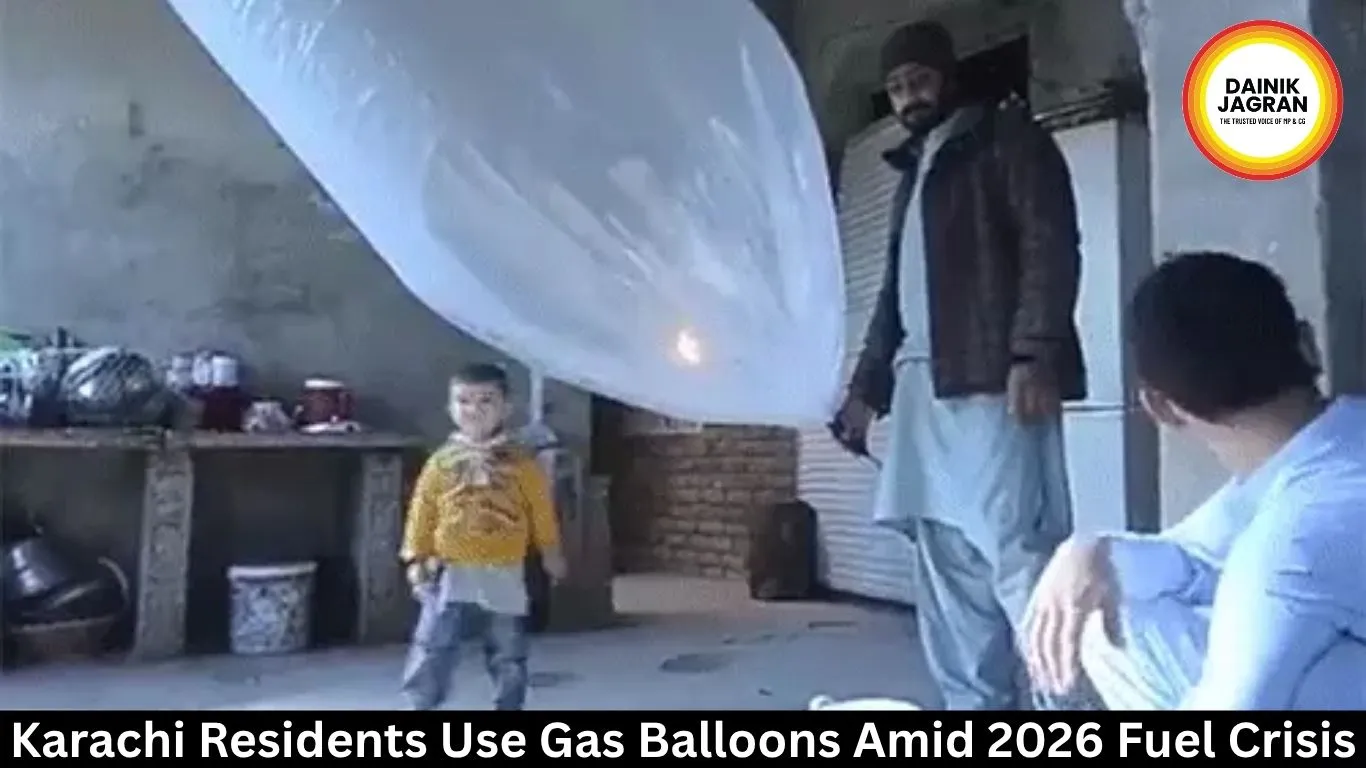
Residents in several parts of Karachi have begun using a highly dangerous "hack" to cope with the city’s worsening fuel shortage: storing natural gas in large plastic balloons for household cooking. The practice, which involves filling industrial-grade plastic bags directly from the gas line during the few hours of supply, has turned kitchens in densely populated neighborhoods into potential disaster zones.
Moving bombs in residential kitchens
The trend is most visible in areas like Orangi Town, Mominabad, and parts of Landhi, where the Sui Southern Gas Company (SSGC) has implemented drastic load-shedding. These "gas bags" are often seen being carried through narrow lanes or hooked up to small suction pumps in cramped kitchens. Safety experts have issued frantic warnings, describing the makeshift storage as "moving bombs."
"These plastic bags are not designed to hold pressurized, flammable gas," said a local safety consultant. "Even a small spark from a kitchen stove, friction from moving the bag, or a lit cigarette nearby can cause a massive explosion. In these congested colonies, one blast could take out an entire block."
Escalation linked to regional conflict
While Karachi has faced gas shortages for years, the current crisis has been exacerbated by the ongoing conflict in the Middle East. With the 2026 Iran war disrupting global energy routes, including the critical Strait of Hormuz, Pakistan’s LNG supply chain has effectively collapsed. Force Majeure declarations from major suppliers like Qatar have left the country scrambling for fuel.
Power Minister Awais Leghari recently confirmed that the country is facing a massive shortfall, with LNG-fired plants producing only a fraction of their capacity. For Karachi’s residents, this macro-level energy war translates to cold stoves and a desperate reliance on the "balloon hack."
High cost of temporary storage
Despite the risks, a local market for these specialized balloons has emerged. Residents report that the bags are being sold for anywhere between 1,000 to 1,500 Pakistani rupees. Users wait for the brief windows of gas supply—often late at night or for an hour in the morning—to fill the bags using compressors.
"We know it is dangerous, but what is the alternative?" asked a resident of Mominabad, who requested anonymity. "Cylinders are too expensive now because of the fuel crisis, and wood is hard to find in the city. We have to feed our children."
SSGC struggles with pressure drops
The SSGC has reportedly revised its supply schedule multiple times this month, but many "tail-end" consumers say they receive zero pressure even during scheduled hours. The utility company has attributed the low pressure to the overall shortfall and the widespread use of illegal suction pumps, which further depletes the network.
In industrial areas, the situation is equally grim. The SSGC recently announced a 24-hour suspension for all industrial customers to prioritize domestic "line-packs," yet the trickle-down effect for the average household remains negligible.
Experts call for urgent intervention
The government has urged citizens to conserve energy and avoid these hazardous storage methods, but enforcement remains a challenge in the city’s sprawling informal settlements. As global energy prices remain volatile due to the Iran-US tensions, analysts believe the fuel crisis in Pakistan will persist well into the summer.
For now, the sight of children carrying gas-filled balloons through the streets of Karachi remains a haunting reminder of the lengths to which people will go when the basic infrastructure of a city fails under the weight of a global energy shock.

--------
🚨 Beat the News Rush – Join Now!
Get breaking alerts, hot exclusives, and game-changing stories instantly on your phone. No delays, no fluff – just the edge you need. ⚡
Tap to join:
🟢 WhatsApp Channel: Dainik Jagran MP CG
Crave more?
🅕 Facebook: Dainik Jagran MP CG English
🅧 Twitter (X): Dainik Jagran MP CG
🅘 Instagram: Dainik Jagran MP CG
Share the fire – keep your crew ahead! 🗞️🔥
Karachi Residents Use Gas Balloons Amid 2026 Fuel Crisis
Digital Desk
Karachi Residents Resort to Storing Gas in Plastic Balloons Amid Severe Energy Crisis
Residents in several parts of Karachi have begun using a highly dangerous "hack" to cope with the city’s worsening fuel shortage: storing natural gas in large plastic balloons for household cooking. The practice, which involves filling industrial-grade plastic bags directly from the gas line during the few hours of supply, has turned kitchens in densely populated neighborhoods into potential disaster zones.
Moving bombs in residential kitchens
The trend is most visible in areas like Orangi Town, Mominabad, and parts of Landhi, where the Sui Southern Gas Company (SSGC) has implemented drastic load-shedding. These "gas bags" are often seen being carried through narrow lanes or hooked up to small suction pumps in cramped kitchens. Safety experts have issued frantic warnings, describing the makeshift storage as "moving bombs."
"These plastic bags are not designed to hold pressurized, flammable gas," said a local safety consultant. "Even a small spark from a kitchen stove, friction from moving the bag, or a lit cigarette nearby can cause a massive explosion. In these congested colonies, one blast could take out an entire block."
Escalation linked to regional conflict
While Karachi has faced gas shortages for years, the current crisis has been exacerbated by the ongoing conflict in the Middle East. With the 2026 Iran war disrupting global energy routes, including the critical Strait of Hormuz, Pakistan’s LNG supply chain has effectively collapsed. Force Majeure declarations from major suppliers like Qatar have left the country scrambling for fuel.
Power Minister Awais Leghari recently confirmed that the country is facing a massive shortfall, with LNG-fired plants producing only a fraction of their capacity. For Karachi’s residents, this macro-level energy war translates to cold stoves and a desperate reliance on the "balloon hack."
High cost of temporary storage
Despite the risks, a local market for these specialized balloons has emerged. Residents report that the bags are being sold for anywhere between 1,000 to 1,500 Pakistani rupees. Users wait for the brief windows of gas supply—often late at night or for an hour in the morning—to fill the bags using compressors.
"We know it is dangerous, but what is the alternative?" asked a resident of Mominabad, who requested anonymity. "Cylinders are too expensive now because of the fuel crisis, and wood is hard to find in the city. We have to feed our children."
SSGC struggles with pressure drops
The SSGC has reportedly revised its supply schedule multiple times this month, but many "tail-end" consumers say they receive zero pressure even during scheduled hours. The utility company has attributed the low pressure to the overall shortfall and the widespread use of illegal suction pumps, which further depletes the network.
In industrial areas, the situation is equally grim. The SSGC recently announced a 24-hour suspension for all industrial customers to prioritize domestic "line-packs," yet the trickle-down effect for the average household remains negligible.
Experts call for urgent intervention
The government has urged citizens to conserve energy and avoid these hazardous storage methods, but enforcement remains a challenge in the city’s sprawling informal settlements. As global energy prices remain volatile due to the Iran-US tensions, analysts believe the fuel crisis in Pakistan will persist well into the summer.
For now, the sight of children carrying gas-filled balloons through the streets of Karachi remains a haunting reminder of the lengths to which people will go when the basic infrastructure of a city fails under the weight of a global energy shock.