

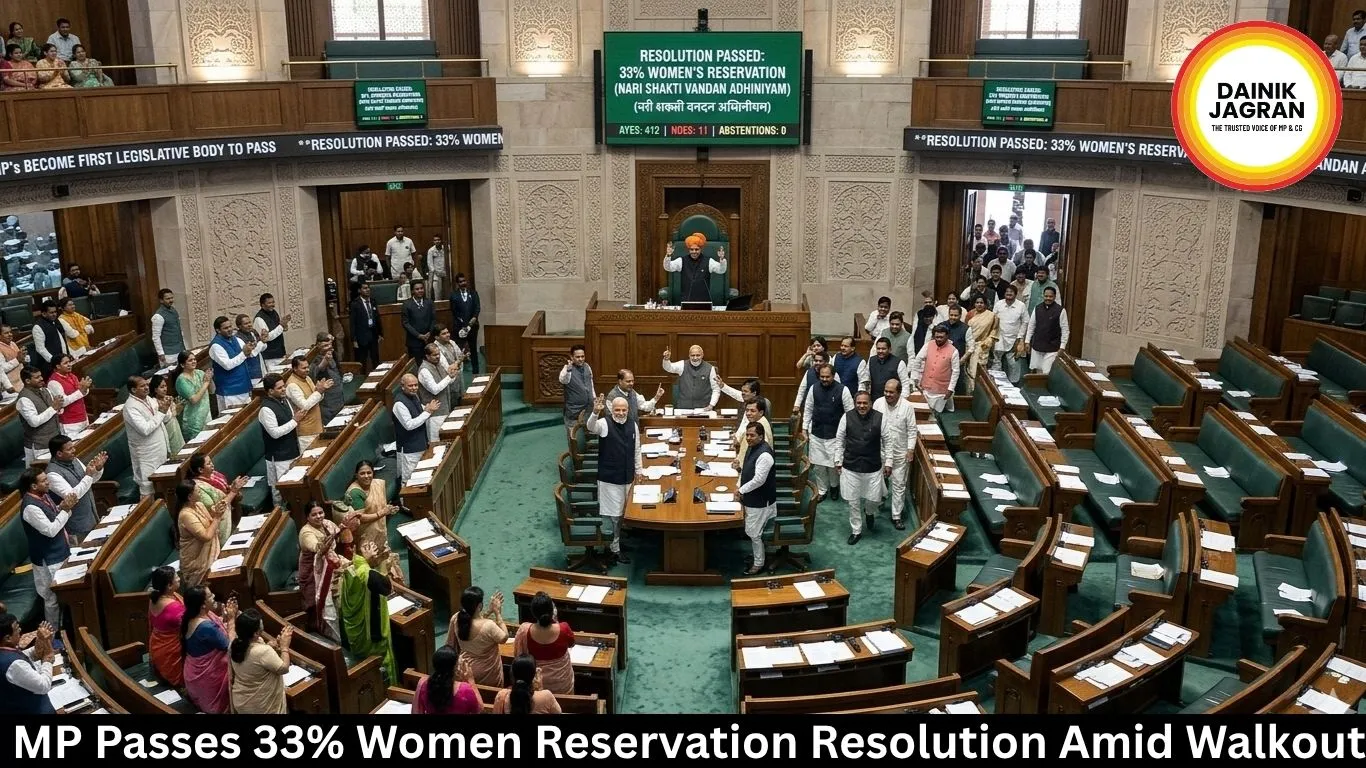
MP Passes 33% Women Reservation Resolution Amid Walkout

Digital Desk

MP Passes 33% Women Reservation Resolution Amid Walkout

Madhya Pradesh becomes the first state to pass the 33% women reservation resolution. CM Mohan Yadav's government pushed the quota linking it to delimitation.


MP Becomes First State to Pass 33% Women Reservation Resolution Amid Walkout

Tabled by CM Mohan Yadav, Madhya Pradesh passes the 33% women reservation resolution after a marathon debate, though the Opposition boycotted the final vote over implementation timelines.

BHOPAL: Making political history late on Monday, Madhya Pradesh passes the 33% women reservation resolution, becoming the first state in the country to formally adopt the one-third gender quota for its legislative assembly. Tabled by Chief Minister Mohan Yadav during a specially convened one-day session, the state government pushed the mandate through by a voice vote. However, the proceedings were far from smooth, ending with a dramatic opposition walkout.

The passage of the resolution formally signals the state’s backing of the Centre’s Nari Shakti Vandan Adhiniyam. But the central caveat that sparked a firestorm on the assembly floor was the timeline. The quota will only come into effect after the completion of the next national census and the subsequent constituency delimitation exercise.

High Drama on the Floor

Right from the morning, the special session witnessed intense friction. Congress legislators, led by Leader of the Opposition Umang Singhar, demanded that the reservation be applied immediately on the current strength of the House. When Speaker Narendra Singh Tomar declined to entertain a private member bill moved by the Congress for immediate enforcement, opposition MLAs stormed the well.

With order breaking down, the Congress eventually staged a walkout. CM Mohan Yadav used the floor to launch a blistering attack on the absent opposition, accusing them of a chronic negative attitude towards women's empowerment.

"Today marks a special occasion where we dedicate this entire day to the rights of our sisters," Yadav stated, according to assembly records. He argued that the reservation cannot bypass constitutional protocols, noting that increasing the number of seats to accommodate the quota requires a formal geographic evaluation first.

The Delimitation Factor

The core of the dispute lies in the physical mechanics of the state assembly. If the quota were to be applied to the existing 230 seats in Madhya Pradesh, the structural dynamics of current constituencies would be severely disrupted.

Instead, the government’s plan links the quota to an expansion of the assembly post-delimitation. During the debate, it was highlighted that the total number of legislative seats could potentially rise to around 345, ensuring that 114 seats are reserved exclusively for women without disenfranchising current regional representation.

Opposition Calls It a Delay

Outside the assembly complex, the opposition dismissed the government’s move as a deliberate delay tactic. Speaking to the media, Singhar questioned the ruling party's intent, pointing out the uncertainty of the census timeline.

"If the government's intentions were honest, they wouldn't push this to 2029 or beyond. They have a massive majority. What is stopping them from implementing the 33% women reservation resolution right now on the existing seats?" he asked reporters.

Echoes of National Politics

The friction witnessed in Bhopal closely mirrors the national narrative surrounding the women's reservation debate. Senior state BJP leaders, including Parliamentary Affairs Minister Kailash Vijayvargiya, intervened during the session to point out that attempting an immediate implementation without a census is constitutionally unviable and would invite immediate legal challenges.

Ground realities suggest that by being the first state to formally clear this hurdle, the ruling party is moving quickly to lock in its pro-women voter base. This demographic played a crucial role in bringing the BJP back to power with a sweeping mandate in the recent state elections.

Looking at the Road Ahead

With the assembly now adjourned sine die, the political shouting match is expected to settle, but the administrative wait has just begun. The actual realization of this quota relies entirely on the Union Government's timeline for the delayed national census and the subsequent formation of a Delimitation Commission.

Until those massive bureaucratic wheels turn, the practical impact remains on hold. But for now, by clearing the 33% women reservation resolution, the Mohan Yadav administration has secured major political bragging rights, putting Madhya Pradesh squarely at the forefront of the nationwide rollout.


--------

🚨 Beat the News Rush – Join Now!

Get breaking alerts, hot exclusives, and game-changing stories instantly on your phone. No delays, no fluff – just the edge you need. ⚡

Tap to join: 

🟢 WhatsApp Channel: Dainik Jagran MP CG

Crave more?

🅕 Facebook: Dainik Jagran MP CG English

🅧 Twitter (X): Dainik Jagran MP CG

🅘 Instagram: Dainik Jagran MP CG

Share the fire – keep your crew ahead! 🗞️🔥

english.dainikjagranmpcg.com
29 Apr 2026 By Abhishek Joshi

MP Passes 33% Women Reservation Resolution Amid Walkout

Digital Desk

MP Becomes First State to Pass 33% Women Reservation Resolution Amid Walkout

Tabled by CM Mohan Yadav, Madhya Pradesh passes the 33% women reservation resolution after a marathon debate, though the Opposition boycotted the final vote over implementation timelines.

BHOPAL: Making political history late on Monday, Madhya Pradesh passes the 33% women reservation resolution, becoming the first state in the country to formally adopt the one-third gender quota for its legislative assembly. Tabled by Chief Minister Mohan Yadav during a specially convened one-day session, the state government pushed the mandate through by a voice vote. However, the proceedings were far from smooth, ending with a dramatic opposition walkout.

The passage of the resolution formally signals the state’s backing of the Centre’s Nari Shakti Vandan Adhiniyam. But the central caveat that sparked a firestorm on the assembly floor was the timeline. The quota will only come into effect after the completion of the next national census and the subsequent constituency delimitation exercise.

High Drama on the Floor

Right from the morning, the special session witnessed intense friction. Congress legislators, led by Leader of the Opposition Umang Singhar, demanded that the reservation be applied immediately on the current strength of the House. When Speaker Narendra Singh Tomar declined to entertain a private member bill moved by the Congress for immediate enforcement, opposition MLAs stormed the well.

With order breaking down, the Congress eventually staged a walkout. CM Mohan Yadav used the floor to launch a blistering attack on the absent opposition, accusing them of a chronic negative attitude towards women's empowerment.

"Today marks a special occasion where we dedicate this entire day to the rights of our sisters," Yadav stated, according to assembly records. He argued that the reservation cannot bypass constitutional protocols, noting that increasing the number of seats to accommodate the quota requires a formal geographic evaluation first.

The Delimitation Factor

The core of the dispute lies in the physical mechanics of the state assembly. If the quota were to be applied to the existing 230 seats in Madhya Pradesh, the structural dynamics of current constituencies would be severely disrupted.

Instead, the government’s plan links the quota to an expansion of the assembly post-delimitation. During the debate, it was highlighted that the total number of legislative seats could potentially rise to around 345, ensuring that 114 seats are reserved exclusively for women without disenfranchising current regional representation.

Opposition Calls It a Delay

Outside the assembly complex, the opposition dismissed the government’s move as a deliberate delay tactic. Speaking to the media, Singhar questioned the ruling party's intent, pointing out the uncertainty of the census timeline.

"If the government's intentions were honest, they wouldn't push this to 2029 or beyond. They have a massive majority. What is stopping them from implementing the 33% women reservation resolution right now on the existing seats?" he asked reporters.

Echoes of National Politics

The friction witnessed in Bhopal closely mirrors the national narrative surrounding the women's reservation debate. Senior state BJP leaders, including Parliamentary Affairs Minister Kailash Vijayvargiya, intervened during the session to point out that attempting an immediate implementation without a census is constitutionally unviable and would invite immediate legal challenges.

Ground realities suggest that by being the first state to formally clear this hurdle, the ruling party is moving quickly to lock in its pro-women voter base. This demographic played a crucial role in bringing the BJP back to power with a sweeping mandate in the recent state elections.

Looking at the Road Ahead

With the assembly now adjourned sine die, the political shouting match is expected to settle, but the administrative wait has just begun. The actual realization of this quota relies entirely on the Union Government's timeline for the delayed national census and the subsequent formation of a Delimitation Commission.

Until those massive bureaucratic wheels turn, the practical impact remains on hold. But for now, by clearing the 33% women reservation resolution, the Mohan Yadav administration has secured major political bragging rights, putting Madhya Pradesh squarely at the forefront of the nationwide rollout.


https://english.dainikjagranmpcg.com/states/madhya-pradesh/mp-passes-33-women-reservation-resolution-amid-walkout/article-17557

Related Posts

Latest News


