Trump Claims China Ready to Help Keep Strait of Hormuz Open Amid Rising Iran Tensions

Digital Desk

Trump Claims China Ready to Help Keep Strait of Hormuz Open Amid Rising Iran Tensions

Iran tightens shipping rules in strategic waterway as global oil security concerns rise and BRICS urged to oppose US-Israel actions

Tensions in the Middle East have escalated further after former US President Donald Trump claimed that Chinese President Xi Jinping has expressed willingness to help keep the Strait of Hormuz open amid growing geopolitical instability involving Iran, the United States, and Israel. The remarks have added a new diplomatic dimension to an already fragile global energy situation.

In an interview with Fox News, Trump stated that Xi Jinping had indirectly conveyed support for efforts to ensure uninterrupted navigation through the Strait of Hormuz, one of the world’s most critical oil transit routes. According to Trump, China has a strong interest in maintaining stability in the region due to its heavy dependence on Iranian crude oil imports.

“Xi Jinping wants some kind of agreement between the United States and Iran. If I can help, I would like to help,” Trump said, quoting the Chinese leadership’s position. He further added that countries heavily reliant on Iranian oil naturally prefer that the Strait of Hormuz remains open and secure for uninterrupted trade flows.

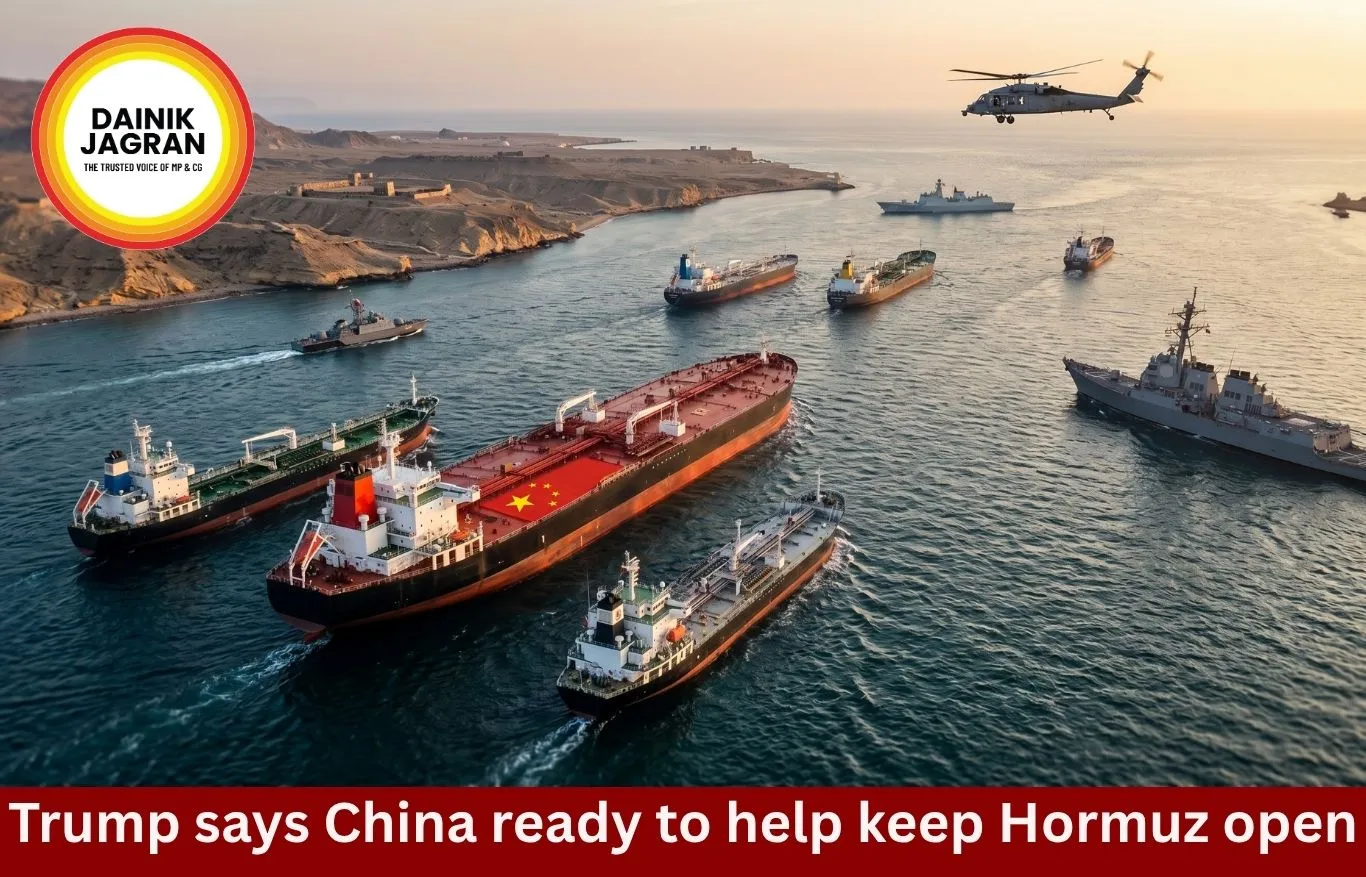
The Strait of Hormuz, a narrow maritime passage connecting the Persian Gulf with the Arabian Sea, handles nearly a fifth of global oil shipments. Any disruption in this corridor has historically led to volatility in global crude oil prices and triggered fears of supply shortages across Asia, Europe, and other major importing regions.

Alongside Trump’s remarks, Iran has introduced new operational protocols for vessels passing through the Strait of Hormuz. According to reports from Iranian state-linked sources, all commercial ships navigating the route are now required to comply with enhanced monitoring and clearance procedures under Iranian oversight. Tehran has framed these measures as necessary for national security amid rising regional tensions.

Iran has also intensified its diplomatic outreach, urging BRICS member countries to openly condemn the United States and Israel for what it describes as violations of international law and aggressive actions in the region. Iranian Foreign Minister Abbas Araghchi made the appeal during a recent BRICS meeting, arguing that global institutions have failed to address escalating instability in West Asia.

The situation has already begun affecting maritime movement. Reports suggest that several vessels have altered their routes due to security concerns. The US Central Command (CENTCOM) stated that increased tensions in the Strait have led to at least 70 commercial ships adjusting their planned passages, reflecting growing uncertainty among global shipping operators.

In a separate incident that highlights the fragility of the region, a cargo vessel reportedly linked to Gujarat was damaged near Oman under unclear circumstances involving a suspected drone or missile strike. All 14 crew members were safely rescued, but the incident has further heightened fears about the safety of commercial shipping in the area.

China’s role in the evolving situation is being closely watched by global analysts. As one of the largest importers of Iranian oil, Beijing has a strategic interest in ensuring stability in the Strait of Hormuz. Any disruption could significantly impact its energy supply chain and manufacturing sector. While China has not officially confirmed Trump’s claim, its diplomatic engagements in the region have consistently emphasized de-escalation and dialogue.

Experts believe that if major powers like China actively engage in mediation, it could reduce tensions between the United States and Iran. However, they also warn that competing geopolitical interests may complicate any coordinated solution. The Strait of Hormuz remains a sensitive geopolitical chokepoint where even minor incidents can escalate into broader conflicts affecting global markets.

Oil prices have already shown volatility in response to recent developments. Traders are closely monitoring supply risks, with concerns that prolonged instability could push crude prices higher and contribute to inflationary pressures worldwide. Energy-importing countries, particularly in Asia, are expected to be the most affected if disruptions continue.

Iran’s new regulatory stance, combined with increased naval presence and diplomatic pressure campaigns, signals a more assertive phase in its regional policy. At the same time, US and allied forces continue to emphasize freedom of navigation in international waters, maintaining a delicate balance to avoid direct confrontation.

The coming weeks are likely to be critical in determining whether diplomatic intervention can stabilize the situation or whether tensions in the Strait of Hormuz will further escalate into a wider geopolitical crisis. For now, global markets, shipping companies, and governments remain on high alert as developments unfold.

--------------

--------

🚨 Beat the News Rush – Join Now!

Get breaking alerts, hot exclusives, and game-changing stories instantly on your phone. No delays, no fluff – just the edge you need. ⚡

Tap to join: 

🟢 WhatsApp Channel: Dainik Jagran MP CG

Crave more?

🅕 Facebook: Dainik Jagran MP CG English

🅧 Twitter (X): Dainik Jagran MP CG

🅘 Instagram: Dainik Jagran MP CG

Share the fire – keep your crew ahead! 🗞️🔥

english.dainikjagranmpcg.com
15 May 2026 By Vaishnavi

Trump Claims China Ready to Help Keep Strait of Hormuz Open Amid Rising Iran Tensions

Digital Desk

Tensions in the Middle East have escalated further after former US President Donald Trump claimed that Chinese President Xi Jinping has expressed willingness to help keep the Strait of Hormuz open amid growing geopolitical instability involving Iran, the United States, and Israel. The remarks have added a new diplomatic dimension to an already fragile global energy situation.

In an interview with Fox News, Trump stated that Xi Jinping had indirectly conveyed support for efforts to ensure uninterrupted navigation through the Strait of Hormuz, one of the world’s most critical oil transit routes. According to Trump, China has a strong interest in maintaining stability in the region due to its heavy dependence on Iranian crude oil imports.

“Xi Jinping wants some kind of agreement between the United States and Iran. If I can help, I would like to help,” Trump said, quoting the Chinese leadership’s position. He further added that countries heavily reliant on Iranian oil naturally prefer that the Strait of Hormuz remains open and secure for uninterrupted trade flows.

The Strait of Hormuz, a narrow maritime passage connecting the Persian Gulf with the Arabian Sea, handles nearly a fifth of global oil shipments. Any disruption in this corridor has historically led to volatility in global crude oil prices and triggered fears of supply shortages across Asia, Europe, and other major importing regions.

Alongside Trump’s remarks, Iran has introduced new operational protocols for vessels passing through the Strait of Hormuz. According to reports from Iranian state-linked sources, all commercial ships navigating the route are now required to comply with enhanced monitoring and clearance procedures under Iranian oversight. Tehran has framed these measures as necessary for national security amid rising regional tensions.

Iran has also intensified its diplomatic outreach, urging BRICS member countries to openly condemn the United States and Israel for what it describes as violations of international law and aggressive actions in the region. Iranian Foreign Minister Abbas Araghchi made the appeal during a recent BRICS meeting, arguing that global institutions have failed to address escalating instability in West Asia.

The situation has already begun affecting maritime movement. Reports suggest that several vessels have altered their routes due to security concerns. The US Central Command (CENTCOM) stated that increased tensions in the Strait have led to at least 70 commercial ships adjusting their planned passages, reflecting growing uncertainty among global shipping operators.

In a separate incident that highlights the fragility of the region, a cargo vessel reportedly linked to Gujarat was damaged near Oman under unclear circumstances involving a suspected drone or missile strike. All 14 crew members were safely rescued, but the incident has further heightened fears about the safety of commercial shipping in the area.

China’s role in the evolving situation is being closely watched by global analysts. As one of the largest importers of Iranian oil, Beijing has a strategic interest in ensuring stability in the Strait of Hormuz. Any disruption could significantly impact its energy supply chain and manufacturing sector. While China has not officially confirmed Trump’s claim, its diplomatic engagements in the region have consistently emphasized de-escalation and dialogue.

Experts believe that if major powers like China actively engage in mediation, it could reduce tensions between the United States and Iran. However, they also warn that competing geopolitical interests may complicate any coordinated solution. The Strait of Hormuz remains a sensitive geopolitical chokepoint where even minor incidents can escalate into broader conflicts affecting global markets.

Oil prices have already shown volatility in response to recent developments. Traders are closely monitoring supply risks, with concerns that prolonged instability could push crude prices higher and contribute to inflationary pressures worldwide. Energy-importing countries, particularly in Asia, are expected to be the most affected if disruptions continue.

Iran’s new regulatory stance, combined with increased naval presence and diplomatic pressure campaigns, signals a more assertive phase in its regional policy. At the same time, US and allied forces continue to emphasize freedom of navigation in international waters, maintaining a delicate balance to avoid direct confrontation.

The coming weeks are likely to be critical in determining whether diplomatic intervention can stabilize the situation or whether tensions in the Strait of Hormuz will further escalate into a wider geopolitical crisis. For now, global markets, shipping companies, and governments remain on high alert as developments unfold.

--------------
https://english.dainikjagranmpcg.com/special-news/6a06e7dbb4d25/article-18387

Latest News