Anti-Immigration Riots Erupt Across UK and Ireland
Digital Desk
Anti-immigration riots spread across Belfast, London and Glasgow after a stabbing incident, leading to arson, looting and heightened tensions.
Anti-immigration riots spread across parts of the UK and Ireland after a Belfast stabbing involving a Sudanese asylum seeker, triggering unrest, arson and political controversy.
Violence Spreads Across Cities
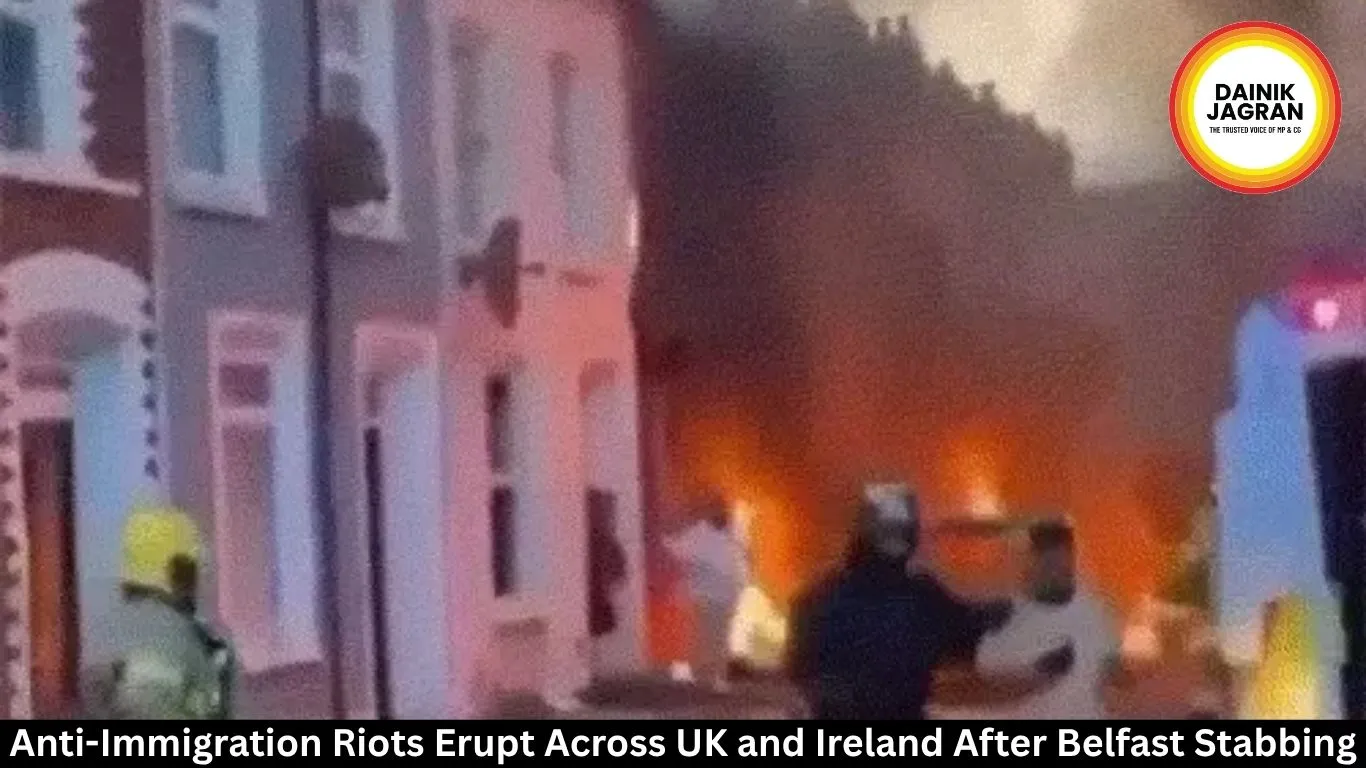
Widespread anti-immigration riots broke out across parts of Northern Ireland, Britain and Ireland on June 10, following a stabbing incident in Belfast that rapidly escalated into a broader wave of unrest. Authorities reported incidents of arson, looting and attacks on properties linked to migrant communities as protests turned violent in several locations.
The disturbances were most intense in Belfast, where groups of masked individuals gathered in multiple neighbourhoods. Similar demonstrations and clashes were also reported in parts of London and Glasgow as tensions over immigration policies spilled onto the streets.
Belfast Incident Sparks Outrage
The unrest was triggered by a stabbing attack in Belfast involving a Sudanese asylum seeker and a local Irish resident. According to police, the victim, a 40-year-old man, sustained serious injuries after an alleged attempt to slash his throat during a dispute.
Investigators identified the suspect as Hadi Alodid, who reportedly travelled from Sudan to France before moving to Dublin and later Belfast. Authorities said he sought asylum after arriving in Northern Ireland in 2023 and had been granted permission to remain in the UK until 2028.
Footage of the attack circulated widely on social media in the hours following the incident, drawing strong public reactions and fuelling calls for demonstrations.
Homes and Businesses Targeted
As protests intensified, several migrant-owned businesses and residential properties came under attack. In Belfast, vehicles were set ablaze on Newtownards Road, while reports emerged of looting in the Shankill area.
A shop reportedly owned by an African migrant was damaged in a fire. Emergency services responded to multiple incidents throughout the city as authorities attempted to contain the unrest.
Local residents and community leaders said some migrant families left their homes temporarily amid fears of further violence. Community organisations also reported heightened anxiety among immigrant groups living in affected areas.
Social Media Under Scrutiny
Officials and community representatives pointed to the role of social media in amplifying tensions. The stabbing video spread rapidly online and was shared by several high-profile anti-immigration figures.
Critics argued that online campaigns contributed to the mobilisation of protesters and intensified public anger before verified details of the incident had fully emerged. Authorities have not publicly linked any individual directly to organising the violence, but investigations into online activity are reportedly ongoing.
Community Impact Deepens
The riots disrupted normal life in several areas of Belfast. Some migrant-owned shops closed early as a precaution, while community centres and religious institutions adjusted activities due to security concerns.
The Belfast Islamic Centre reportedly suspended evening prayers amid fears for public safety. Local faith leaders appealed for calm and urged residents not to retaliate against acts of violence.
Emergency responders worked through the night in several affected districts, while police deployed additional resources to restore order and protect vulnerable communities.
Political Reactions Intensify
The violence has reignited debate over immigration, asylum policy and public safety across the UK. Political figures from different parties offered sharply contrasting responses to the events.
Some politicians called for stricter immigration controls and a review of asylum procedures, while others warned against blaming entire communities for the actions of an individual suspect.
Labour MP Claire Hanna criticised public figures whom she accused of inflaming tensions through online commentary. The remarks came as political leaders urged citizens to avoid spreading misinformation and allow law enforcement agencies to complete their investigations.
Security Measures Continue
Police and local authorities remain on high alert as they monitor the possibility of further demonstrations. Additional patrols have been deployed in sensitive areas, particularly neighbourhoods with large migrant populations.
Officials have appealed for calm and encouraged residents to report suspicious activity rather than engage in vigilante action. Investigations into both the original stabbing and the subsequent anti-immigration riots are continuing.
The latest unrest has once again highlighted the challenges facing authorities as immigration, public safety and social cohesion become increasingly contentious issues across parts of the UK and Ireland.
--------
🚨 Beat the News Rush – Join Now!
Get breaking alerts, hot exclusives, and game-changing stories instantly on your phone. No delays, no fluff – just the edge you need. ⚡
Tap to join:
🟢 WhatsApp Channel: Dainik Jagran MP CG
Crave more?
🅕 Facebook: Dainik Jagran MP CG English
🅧 Twitter (X): Dainik Jagran MP CG
🅘 Instagram: Dainik Jagran MP CG
Share the fire – keep your crew ahead! 🗞️🔥
Anti-Immigration Riots Erupt Across UK and Ireland
Digital Desk
Anti-immigration riots spread across parts of the UK and Ireland after a Belfast stabbing involving a Sudanese asylum seeker, triggering unrest, arson and political controversy.
Violence Spreads Across Cities
Widespread anti-immigration riots broke out across parts of Northern Ireland, Britain and Ireland on June 10, following a stabbing incident in Belfast that rapidly escalated into a broader wave of unrest. Authorities reported incidents of arson, looting and attacks on properties linked to migrant communities as protests turned violent in several locations.
The disturbances were most intense in Belfast, where groups of masked individuals gathered in multiple neighbourhoods. Similar demonstrations and clashes were also reported in parts of London and Glasgow as tensions over immigration policies spilled onto the streets.
Belfast Incident Sparks Outrage
The unrest was triggered by a stabbing attack in Belfast involving a Sudanese asylum seeker and a local Irish resident. According to police, the victim, a 40-year-old man, sustained serious injuries after an alleged attempt to slash his throat during a dispute.
Investigators identified the suspect as Hadi Alodid, who reportedly travelled from Sudan to France before moving to Dublin and later Belfast. Authorities said he sought asylum after arriving in Northern Ireland in 2023 and had been granted permission to remain in the UK until 2028.
Footage of the attack circulated widely on social media in the hours following the incident, drawing strong public reactions and fuelling calls for demonstrations.
Homes and Businesses Targeted
As protests intensified, several migrant-owned businesses and residential properties came under attack. In Belfast, vehicles were set ablaze on Newtownards Road, while reports emerged of looting in the Shankill area.
A shop reportedly owned by an African migrant was damaged in a fire. Emergency services responded to multiple incidents throughout the city as authorities attempted to contain the unrest.
Local residents and community leaders said some migrant families left their homes temporarily amid fears of further violence. Community organisations also reported heightened anxiety among immigrant groups living in affected areas.
Social Media Under Scrutiny
Officials and community representatives pointed to the role of social media in amplifying tensions. The stabbing video spread rapidly online and was shared by several high-profile anti-immigration figures.
Critics argued that online campaigns contributed to the mobilisation of protesters and intensified public anger before verified details of the incident had fully emerged. Authorities have not publicly linked any individual directly to organising the violence, but investigations into online activity are reportedly ongoing.
Community Impact Deepens
The riots disrupted normal life in several areas of Belfast. Some migrant-owned shops closed early as a precaution, while community centres and religious institutions adjusted activities due to security concerns.
The Belfast Islamic Centre reportedly suspended evening prayers amid fears for public safety. Local faith leaders appealed for calm and urged residents not to retaliate against acts of violence.
Emergency responders worked through the night in several affected districts, while police deployed additional resources to restore order and protect vulnerable communities.
Political Reactions Intensify
The violence has reignited debate over immigration, asylum policy and public safety across the UK. Political figures from different parties offered sharply contrasting responses to the events.
Some politicians called for stricter immigration controls and a review of asylum procedures, while others warned against blaming entire communities for the actions of an individual suspect.
Labour MP Claire Hanna criticised public figures whom she accused of inflaming tensions through online commentary. The remarks came as political leaders urged citizens to avoid spreading misinformation and allow law enforcement agencies to complete their investigations.
Security Measures Continue
Police and local authorities remain on high alert as they monitor the possibility of further demonstrations. Additional patrols have been deployed in sensitive areas, particularly neighbourhoods with large migrant populations.
Officials have appealed for calm and encouraged residents to report suspicious activity rather than engage in vigilante action. Investigations into both the original stabbing and the subsequent anti-immigration riots are continuing.
The latest unrest has once again highlighted the challenges facing authorities as immigration, public safety and social cohesion become increasingly contentious issues across parts of the UK and Ireland.