


BNP Secures Landslide Victory in Bangladesh Elections, Tarique Rahman Set to Become Prime Minister
Digital Desk
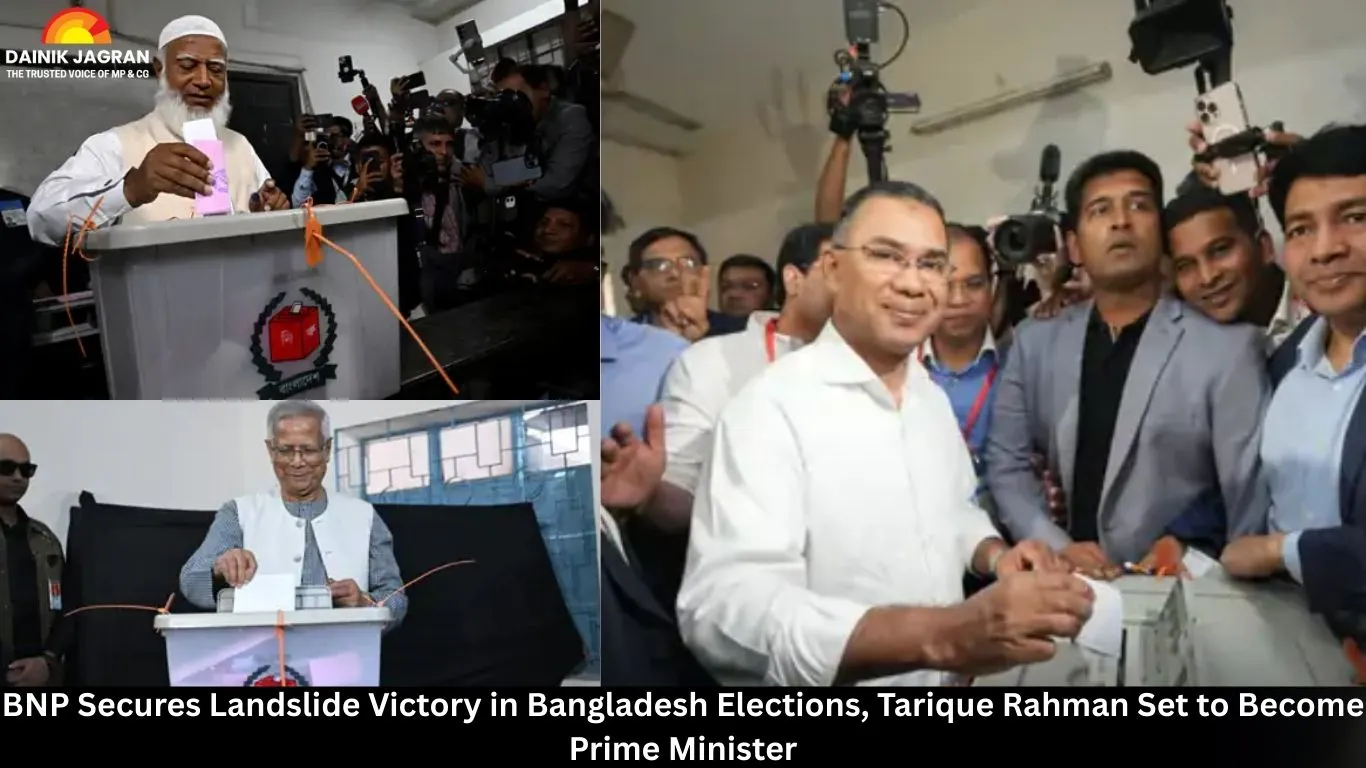
In a historic political shift, the Bangladesh Nationalist Party (BNP) has swept the 13th parliamentary elections, winning 209 of 299 seats and ending nearly two decades of opposition. Party chairman Tarique Rahman is now poised to become Bangladesh's next prime minister, marking the country's first male leader in 35 years.
Landslide Victory Ends Awami League Era
The Bangladesh Election Commission officially declared results for 297 parliamentary seats on Friday, with the BNP securing a decisive mandate well above the 150-seat majority threshold. The party's 11-party alliance, including Jamaat-e-Islami, collectively won 279 seats.
This election victory brings the BNP back to power after 20 years, conclusively ending Sheikh Hasina's Awami League rule that spanned from 2008 to 2024. The Awami League was largely barred from contesting this election due to its alleged role in violence during the 2024 student movement.
In a symbolic blow to the former ruling party, the BNP swept all three parliamentary seats in Gopalganj—Sheikh Hasina's traditional stronghold and the home district of Bangladesh's founding leader, Sheikh Mujibur Rahman.
Tarique Rahman: From Exile to Prime Minister
Tarique Rahman, the son of late former Prime Minister Khaleda Zia, contested from two constituencies and won both—Dhaka-8 and Bogura-6. He returned to Bangladesh in December 2025 after 17 years in self-imposed exile in London, where he had lived since 2008 to avoid arrest on corruption charges.
His return and subsequent victory mark a remarkable political comeback. Following his mother's passing on December 30, 2025, at age 80, Rahman assumed full leadership of the party his father, President Ziaur Rahman, founded.
Historic Shift: Male Prime Minister After 35 Years
This election will bring a male prime minister to Bangladesh for the first time since 1988, when Kazi Zafar Ahmed held the position. The intervening 35 years were dominated by the "Battle of the Begums"—Sheikh Hasina and Khaleda Zia—who alternately led the country from 1991 onward.
Election Commission Declares Results Transparent
Chief Election Commissioner Nasir Uddin described the election as "neutral and credible," reporting a voter turnout of 59.44 percent. Results for Chattogram-2 and Chattogram-4 remain suspended due to pending formalities.
"We promised to conduct the election in a festive atmosphere, ensuring it would be completely neutral and credible, and we believe we have achieved that," Uddin told reporters.
International Reactions Pour In
Indian Prime Minister Narendra Modi congratulated Tarique Rahman, with India affirming it will "continue to stand in support of a democratic Bangladesh." Indian National Congress president and West Bengal Chief Minister Mamata Banerjee also extended congratulations.
Pakistan's President Asif Ali Zardari welcomed the BNP's "landslide majority," expressing hope for "more balanced, independent, and mutually respectful engagement" in the region. The Chinese Embassy in Bangladesh congratulated Dhaka on a "smooth and successful" election and expressed interest in strengthening bilateral ties.
Women Candidates Make Their Mark
Despite only 78 women contesting among 1,981 candidates, seven secured parliamentary seats. Six BNP women candidates won, including Afroza Khan Rita (Manikganj-3), Israt Sultana Elin Bhutto (Jhalkathi-2), and Tahsina Rushdi Luna (Sylhet-2). Barrister Rumin Farhana, expelled from BNP, won Brahmanbaria-2 as an independent candidate.
BNP's Vision: Democracy, Stability, and Reform
Speaking to the BBC, senior BNP leader Amir Khasru Mahmud Chowdhury outlined the party's priorities: "All democratic and financial institutions that have been weakened over the past decade need to be rebuilt. Stability and peace are what Bangladesh needs most right now."
BNP spokesperson Mahdi Amin promised the party would "absolutely guarantee democracy and freedom of speech" and protect minority rights. The party has called for nationwide prayers rather than victory processions, honoring the sacrifices of workers during years of political struggle.
Key Challenges Ahead
The incoming BNP government faces significant challenges:
- Reviving Bangladesh's economy and controlling inflation
- Creating jobs for approximately 900,000 unemployed graduates
- Implementing the July Charter reforms inspired by the 2024 uprising
- Managing the long-standing Teesta River water dispute with India
- Addressing the Rohingya refugee crisis
What Happens Next
The BNP is expected to form the government between February 14-16, with MPs taking their oaths shortly. Tarique Rahman's 31-point reform plan, focused on digital innovation, green initiatives, and technical education expansion, will guide the new administration's agenda.
As Bangladesh transitions to this new political chapter, all eyes will be on how the BNP translates its electoral mandate into governance—and whether it can deliver the stability and prosperity voters have demanded.
.jpg)




