

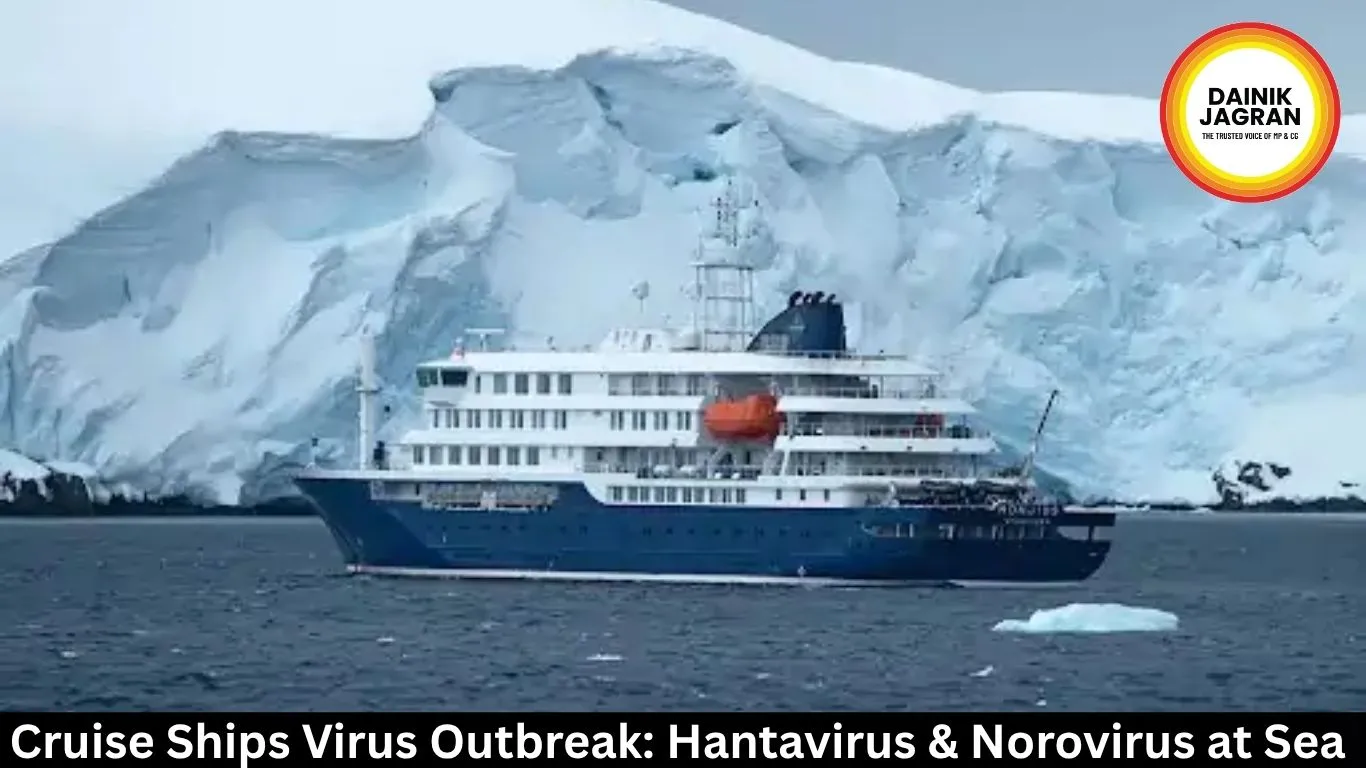
Cruise Ships Virus Outbreak: Hantavirus & Norovirus at Sea
Digital Desk
Two cruise ships face viral crises—hantavirus kills 3 on Hondius, norovirus hits Caribbean Princess. CDC and WHO monitor outbreaks triggering global health alerts.
Two Cruise Ships Battle Viral Outbreaks at Sea, Triggering Global Health Alert
Hantavirus deaths on Hondius, norovirus spreads on Caribbean Princess as CDC and WHO monitor situation
Dual Crisis Unfolds
Two cruise ships navigating distant ocean routes are now at the centre of separate but alarming viral outbreaks, prompting coordinated monitoring by the US Centers for Disease Control and Prevention and the World Health Organization. The developments mark an unusual convergence of maritime health emergencies, with passengers and crew across both vessels facing potential exposure to viruses capable of serious complications.
The Antarctica-bound MV Hondius, which departed Argentina seven weeks ago, is grappling with a confirmed hantavirus outbreak that has claimed three lives. Simultaneously, the Caribbean Princess, currently on a Southern Caribbean cruise from Florida, is battling a norovirus crisis affecting over 100 individuals aboard.
Hantavirus Outbreak: Three Deaths Confirmed
The situation aboard Hondius has escalated since the first confirmed death of a 70-year-old passenger while the vessel was traversing Antarctic waters. The ship, registered in the Netherlands and carrying 147 passengers and crew members, has now recorded six confirmed infections and three deaths linked to the virus.
Officials confirmed that the initial victim's wife, who had been in close contact with other passengers, subsequently developed symptoms and died at a South African hospital after the ship made an unscheduled stop. A third death has also been recorded, with the deceased's body remaining aboard as the vessel diverts toward the Canary Islands.
Maritime health authorities denied the Hondius docking permission at Cape Verde, forcing a change in route. The ship is now headed toward Spanish territories off the African coast.
Andes Strain Raises Alarm
The WHO has identified the outbreak as involving the Andes strain of hantavirus—a variant with concerning characteristics. Unlike most hantavirus types, the Andes strain demonstrates limited human-to-human transmission capability, though transmission remains significantly slower than respiratory viruses like COVID-19.
Health investigators traced the initial infections to two passengers who had undertaken a bird-watching expedition across Chile, Argentina, and Uruguay before boarding. These regions are known habitats for rodents carrying the virus, the primary vector for infection. Argentine health authorities are now pursuing detailed travel reconstruction to identify potential exposure points.
The virus typically spreads through contact with infected rodent droppings or saliva, but the documented human-to-human transmission in this outbreak has raised international concerns about containment aboard confined cruise environments.
Caribbean Princess Battles Norovirus
While hantavirus claims attention elsewhere, the Caribbean Princess faces a different but equally disruptive challenge. Approximately 115 individuals aboard the 3,116-passenger vessel have been diagnosed with norovirus, experiencing gastrointestinal symptoms including vomiting, diarrhoea, and acute stomach infections.
The ship's itinerary continues as scheduled, with Port Canaveral in Florida designated as its final destination on May 11. Onboard medical teams have implemented isolation protocols for affected passengers and enhanced sanitation procedures across common areas.
International Monitoring Intensifies
Following passenger disembarkation at Saint Helena, the WHO has activated alerts across 12 nations, including the United Kingdom, United States, Canada, Germany, and Singapore. Health authorities in these countries have been instructed to monitor for any confirmed cases linked to exposed passengers who may have travelled onward after departing the vessels.
The coordination reflects growing concerns about maritime disease transmission, particularly given modern cruise itineraries that span multiple continents within weeks. Passengers and crew members who travelled through various ports now pose potential transmission risks in their home countries.
Timeline and Route Details
The Hondius began its journey from Ushuaia, the world's southernmost city, on March 20. The seven-week voyage encompassed Antarctic exploration before crossing the Atlantic toward European destinations. The vessel was originally scheduled to reach the Canary Islands, though the outbreak has now determined its actual destination and operational priorities.
The Caribbean Princess operates independently on its scheduled 13-day Southern Caribbean route, unrelated to the Atlantic vessel's trajectory.
What Comes Next
Both cruise operators and maritime regulators face mounting pressure to demonstrate robust outbreak response protocols. The simultaneous nature of these incidents underscores vulnerabilities in maritime health infrastructure, particularly aboard large passenger vessels where rapid viral transmission is geometrically possible.
The CDC and WHO are expected to issue updated guidance for cruise operators regarding viral outbreak identification, passenger isolation, and reporting procedures. Industry stakeholders anticipate increased scrutiny of onboard medical facilities and disinfection standards.
For passengers aboard both vessels, the coming days represent a period of heightened vigilance as medical teams work to contain spread and monitor for new cases. The international community, meanwhile, remains alert for any confirmed infections emerging in disembarking passengers' home countries.
--------
🚨 Beat the News Rush – Join Now!
Get breaking alerts, hot exclusives, and game-changing stories instantly on your phone. No delays, no fluff – just the edge you need. ⚡
Tap to join:
🟢 WhatsApp Channel: Dainik Jagran MP CG
Crave more?
🅕 Facebook: Dainik Jagran MP CG English
🅧 Twitter (X): Dainik Jagran MP CG
🅘 Instagram: Dainik Jagran MP CG
Share the fire – keep your crew ahead! 🗞️🔥
Cruise Ships Virus Outbreak: Hantavirus & Norovirus at Sea
Digital Desk
Two Cruise Ships Battle Viral Outbreaks at Sea, Triggering Global Health Alert
Hantavirus deaths on Hondius, norovirus spreads on Caribbean Princess as CDC and WHO monitor situation
Dual Crisis Unfolds
Two cruise ships navigating distant ocean routes are now at the centre of separate but alarming viral outbreaks, prompting coordinated monitoring by the US Centers for Disease Control and Prevention and the World Health Organization. The developments mark an unusual convergence of maritime health emergencies, with passengers and crew across both vessels facing potential exposure to viruses capable of serious complications.
The Antarctica-bound MV Hondius, which departed Argentina seven weeks ago, is grappling with a confirmed hantavirus outbreak that has claimed three lives. Simultaneously, the Caribbean Princess, currently on a Southern Caribbean cruise from Florida, is battling a norovirus crisis affecting over 100 individuals aboard.
Hantavirus Outbreak: Three Deaths Confirmed
The situation aboard Hondius has escalated since the first confirmed death of a 70-year-old passenger while the vessel was traversing Antarctic waters. The ship, registered in the Netherlands and carrying 147 passengers and crew members, has now recorded six confirmed infections and three deaths linked to the virus.
Officials confirmed that the initial victim's wife, who had been in close contact with other passengers, subsequently developed symptoms and died at a South African hospital after the ship made an unscheduled stop. A third death has also been recorded, with the deceased's body remaining aboard as the vessel diverts toward the Canary Islands.
Maritime health authorities denied the Hondius docking permission at Cape Verde, forcing a change in route. The ship is now headed toward Spanish territories off the African coast.
Andes Strain Raises Alarm
The WHO has identified the outbreak as involving the Andes strain of hantavirus—a variant with concerning characteristics. Unlike most hantavirus types, the Andes strain demonstrates limited human-to-human transmission capability, though transmission remains significantly slower than respiratory viruses like COVID-19.
Health investigators traced the initial infections to two passengers who had undertaken a bird-watching expedition across Chile, Argentina, and Uruguay before boarding. These regions are known habitats for rodents carrying the virus, the primary vector for infection. Argentine health authorities are now pursuing detailed travel reconstruction to identify potential exposure points.
The virus typically spreads through contact with infected rodent droppings or saliva, but the documented human-to-human transmission in this outbreak has raised international concerns about containment aboard confined cruise environments.
Caribbean Princess Battles Norovirus
While hantavirus claims attention elsewhere, the Caribbean Princess faces a different but equally disruptive challenge. Approximately 115 individuals aboard the 3,116-passenger vessel have been diagnosed with norovirus, experiencing gastrointestinal symptoms including vomiting, diarrhoea, and acute stomach infections.
The ship's itinerary continues as scheduled, with Port Canaveral in Florida designated as its final destination on May 11. Onboard medical teams have implemented isolation protocols for affected passengers and enhanced sanitation procedures across common areas.
International Monitoring Intensifies
Following passenger disembarkation at Saint Helena, the WHO has activated alerts across 12 nations, including the United Kingdom, United States, Canada, Germany, and Singapore. Health authorities in these countries have been instructed to monitor for any confirmed cases linked to exposed passengers who may have travelled onward after departing the vessels.
The coordination reflects growing concerns about maritime disease transmission, particularly given modern cruise itineraries that span multiple continents within weeks. Passengers and crew members who travelled through various ports now pose potential transmission risks in their home countries.
Timeline and Route Details
The Hondius began its journey from Ushuaia, the world's southernmost city, on March 20. The seven-week voyage encompassed Antarctic exploration before crossing the Atlantic toward European destinations. The vessel was originally scheduled to reach the Canary Islands, though the outbreak has now determined its actual destination and operational priorities.
The Caribbean Princess operates independently on its scheduled 13-day Southern Caribbean route, unrelated to the Atlantic vessel's trajectory.
What Comes Next
Both cruise operators and maritime regulators face mounting pressure to demonstrate robust outbreak response protocols. The simultaneous nature of these incidents underscores vulnerabilities in maritime health infrastructure, particularly aboard large passenger vessels where rapid viral transmission is geometrically possible.
The CDC and WHO are expected to issue updated guidance for cruise operators regarding viral outbreak identification, passenger isolation, and reporting procedures. Industry stakeholders anticipate increased scrutiny of onboard medical facilities and disinfection standards.
For passengers aboard both vessels, the coming days represent a period of heightened vigilance as medical teams work to contain spread and monitor for new cases. The international community, meanwhile, remains alert for any confirmed infections emerging in disembarking passengers' home countries.


