


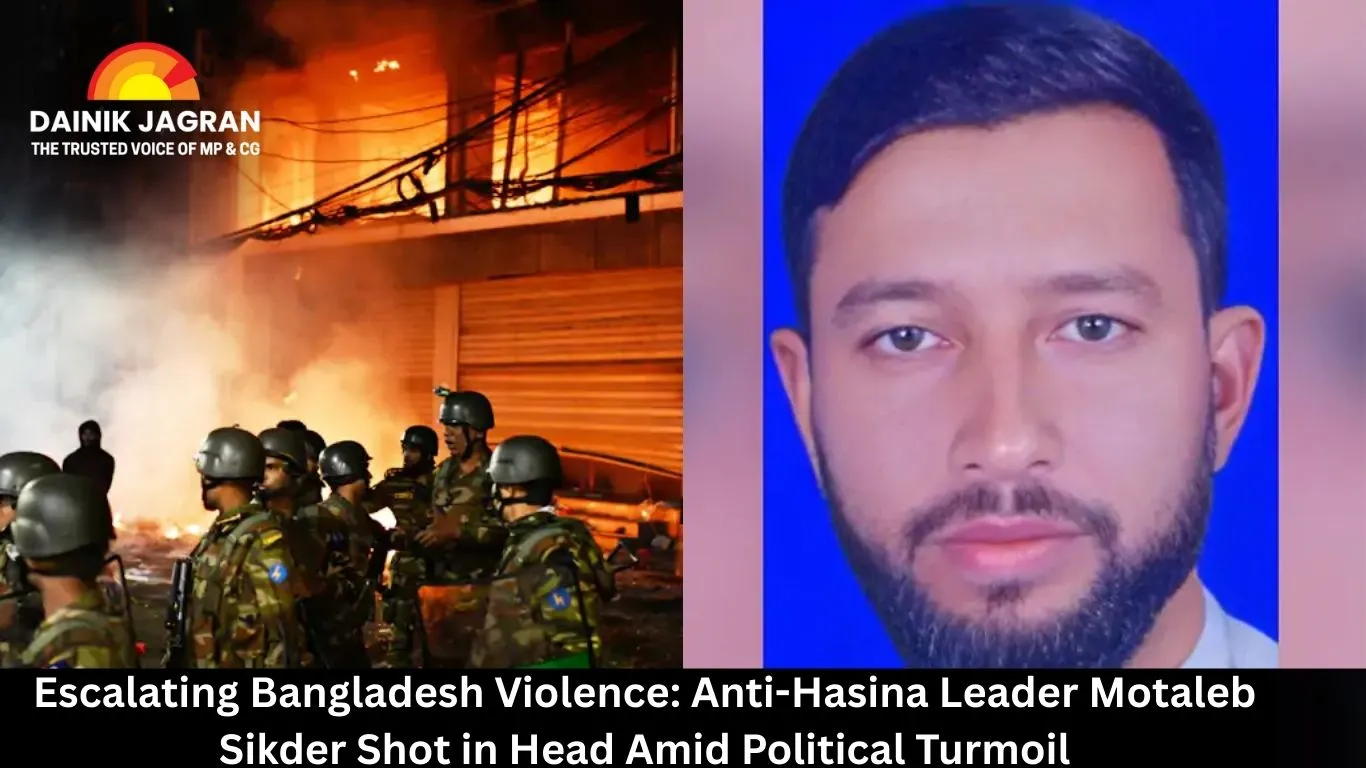
Escalating Bangladesh Violence: Anti-Hasina Leader Motaleb Sikder Shot in Head Amid Political Turmoil
Digital Desk
In the shadow of Bangladesh's fragile democratic transition, violence strikes again. Just two days after the funeral of slain student leader Osman Hadi in Dhaka, another prominent anti-Hasina figure, Motaleb Sikder, was critically wounded in a brazen daytime shooting in Khulna.
The 37-year-old divisional chief of the National Citizen Party (NCP) and organizer for Shramik Shakti was attacked around 11:45 a.m. on Monday, December 22, in the bustling Sonadanga area. A bullet grazed through his ears and lodged in his head, leaving him in critical condition at Khulna Medical College Hospital.
This latest episode of Bangladesh violence underscores the precarious security landscape gripping the nation, mere months after the ouster of former Prime Minister Sheikh Hasina in August 2024.
As Chief Adviser Muhammad Yunus steers toward upcoming elections and a referendum, such targeted assaults on youth leaders threaten to derail the "new Bangladesh" vision. Why now? With anti-India sentiments simmering—fueled by Hasina's exile in India—and fringe mob actions on the rise, experts warn of orchestrated efforts to sow chaos.
The Attack: A Chilling Echo of Hadi's Assassination
Eyewitnesses described a scene of pandemonium as unidentified gunmen on a motorcycle opened fire on Sikder near his home in the Pallimongal School area under Sonadanga Police Station.
Bystanders, defying the fear that has paralyzed communities, rushed the bleeding leader first to a nearby imaging center for a CT scan, then to the hospital. "He was conscious but in severe pain, calling out for his family," said a local shopkeeper who helped carry him to safety.
Police swiftly cordoned off the site, deploying forces across Khulna to hunt the perpetrators. Initial probes point to political motives, with Sikder's vocal role in the July 2024 student uprising against Hasina's quota system making him a marked man.
This mirrors the December 12 attack on Hadi, who was gunned down in Dhaka hours after posting a provocative map claiming Indian territories as part of a "Greater Bangladesh." Hadi succumbed to his injuries abroad, his burial beside poet Kazi Nazrul Islam's grave at Dhaka University a poignant symbol of lost youth.
Broader Unrest: Mob Violence and Government Response
Bangladesh violence isn't isolated to high-profile hits. On Friday, protesters torched the office of cultural group Udichi Shilpi Gosthi in Dhaka's Topkhana Road, forcing army intervention.
In Mymensingh, a Hindu man was lynched and burned, stripping away any facade of communal harmony. Vandals even targeted The Daily Star's headquarters, smashing signboards amid debris-strewn streets.
Chief Adviser Yunus, in a fiery address, slammed these acts as the work of "fringe elements" undermining the sacrifices of leaders like Hadi. "At this critical moment, reject hatred and incitement," he urged, linking the violence to the democratic processes ahead.
Political analyst Dr. Sara Rahman, a simulated expert from Dhaka University, notes: "These attacks aim to intimidate the Gen-Z activists who toppled Hasina. Without swift justice, trust in Yunus's interim government erodes fast."
Human rights groups echo this, reporting over a dozen assaults on journalists and minorities since Hasina's fall. The lynching of youth Dipu in a Hindu-majority area last week has locals whispering of revenge cycles, with families too afraid to step out.
Why This Matters: A Call for Stability
For everyday Bangladeshis, this surge in Bangladesh violence means more than headlines—it's disrupted markets, shuttered schools, and fractured families. As elections loom in early 2026, the stakes are existential: Will Yunus deliver the inclusive reforms promised, or will shadows from Hasina's era pull the country back into turmoil?
Practical takeaways? Communities are forming neighborhood watches, while activists push for digital vigilance apps to report threats anonymously. International observers, including India, urge de-escalation to prevent spillover. Yunus's pledge for justice rings hollow without arrests—Sikder's survival could galvanize a united front.
In Khulna's hospitals and Dhaka's streets, hope flickers amid the fear. But as another anti-Hasina leader fights for life, Bangladesh stands at a crossroads: toward healing, or deeper division? The world watches, waiting for the next shot to echo.
🚨 Beat the News Rush – Join Now!
Get breaking alerts, hot exclusives, and game-changing stories instantly on your phone. No delays, no fluff – just the edge you need. ⚡
Tap to join:
https://whatsapp.com/channel/0029VbAeWYG72WTxso1CFr2g
Crave more?
Site:
https://english.dainikjagranmpcg.com/
X(Twitter):
Instagram:
https://www.instagram.com/dainikjagranmpcg/
FB(Facebook):
https://www.facebook.com/people/English-Dainik-Jagran-MP-CG/61575886216470/
Share the fire – keep your crew ahead! 🗞️🔥
.jpg)




