Escalating Tensions: Afghanistan-Pakistan Relations Strain After Landmark India-Taliban Meeting
Digital Desk
In a dramatic shift in South Asian geopolitics, relations between Afghanistan and Pakistan have hit a new low following a high-level meeting between Indian officials and the Taliban-led government in Kabul.
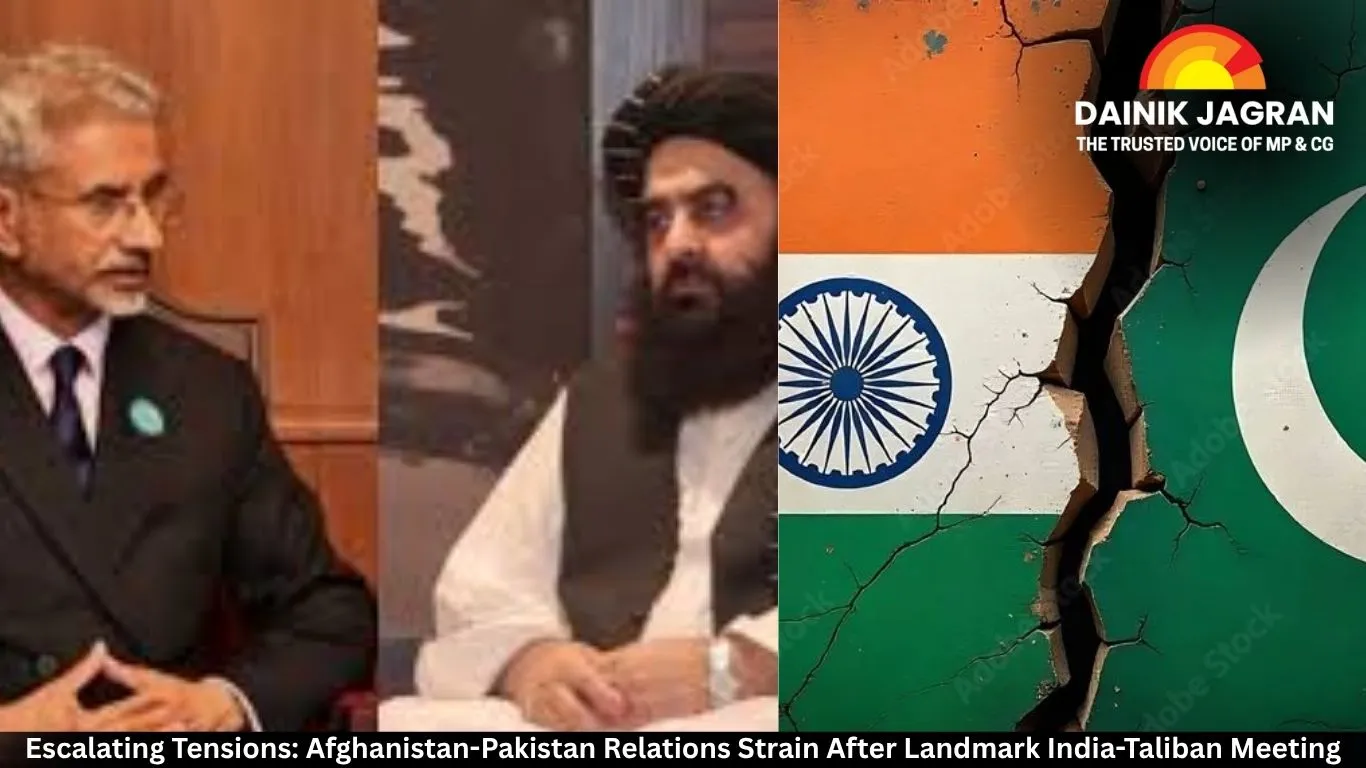
The talks in New Delhi between India's External Affairs Minister S. Jaishankar and Afghanistan's acting Foreign Minister Amir Khan Muttaqi marked a significant upgrade in bilateral ties, with India announcing the reopening of its embassy in Kabul after a four-year hiatus. This move signals India's intent to deepen diplomatic and economic engagement with the Taliban administration, despite ongoing concerns over human rights and regional stability.
The meeting, held amid tight security at Hyderabad House, avoided displaying national flags to sidestep sensitivities around the Taliban's unrecognized status. Discussions focused on trade, humanitarian aid, and counter-terrorism, with both sides emphasizing that Afghan soil would not be used for attacks against any nation.Muttaqi's visit, described as "groundbreaking" by analysts, underscores Afghanistan's pivot toward India as a counterbalance to Pakistan's historical influence. India pledged to elevate its technical mission to a full embassy, boosting ties in areas like infrastructure and education.
Pakistan's reaction was swift and furious. Islamabad lodged a formal protest with Kabul over the joint India-Afghanistan statement, which subtly criticized cross-border terrorisma jab at Pakistan's alleged support for militant groups. Hours after Muttaqi landed in Delhi, Pakistani jets reportedly bombed suspected Tehreek-e-Taliban Pakistan (TTP) hideouts in Kabul, escalating the border conflict.Afghan officials condemned the strikes as a violation of sovereignty, vowing revenge and declaring, "We take no orders from Pakistan anymore."The Taliban accused Pakistan of targeting civilians, further straining the already fragile Durand Line relations.
This airstrike, coinciding with the India-Taliban talks, highlights Pakistan's desperation to reassert dominance. Experts note that Afghanistan's warming ties with India come amid accusations that the Taliban harbors TTP militants, who have launched attacks inside Pakistan. Pakistan's Defense Minister Khawaja Asif labeled Afghanistan a "hostile country," blaming it for terrorism originating from its soil. Social media buzzed with reactions, with users pointing to Pakistan's "master stroke in strategic failure" by damaging ties with Kabul while India gains ground.
The rift has broader implications for regional security. Afghanistan's lean toward India could disrupt Pakistan's supply routes and influence, especially as the Taliban seeks international recognition. Meanwhile, border skirmishes continue, with reports of troop movements and artillery fire.As tensions simmer, the U.S. and other powers watch closely, wary of a full-blown conflict in this volatile region.
This evolving dynamic underscores a realignment in South Asia, where India's pragmatic outreach to the Taliban challenges Pakistan's long-held leverage. With no immediate de-escalation in sight, the Afghanistan-Pakistan border remains a flashpoint, potentially drawing in larger powers.
--------
🚨 Beat the News Rush – Join Now!
Get breaking alerts, hot exclusives, and game-changing stories instantly on your phone. No delays, no fluff – just the edge you need. ⚡
Tap to join:
🟢 WhatsApp Channel: Dainik Jagran MP CG
Crave more?
🅕 Facebook: Dainik Jagran MP CG English
🅧 Twitter (X): Dainik Jagran MP CG
🅘 Instagram: Dainik Jagran MP CG
Share the fire – keep your crew ahead! 🗞️🔥
Escalating Tensions: Afghanistan-Pakistan Relations Strain After Landmark India-Taliban Meeting
Digital Desk
The talks in New Delhi between India's External Affairs Minister S. Jaishankar and Afghanistan's acting Foreign Minister Amir Khan Muttaqi marked a significant upgrade in bilateral ties, with India announcing the reopening of its embassy in Kabul after a four-year hiatus. This move signals India's intent to deepen diplomatic and economic engagement with the Taliban administration, despite ongoing concerns over human rights and regional stability.
The meeting, held amid tight security at Hyderabad House, avoided displaying national flags to sidestep sensitivities around the Taliban's unrecognized status. Discussions focused on trade, humanitarian aid, and counter-terrorism, with both sides emphasizing that Afghan soil would not be used for attacks against any nation.Muttaqi's visit, described as "groundbreaking" by analysts, underscores Afghanistan's pivot toward India as a counterbalance to Pakistan's historical influence. India pledged to elevate its technical mission to a full embassy, boosting ties in areas like infrastructure and education.
Pakistan's reaction was swift and furious. Islamabad lodged a formal protest with Kabul over the joint India-Afghanistan statement, which subtly criticized cross-border terrorisma jab at Pakistan's alleged support for militant groups. Hours after Muttaqi landed in Delhi, Pakistani jets reportedly bombed suspected Tehreek-e-Taliban Pakistan (TTP) hideouts in Kabul, escalating the border conflict.Afghan officials condemned the strikes as a violation of sovereignty, vowing revenge and declaring, "We take no orders from Pakistan anymore."The Taliban accused Pakistan of targeting civilians, further straining the already fragile Durand Line relations.
This airstrike, coinciding with the India-Taliban talks, highlights Pakistan's desperation to reassert dominance. Experts note that Afghanistan's warming ties with India come amid accusations that the Taliban harbors TTP militants, who have launched attacks inside Pakistan. Pakistan's Defense Minister Khawaja Asif labeled Afghanistan a "hostile country," blaming it for terrorism originating from its soil. Social media buzzed with reactions, with users pointing to Pakistan's "master stroke in strategic failure" by damaging ties with Kabul while India gains ground.
The rift has broader implications for regional security. Afghanistan's lean toward India could disrupt Pakistan's supply routes and influence, especially as the Taliban seeks international recognition. Meanwhile, border skirmishes continue, with reports of troop movements and artillery fire.As tensions simmer, the U.S. and other powers watch closely, wary of a full-blown conflict in this volatile region.
This evolving dynamic underscores a realignment in South Asia, where India's pragmatic outreach to the Taliban challenges Pakistan's long-held leverage. With no immediate de-escalation in sight, the Afghanistan-Pakistan border remains a flashpoint, potentially drawing in larger powers.