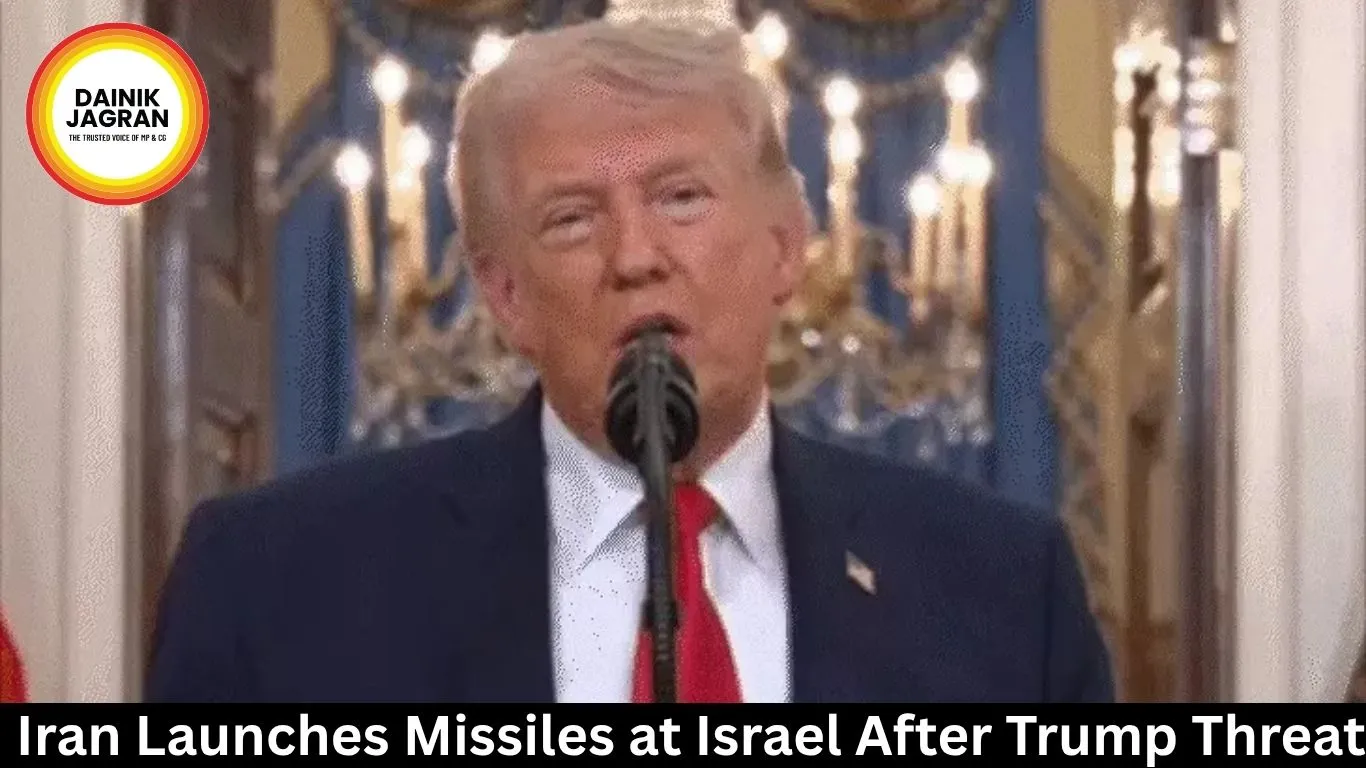
Iran Launches Missiles at Israel After Trump Threat

Digital Desk

Iran Launches Missiles at Israel After Trump Threat

Iran launched missiles at Israel shortly after President Trump vowed to bomb the country “back to the stone age.” Oil prices surge as conflict escalates.

Iran Launches Missiles at Israel Minutes After Trump’s ‘Stone Age’ Threat

Trump declared victory over Iran’s military, but incoming missile fire from Tehran exposed the fragility of that claim.

Within minutes of US President Donald Trump claiming that Iran’s military capabilities had been destroyed, the Israeli military detected a fresh wave of Iranian missile launches. The timing directly contradicted the President’s assertion that Washington had won the war.

Trump, in a televised address, said the United States had achieved a victory “unlike the world has ever seen.” He insisted Iran’s navy was wiped out and its drone fleet no longer existed. He warned Tehran that without a deal, the US would bomb the country “back to the stone age.”

Almost immediately after he finished speaking, air raid sirens sounded across northern Israel. The Israeli military confirmed its defensive systems were actively intercepting incoming threats. No casualties were reported in the initial wave.

Missile Launch After Victory Claim

The Iranian semi-official Tasnim news agency stated the attack was launched directly after Trump’s speech. The agency noted Tehran was responding to the President’s claim that Iranian missile power had been eliminated.

Israel’s Channel 12 broadcaster reported that all incoming rockets were intercepted. The Israeli Home Front quickly lifted shelter directives for residents in the Upper Galilee region. However, the incident proved that Iran retains significant offensive capabilities despite US assertions.

Regional Fallout Spreads Quickly

The escalation is no longer confined to Iranian and Israeli territory. The UAE confirmed its air defences were responding to missile and drone threats from Iran. Bahrain also activated warning sirens following reports of falling debris.

Earlier in the day, a fire broke out at a data centre owned by Amazon Web Services in Bahrain. The Financial Times linked the incident to an Iranian strike. Bahraini authorities confirmed fire crews were dousing the flames at the unnamed facility.

Economic Crisis Deepens in West Asia

The United Nations Development Programme warned the ongoing war is triggering a regional economic collapse. The UNDP estimates the region’s GDP could fall by up to 6%. Ship traffic through the Strait of Hormuz has dropped by over 70%.

Oil prices surged past $106 per barrel following Trump’s speech. Brent crude jumped 5% as markets priced in a prolonged conflict. Between 16 lakh and 36 lakh jobs are at risk across the Middle East, according to UN estimates.

Hezbollah Joins Northern Front

Lebanon’s Hezbollah announced it had launched rocket and drone attacks on Israeli troop positions. The group targeted settlements near the border, including al-Malikiyah and Even Menachem.

The Lebanese armed group also claimed responsibility for a rocket barrage aimed at Israeli infrastructure east of Haifa. This opens a second front for Israeli forces already bracing for continued Iranian missile barrages.

World Leaders Call for Restraint

Australian Prime Minister Anthony Albanese questioned the logic of further fighting. He noted that Trump’s stated objectives have largely been met, adding it is “not clear what more needs to be achieved.”

Britain announced it will host a 35-nation meeting to resolve the Strait of Hormuz crisis. Notably, the United States was not invited to the talks. Meanwhile, France clarified that NATO’s role is limited to protecting Europe, refusing to back US military action in the strait.

What Lies Ahead for India

For India, the crisis poses a direct threat to energy security. The government has already exempted customs duty on key petrochemical products until June 30 to cushion the blow. With oil hovering near $120 per barrel, inflationary pressures are expected to rise.

As Trump vowed to “hit Iran extremely hard” over the next two to three weeks, the window for diplomacy appears closed. The Strait of Hormuz remains blocked, and with Iran still able to launch missiles, the US President’s declaration of victory remains unsubstantiated on the ground.


--------

🚨 Beat the News Rush – Join Now!

Get breaking alerts, hot exclusives, and game-changing stories instantly on your phone. No delays, no fluff – just the edge you need. ⚡

Tap to join: 

🟢 WhatsApp Channel: Dainik Jagran MP CG

Crave more?

🅕 Facebook: Dainik Jagran MP CG English

🅧 Twitter (X): Dainik Jagran MP CG

🅘 Instagram: Dainik Jagran MP CG

Share the fire – keep your crew ahead! 🗞️🔥

english.dainikjagranmpcg.com
02 Apr 2026 By Abhishek Joshi

Iran Launches Missiles at Israel After Trump Threat

Digital Desk

Iran Launches Missiles at Israel Minutes After Trump’s ‘Stone Age’ Threat

Trump declared victory over Iran’s military, but incoming missile fire from Tehran exposed the fragility of that claim.

Within minutes of US President Donald Trump claiming that Iran’s military capabilities had been destroyed, the Israeli military detected a fresh wave of Iranian missile launches. The timing directly contradicted the President’s assertion that Washington had won the war.

Trump, in a televised address, said the United States had achieved a victory “unlike the world has ever seen.” He insisted Iran’s navy was wiped out and its drone fleet no longer existed. He warned Tehran that without a deal, the US would bomb the country “back to the stone age.”

Almost immediately after he finished speaking, air raid sirens sounded across northern Israel. The Israeli military confirmed its defensive systems were actively intercepting incoming threats. No casualties were reported in the initial wave.

Missile Launch After Victory Claim

The Iranian semi-official Tasnim news agency stated the attack was launched directly after Trump’s speech. The agency noted Tehran was responding to the President’s claim that Iranian missile power had been eliminated.

Israel’s Channel 12 broadcaster reported that all incoming rockets were intercepted. The Israeli Home Front quickly lifted shelter directives for residents in the Upper Galilee region. However, the incident proved that Iran retains significant offensive capabilities despite US assertions.

Regional Fallout Spreads Quickly

The escalation is no longer confined to Iranian and Israeli territory. The UAE confirmed its air defences were responding to missile and drone threats from Iran. Bahrain also activated warning sirens following reports of falling debris.

Earlier in the day, a fire broke out at a data centre owned by Amazon Web Services in Bahrain. The Financial Times linked the incident to an Iranian strike. Bahraini authorities confirmed fire crews were dousing the flames at the unnamed facility.

Economic Crisis Deepens in West Asia

The United Nations Development Programme warned the ongoing war is triggering a regional economic collapse. The UNDP estimates the region’s GDP could fall by up to 6%. Ship traffic through the Strait of Hormuz has dropped by over 70%.

Oil prices surged past $106 per barrel following Trump’s speech. Brent crude jumped 5% as markets priced in a prolonged conflict. Between 16 lakh and 36 lakh jobs are at risk across the Middle East, according to UN estimates.

Hezbollah Joins Northern Front

Lebanon’s Hezbollah announced it had launched rocket and drone attacks on Israeli troop positions. The group targeted settlements near the border, including al-Malikiyah and Even Menachem.

The Lebanese armed group also claimed responsibility for a rocket barrage aimed at Israeli infrastructure east of Haifa. This opens a second front for Israeli forces already bracing for continued Iranian missile barrages.

World Leaders Call for Restraint

Australian Prime Minister Anthony Albanese questioned the logic of further fighting. He noted that Trump’s stated objectives have largely been met, adding it is “not clear what more needs to be achieved.”

Britain announced it will host a 35-nation meeting to resolve the Strait of Hormuz crisis. Notably, the United States was not invited to the talks. Meanwhile, France clarified that NATO’s role is limited to protecting Europe, refusing to back US military action in the strait.

What Lies Ahead for India

For India, the crisis poses a direct threat to energy security. The government has already exempted customs duty on key petrochemical products until June 30 to cushion the blow. With oil hovering near $120 per barrel, inflationary pressures are expected to rise.

As Trump vowed to “hit Iran extremely hard” over the next two to three weeks, the window for diplomacy appears closed. The Strait of Hormuz remains blocked, and with Iran still able to launch missiles, the US President’s declaration of victory remains unsubstantiated on the ground.

https://english.dainikjagranmpcg.com/special-news/iran-launches-missiles-at-israel-after-trump-threat/article-16417

Latest News