
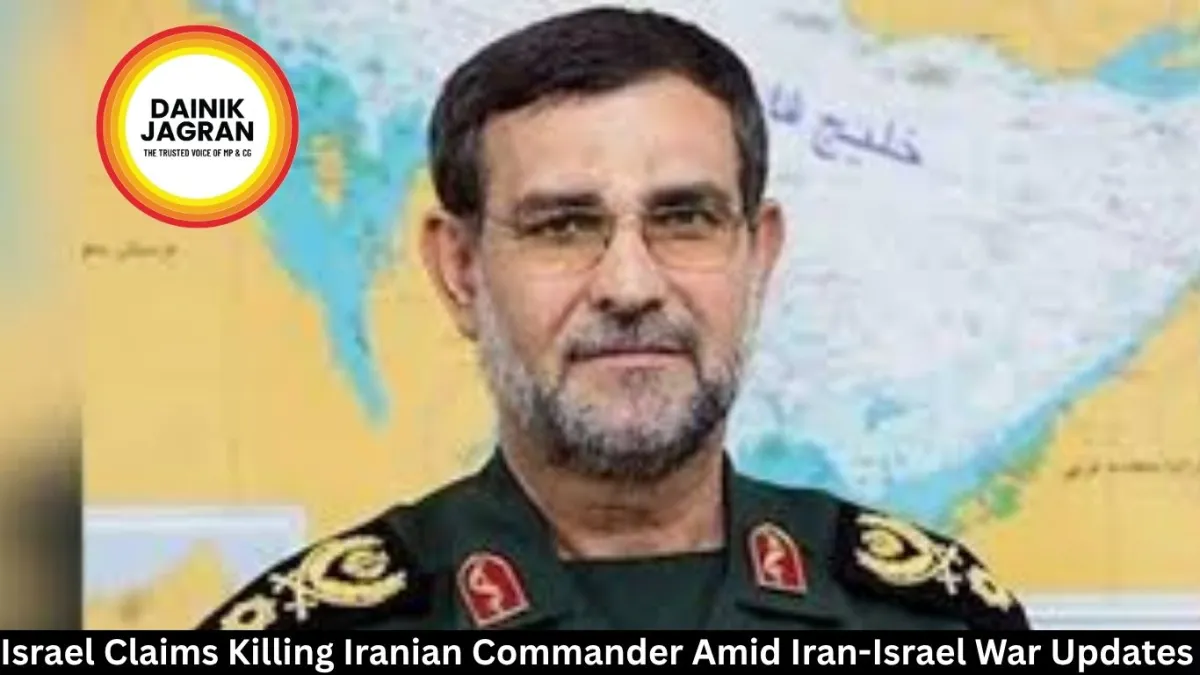

Israel Claims Killing Iranian Commander Amid Iran-Israel War Updates

Digital Desk

Israel Claims Killing Iranian Commander Amid Iran-Israel War Updates

Israel claims killing of IRGC Navy Commander as Pakistan says it averted a strike on Iran's foreign minister. Iran allows India to pass through the Strait of Hormuz. Read latest news updates.


Israel Claims Killing of Iranian Naval Commander as Pakistan Reports Averting Strike on Foreign Minister

Tehran reportedly allows passage through Strait of Hormuz for India and other friendly nations amid escalating regional conflict.

As the US-Israel-Iran conflict enters its 27th day, Israel has claimed responsibility for the killing of a senior Iranian naval commander. Simultaneously, a Pakistani official has revealed that Islamabad intervened to prevent an Israeli strike on Iran’s foreign minister. The developments come as Iran announced it has permitted vessels from India, China, and other friendly nations to transit through the strategically vital Strait of Hormuz.

Killing of Navy Commander

Israel has claimed that its forces killed Islamic Revolutionary Guard Corps (IRGC) Navy Commander Alireza Tangsiri in attacks on the port city of Bandar Abbas. Tangsiri was a key figure in Iran’s maritime strategy, overseeing military operations in the Strait of Hormuz.

Iran has not officially confirmed the death of the commander. The claim adds to the mounting tensions that have gripped the region over the past month.

Pakistan’s Role in Averting Strike

A Pakistani official told Reuters that Islamabad urged the United States to intervene after Israel allegedly planned to target Iranian Foreign Minister Abbas Araghchi and Parliament Speaker Mohammad Bagher Ghalibaf.

According to the official, Israeli intelligence had precise locations of the Iranian figures. The planned strike was reportedly called off after Pakistan communicated to Washington that eliminating them would leave no viable partner for diplomatic negotiations.

Iran Opens Strait to Friendly Nations

Amid the hostilities, Iranian Foreign Minister Abbas Araghchi announced that Tehran has permitted vessels from “friendly countries” to pass through the Strait of Hormuz. The list includes India, China, Russia, Iraq, and Pakistan.

Iran has maintained that the strait is not completely closed but is restricted only for nations considered hostile. The move ensures continued energy supplies and trade routes for key Asian partners, including India, which relies heavily on the passage for its energy security.

Iran’s Conditions for Ending War

Tehran has laid out a five-point framework to end the conflict. The conditions include a complete halt to attacks and targeted killings against Iran, firm guarantees to prevent future conflicts, compensation for war damages, a cessation of hostilities across all fronts, and international recognition of Iran’s rights over the Strait of Hormuz.

Iran has stated it will continue retaliatory measures until these conditions are fulfilled, accusing the US of shifting its stance while Tehran remains consistent.

US Presents 15-Point Proposal

The United States has presented a 15-point proposal to Iran, delivered via Pakistan. The plan demands a halt to Iran’s nuclear programme, limits on uranium enrichment, full access for international inspectors to nuclear sites, and an opening of the Strait of Hormuz for global shipping.

In return, the proposal offers the phased lifting of economic sanctions, international cooperation in civilian nuclear energy, and a long-term roadmap for regional stability. The proposal comes as the US deploys an additional 2,500 troops to West Asia.

Regional Spillover and Global Impact

The conflict has triggered widespread instability across the Middle East. The UAE reported intercepting missile threats, while Saudi Arabia shot down drones over its Eastern Province. Hezbollah has claimed attacks on Israeli military positions, and Israel has launched ground operations in southern Lebanon.

The UN has appointed a special envoy for Middle East peace, with Secretary-General Antonio Guterres warning that the disruption to the Strait of Hormuz will have repercussions for the entire global economy if the route remains compromised for a sustained period.


english.dainikjagranmpcg.com
26 Mar 2026 By Abhishek Joshi

Israel Claims Killing Iranian Commander Amid Iran-Israel War Updates

Digital Desk

Israel Claims Killing of Iranian Naval Commander as Pakistan Reports Averting Strike on Foreign Minister

Tehran reportedly allows passage through Strait of Hormuz for India and other friendly nations amid escalating regional conflict.

As the US-Israel-Iran conflict enters its 27th day, Israel has claimed responsibility for the killing of a senior Iranian naval commander. Simultaneously, a Pakistani official has revealed that Islamabad intervened to prevent an Israeli strike on Iran’s foreign minister. The developments come as Iran announced it has permitted vessels from India, China, and other friendly nations to transit through the strategically vital Strait of Hormuz.

Killing of Navy Commander

Israel has claimed that its forces killed Islamic Revolutionary Guard Corps (IRGC) Navy Commander Alireza Tangsiri in attacks on the port city of Bandar Abbas. Tangsiri was a key figure in Iran’s maritime strategy, overseeing military operations in the Strait of Hormuz.

Iran has not officially confirmed the death of the commander. The claim adds to the mounting tensions that have gripped the region over the past month.

Pakistan’s Role in Averting Strike

A Pakistani official told Reuters that Islamabad urged the United States to intervene after Israel allegedly planned to target Iranian Foreign Minister Abbas Araghchi and Parliament Speaker Mohammad Bagher Ghalibaf.

According to the official, Israeli intelligence had precise locations of the Iranian figures. The planned strike was reportedly called off after Pakistan communicated to Washington that eliminating them would leave no viable partner for diplomatic negotiations.

Iran Opens Strait to Friendly Nations

Amid the hostilities, Iranian Foreign Minister Abbas Araghchi announced that Tehran has permitted vessels from “friendly countries” to pass through the Strait of Hormuz. The list includes India, China, Russia, Iraq, and Pakistan.

Iran has maintained that the strait is not completely closed but is restricted only for nations considered hostile. The move ensures continued energy supplies and trade routes for key Asian partners, including India, which relies heavily on the passage for its energy security.

Iran’s Conditions for Ending War

Tehran has laid out a five-point framework to end the conflict. The conditions include a complete halt to attacks and targeted killings against Iran, firm guarantees to prevent future conflicts, compensation for war damages, a cessation of hostilities across all fronts, and international recognition of Iran’s rights over the Strait of Hormuz.

Iran has stated it will continue retaliatory measures until these conditions are fulfilled, accusing the US of shifting its stance while Tehran remains consistent.

US Presents 15-Point Proposal

The United States has presented a 15-point proposal to Iran, delivered via Pakistan. The plan demands a halt to Iran’s nuclear programme, limits on uranium enrichment, full access for international inspectors to nuclear sites, and an opening of the Strait of Hormuz for global shipping.

In return, the proposal offers the phased lifting of economic sanctions, international cooperation in civilian nuclear energy, and a long-term roadmap for regional stability. The proposal comes as the US deploys an additional 2,500 troops to West Asia.

Regional Spillover and Global Impact

The conflict has triggered widespread instability across the Middle East. The UAE reported intercepting missile threats, while Saudi Arabia shot down drones over its Eastern Province. Hezbollah has claimed attacks on Israeli military positions, and Israel has launched ground operations in southern Lebanon.

The UN has appointed a special envoy for Middle East peace, with Secretary-General Antonio Guterres warning that the disruption to the Strait of Hormuz will have repercussions for the entire global economy if the route remains compromised for a sustained period.


https://english.dainikjagranmpcg.com/special-news/israel-claims-killing-iranian-commander-amid-iran-israel-war-updates/article-16030

Related Posts

Advertisement

Latest News


