Trump Says Iran Is "Begging" for a Deal — But Time Is Running Out Fast

Digital Desk

Trump Says Iran Is

Trump warns Iran time is running out as he claims Tehran is begging for a deal. Full breakdown of the US-Iran war diplomacy crisis — March 26, 2026.

Trump Says Iran Is "Begging" for a Deal — But Time Is Running Out Fast

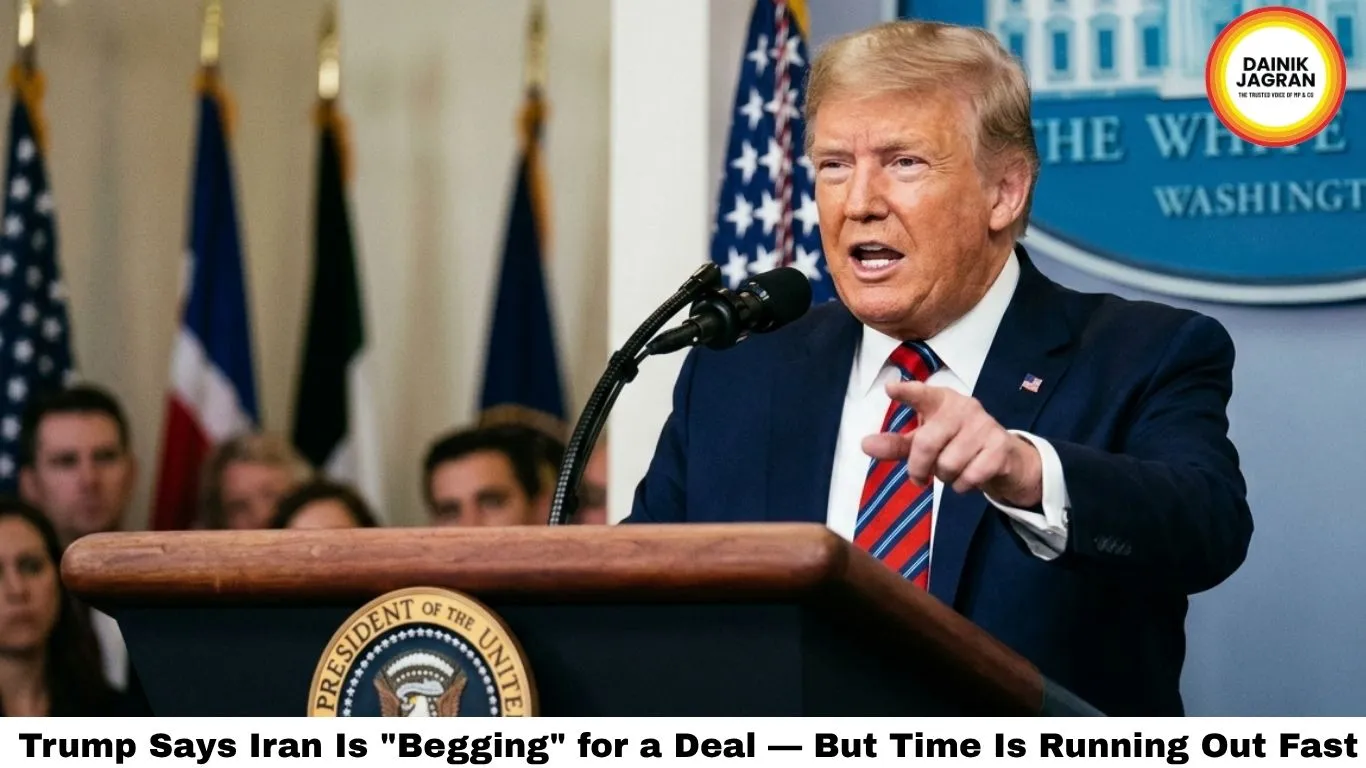
The words came from Truth Social and landed like a thunderclap across diplomatic channels worldwide. President Donald Trump, frustrated with what he described as Iran's confusing and contradictory signals at the negotiating table, turned up the pressure sharply on Thursday — warning Tehran that the window for a deal is closing, and that what comes next will not be pretty.

"They better get serious soon," Trump wrote on his social media platform, "before it is too late, because once that happens, there is NO TURNING BACK, and it won't be pretty."

This is the most intense diplomatic moment of the four-week-old US-Iran war — and the world is watching.

What Trump Actually Said — And What It Means

Trump's Truth Social post on March 26 was strikingly direct. He claimed that Iranian negotiators are "begging" the US to finalise a deal while simultaneously stating publicly that they are merely reviewing the American proposal. Trump called that posture flat-out wrong and demanded that Tehran drop the diplomatic pretence and engage seriously.

The frustration is understandable from Washington's perspective. Earlier this week, Trump had already walked back his own 48-hour ultimatum to bomb Iran's power plants — citing what he called productive conversations with a senior Iranian official. He gave Iran a five-day diplomatic window. That gesture of restraint appears to have produced mixed signals at best and open denial at worst.

Iran's Parliament Speaker Mohammad Bagher Ghalibaf fired back publicly, insisting that no negotiations with the United States had taken place and accusing Trump of using fake news to manipulate oil markets and cover up the military quagmire in which the US and Israel find themselves.

The Back-Channel Reality

Behind the public denials, a very different story is emerging through diplomatic sources. US special envoys Steve Witkoff and Jared Kushner have been in active contact with Ghalibaf — the same Iranian official publicly denying talks ever happened. Egypt, Turkey, and Pakistan are all playing the role of message-carriers, passing communications between Washington and Tehran.

A possible in-person meeting in Islamabad has been discussed, with Witkoff, Kushner, and potentially Vice President JD Vance representing the United States, and Ghalibaf leading the Iranian side. Whether that meeting happens depends entirely on the next 48 to 72 hours of diplomacy.

Trump himself has been careful not to publicly name his Iranian interlocutor, saying only that he does not want to get the man killed — an unusual statement that speaks volumes about the danger and sensitivity of any Iranian official being seen to deal with Washington.

The Strait of Hormuz: The Chokepoint at the Centre of Everything

At the heart of the US demands is the Strait of Hormuz — the narrow waterway connecting the Persian Gulf to the global ocean, through which roughly 20 percent of the world's oil and gas normally flows. Since the war began on February 28, ship transits through the Strait have fallen by an extraordinary 94.2 percent. The passage is physically open, according to US Central Command, but vessels are staying away because Iran has been firing missiles and drones at ships attempting to pass.

The US has demanded Iran reopen the Strait as a condition for any ceasefire agreement. Iran has threatened not only to keep it closed but to mine the entire Persian Gulf if the US attempts a ground invasion or strikes Iranian islands. The economic consequences of this standoff are already global — oil is trading near $100 a barrel, and the head of the International Energy Agency has described the current crisis as worse than the oil shocks of 1973 and 1979 combined.

The Military Escalation Continues

Even as diplomats exchange messages, the bombs have not stopped. Israel struck Tehran again, targeting infrastructure across the city. The Israel Defense Forces launched a strike specifically aimed at the head of Iran's IRGC Navy, Alireza Tangsiri — the outcome of that strike remains under assessment. Iran retaliated with missile and drone attacks on Israel, Gulf Arab states, and US military bases in the region. Kuwait International Airport suffered a massive fire after an Iranian assault. The UAE intercepted multiple incoming Iranian missiles and drones overnight, with explosions audible across Abu Dhabi.

An Indian national in the UAE was injured by falling shrapnel from an intercepted ballistic missile — a reminder that this war's blast radius extends well beyond its principal combatants.

What the Five-Day Window Actually Means

Trump's decision to pause strikes on Iranian power plants created a five-day diplomatic window that is now more than half expired. When that window closes — likely by March 28 or 29 — Trump will face a stark choice: extend it again and risk looking weak, or follow through with strikes on Iran's energy infrastructure, a move that could trigger a catastrophic escalation including Iranian attacks on Gulf energy facilities and a full mining of the Persian Gulf.

Neither path is clean. But the clock is ticking, and Trump has made clear he believes the initiative is his to lose.

The US-Iran war is at a hinge moment. Trump says Iran is begging for a deal. Iran says there are no talks. Both things cannot be true — and somewhere between those contradictions, a diplomatic breakthrough or a devastating escalation is being decided right now. For a world already reeling from $100 oil, shuttered shipping lanes, and more than 1,200 civilians dead in Iran alone, the stakes of getting this wrong have never been higher. The next 72 hours may be the most consequential in a crisis that has already reshaped global energy markets, regional security, and the limits of American military power.
english.dainikjagranmpcg.com
26 Mar 2026 By Jiya.S

Trump Says Iran Is "Begging" for a Deal — But Time Is Running Out Fast

Digital Desk

Trump Says Iran Is "Begging" for a Deal — But Time Is Running Out Fast

The words came from Truth Social and landed like a thunderclap across diplomatic channels worldwide. President Donald Trump, frustrated with what he described as Iran's confusing and contradictory signals at the negotiating table, turned up the pressure sharply on Thursday — warning Tehran that the window for a deal is closing, and that what comes next will not be pretty.

"They better get serious soon," Trump wrote on his social media platform, "before it is too late, because once that happens, there is NO TURNING BACK, and it won't be pretty."

This is the most intense diplomatic moment of the four-week-old US-Iran war — and the world is watching.

What Trump Actually Said — And What It Means

Trump's Truth Social post on March 26 was strikingly direct. He claimed that Iranian negotiators are "begging" the US to finalise a deal while simultaneously stating publicly that they are merely reviewing the American proposal. Trump called that posture flat-out wrong and demanded that Tehran drop the diplomatic pretence and engage seriously.

The frustration is understandable from Washington's perspective. Earlier this week, Trump had already walked back his own 48-hour ultimatum to bomb Iran's power plants — citing what he called productive conversations with a senior Iranian official. He gave Iran a five-day diplomatic window. That gesture of restraint appears to have produced mixed signals at best and open denial at worst.

Iran's Parliament Speaker Mohammad Bagher Ghalibaf fired back publicly, insisting that no negotiations with the United States had taken place and accusing Trump of using fake news to manipulate oil markets and cover up the military quagmire in which the US and Israel find themselves.

The Back-Channel Reality

Behind the public denials, a very different story is emerging through diplomatic sources. US special envoys Steve Witkoff and Jared Kushner have been in active contact with Ghalibaf — the same Iranian official publicly denying talks ever happened. Egypt, Turkey, and Pakistan are all playing the role of message-carriers, passing communications between Washington and Tehran.

A possible in-person meeting in Islamabad has been discussed, with Witkoff, Kushner, and potentially Vice President JD Vance representing the United States, and Ghalibaf leading the Iranian side. Whether that meeting happens depends entirely on the next 48 to 72 hours of diplomacy.

Trump himself has been careful not to publicly name his Iranian interlocutor, saying only that he does not want to get the man killed — an unusual statement that speaks volumes about the danger and sensitivity of any Iranian official being seen to deal with Washington.

The Strait of Hormuz: The Chokepoint at the Centre of Everything

At the heart of the US demands is the Strait of Hormuz — the narrow waterway connecting the Persian Gulf to the global ocean, through which roughly 20 percent of the world's oil and gas normally flows. Since the war began on February 28, ship transits through the Strait have fallen by an extraordinary 94.2 percent. The passage is physically open, according to US Central Command, but vessels are staying away because Iran has been firing missiles and drones at ships attempting to pass.

The US has demanded Iran reopen the Strait as a condition for any ceasefire agreement. Iran has threatened not only to keep it closed but to mine the entire Persian Gulf if the US attempts a ground invasion or strikes Iranian islands. The economic consequences of this standoff are already global — oil is trading near $100 a barrel, and the head of the International Energy Agency has described the current crisis as worse than the oil shocks of 1973 and 1979 combined.

The Military Escalation Continues

Even as diplomats exchange messages, the bombs have not stopped. Israel struck Tehran again, targeting infrastructure across the city. The Israel Defense Forces launched a strike specifically aimed at the head of Iran's IRGC Navy, Alireza Tangsiri — the outcome of that strike remains under assessment. Iran retaliated with missile and drone attacks on Israel, Gulf Arab states, and US military bases in the region. Kuwait International Airport suffered a massive fire after an Iranian assault. The UAE intercepted multiple incoming Iranian missiles and drones overnight, with explosions audible across Abu Dhabi.

An Indian national in the UAE was injured by falling shrapnel from an intercepted ballistic missile — a reminder that this war's blast radius extends well beyond its principal combatants.

What the Five-Day Window Actually Means

Trump's decision to pause strikes on Iranian power plants created a five-day diplomatic window that is now more than half expired. When that window closes — likely by March 28 or 29 — Trump will face a stark choice: extend it again and risk looking weak, or follow through with strikes on Iran's energy infrastructure, a move that could trigger a catastrophic escalation including Iranian attacks on Gulf energy facilities and a full mining of the Persian Gulf.

Neither path is clean. But the clock is ticking, and Trump has made clear he believes the initiative is his to lose.

The US-Iran war is at a hinge moment. Trump says Iran is begging for a deal. Iran says there are no talks. Both things cannot be true — and somewhere between those contradictions, a diplomatic breakthrough or a devastating escalation is being decided right now. For a world already reeling from $100 oil, shuttered shipping lanes, and more than 1,200 civilians dead in Iran alone, the stakes of getting this wrong have never been higher. The next 72 hours may be the most consequential in a crisis that has already reshaped global energy markets, regional security, and the limits of American military power.

https://english.dainikjagranmpcg.com/international/69c519551ad4e/article-16041

Advertisement

Latest News