Magh Mela Controversy Deepens: Administration Warns Swami Avimukteshwaranand of Permanent Ban
Digital Desk
Magh Mela Controversy Deepens: Administration Warns Swami Avimukteshwaranand of Permanent Ban
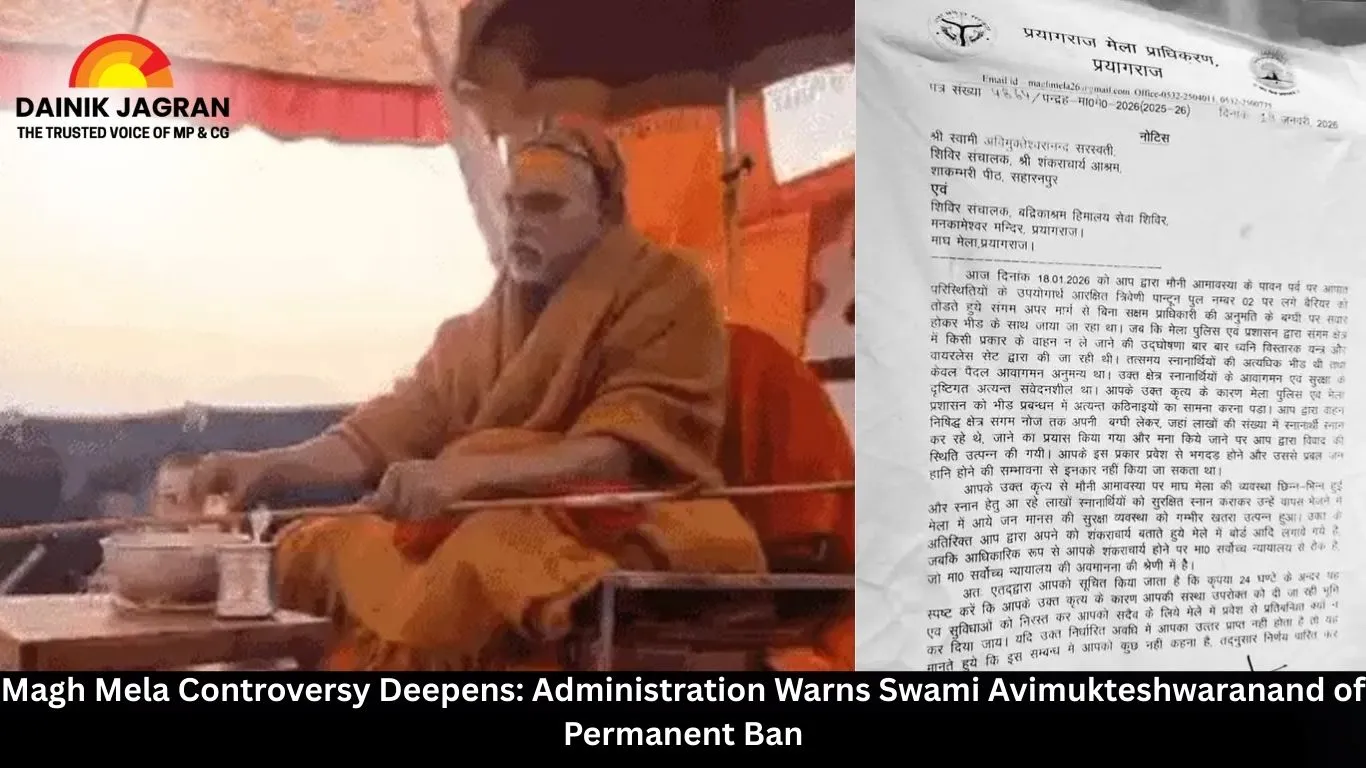
The sacred grounds of Prayagraj’s Magh Mela have become the stage for a escalating confrontation between religious tradition and administrative authority. The Magh Mela controversy has intensified dramatically, with the Mela administration issuing a second stern notice to Swami Avimukteshwaranand within 48 hours, warning of a potential permanent ban from the festival. This clash, centered on events during the auspicious Mauni Amavasya bath, has split the saint community, drawn political intervention, and raised pressing questions about protocol and respect in India’s spiritual heartland.
At the core of the Magh Mela controversy are starkly conflicting accounts of January 18. The administration alleges the seer broke a barrier on a reserve pontoon bridge and attempted to forcibly enter a densely crowded area with a carriage, "creating a serious risk of a stampede." Their notice demands to know why he should not be banned for life, threatening to withdraw his camp’s allotted land if a satisfactory reply is not given within 24 hours.
However, Swami Avimukteshwaranand’s camp has fired back with a detailed, three-page rebuttal. His media in-charge, Shailendra Yogiraj, calls the notice "vindictive" and backdated. The Swami’s response denies all allegations, stating he owns no horse-drawn carriage and was in a simple palanquin carried by devotees. He accuses certain officials of deliberately orchestrating disorder and then scapegoating him, asserting that CCTV footage would exonerate him. On the administration’s challenge to his Shankaracharya title, his reply advises officials to refrain from commentary on sub-judice matters.
The Magh Mela controversy has revealed deep fissures within the religious community. Prominent voices like Dwarka’s Shankaracharya Swami Sadanand Maharaj and Puri’s Shankaracharya Nishchalanand Saraswati have rallied behind Avimukteshwaranand, condemning administrative "arrogance." Conversely, Jagadguru Rambhadracharya has stated "no injustice was done" to the Swami, suggesting the fault lies with his insistence on using a palanquin.
Politically, the issue is gaining heat. Samajwadi Party leader Mata Prasad Pandey met the Swami, alleging a conspiracy and promising to raise the issue in the assembly. Shiv Sena (UBT) leader Sanjay Raut has condemned the treatment of the seer. Meanwhile, the administration appears to be holding its ground, setting the stage for a potential legal and devotional standoff.
Why This Matters Now
This is more than a procedural dispute. It highlights the tense, often fragile balance between managing millions of devotees at mega-festivals and respecting centuries-old traditions of ascetic authority. With the festival ongoing and the next key bath—Basant Panchami—approaching, the Magh Mela controversy threatens to cast a shadow over the remaining rituals. Swami Avimukteshwaranand has declared he will not perform the Basant Snan until he completes his disputed Mauni Amavasya bath, ensuring the impasse continues.
The coming 24 hours are critical. Will the administration’s ultimatum force a resolution, or will it inflame sentiments further, potentially triggering the wider saint-led protests some have warned of? This Magh Mela controversy has evolved from a local incident into a national discourse on faith, order, and power.