Pakistan rejects Trump's call to join Abraham Accords

Digital Desk

Pakistan rejects Trump's call to join Abraham Accords

Pakistan’s Defence Minister Khawaja Asif firmly rejects US President Donald Trump’s appeal to normalise ties with Israel under the Abraham Accords.


Islamabad says its stance on the Middle East issue remains non-negotiable despite fresh calls from Washington linking normalisation to regional peace talks.

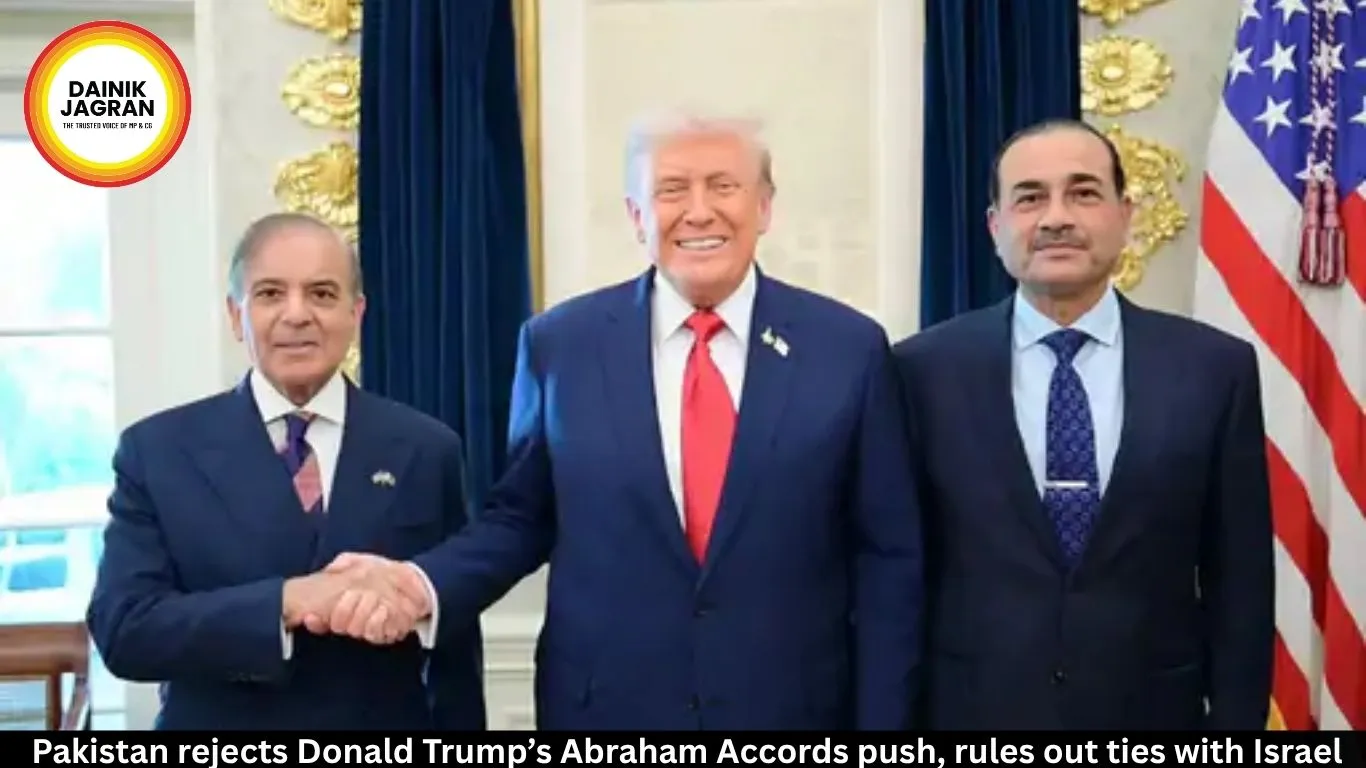
In a sharp diplomatic pushback, Pakistan has firmly rejected US President Donald Trump’s latest appeal to normalise relations with Israel by joining the Abraham Accords. Defending the country’s traditional foreign policy, Defence Minister Khawaja Muhammad Asif stated that Islamabad cannot compromise on its foundational principles for short-term strategic gains.

The developments unfolded on Monday after Trump outlined a major diplomatic push on social media, linking ongoing US-Iran peace negotiations to a broader Middle East settlement. In a lengthy public statement, Trump explicitly named Pakistan alongside heavyweights like Saudi Arabia and Turkiye, urging them to simultaneously sign the accords to secure a wider regional alignment.

Reacting swiftly to the proposal during a late-night television interview, Asif made it clear that joining such an arrangement is out of the question. “Personally, I don't think we should join any such accord that clashes with our fundamental ideologies,” the Defence Minister told Samaa TV.

Core ideology non-negotiable

The strongly worded rejection from Islamabad underlines the domestic and political sensitivities that govern Pakistan’s approach to the Middle East. Officials in the foreign ministry indicated that the state's official position has remained consistent for the past 78 years, anchoring any potential recognition of Israel to the creation of an independent Palestinian state based on pre-1967 borders with East Jerusalem as its capital.

Asif also took aim at the diplomatic credibility of the Israeli leadership, questioning how any sovereign nation could engage in structured negotiations under the current global climate. “How will you sit down with those people whose word cannot be trusted even for a single day?” he asked, highlighting deep-seated skepticism over ongoing ceasefire violations in Gaza.

Passport policy stands out

To drive home the point, the Defence Minister pointed toward a unique domestic legal barrier that defines the state’s absolute isolation from Tel Aviv. He reminded the public that the country’s travel documents are intentionally designed to restrict access, calling it an institutional proof of Pakistan's refusal to recognise Israel.

“On our passports, we are the only country whose passports don't even include Israel's name,” Asif noted, referencing the explicit inscription stating the document is valid for all countries except Israel.

Trump’s wider alliance blueprint

The push from Washington appears to be part of a broader, unconventional blueprint curated by the Trump administration to establish a massive US-backed alliance in West Asia. According to diplomatic sources, Trump is attempting to capitalise on the current momentum of negotiations with Iran to pull multiple Muslim-majority states into the Abraham Accords framework.

Trump described the ongoing talks with Tehran as "proceeding nicely" but added a stark warning that failure to secure an all-encompassing deal would mean a return to active hostilities. He argued that the 2020 accords, which initially brought the UAE, Bahrain, and Morocco into formal diplomatic terms with Israel, have triggered an economic and social boom that other regional players should look to replicate.

Economic and domestic tightrope

For the current ruling coalition in Islamabad, balancing Washington's expectations against severe domestic pushback remains an incredibly delicate tightrope walk. Observers note that while Pakistan relies heavily on international financial systems and trade ties with the West, any overt softening towards Israel carries extreme domestic political risks capable of triggering widespread public unrest.

Furthermore, the situation is complicated by the evolving stances of major Gulf monarchies. With key regional allies like Saudi Arabia also being intensely courted by the US for normalisation pacts, Islamabad faces the challenging prospect of maintaining its traditional stance while navigating its deep economic dependency on financial assistance and remittances from the Gulf region.

No policy shift ahead

Despite the mounting pressure, senior officials in Islamabad insist that participation in multilateral humanitarian forums should not be misconstrued as a diplomatic shift. Earlier this year, when questions were raised regarding Pakistani representatives attending a Gaza-related peace board meeting, the Foreign Ministry had issued a similar clarification denying any backchannel movement toward the Abraham Accords.

For now, the government maintains that its position remains absolute, leaving little room for the diplomatic expansion Trump envisioned in his latest regional peace outline.
 

--------

🚨 Beat the News Rush – Join Now!

Get breaking alerts, hot exclusives, and game-changing stories instantly on your phone. No delays, no fluff – just the edge you need. ⚡

Tap to join: 

🟢 WhatsApp Channel: Dainik Jagran MP CG

Crave more?

🅕 Facebook: Dainik Jagran MP CG English

🅧 Twitter (X): Dainik Jagran MP CG

🅘 Instagram: Dainik Jagran MP CG

Share the fire – keep your crew ahead! 🗞️🔥

english.dainikjagranmpcg.com
27 May 2026 By Abhishek Joshi

Pakistan rejects Trump's call to join Abraham Accords

Digital Desk

Islamabad says its stance on the Middle East issue remains non-negotiable despite fresh calls from Washington linking normalisation to regional peace talks.

In a sharp diplomatic pushback, Pakistan has firmly rejected US President Donald Trump’s latest appeal to normalise relations with Israel by joining the Abraham Accords. Defending the country’s traditional foreign policy, Defence Minister Khawaja Muhammad Asif stated that Islamabad cannot compromise on its foundational principles for short-term strategic gains.

The developments unfolded on Monday after Trump outlined a major diplomatic push on social media, linking ongoing US-Iran peace negotiations to a broader Middle East settlement. In a lengthy public statement, Trump explicitly named Pakistan alongside heavyweights like Saudi Arabia and Turkiye, urging them to simultaneously sign the accords to secure a wider regional alignment.

Reacting swiftly to the proposal during a late-night television interview, Asif made it clear that joining such an arrangement is out of the question. “Personally, I don't think we should join any such accord that clashes with our fundamental ideologies,” the Defence Minister told Samaa TV.

Core ideology non-negotiable

The strongly worded rejection from Islamabad underlines the domestic and political sensitivities that govern Pakistan’s approach to the Middle East. Officials in the foreign ministry indicated that the state's official position has remained consistent for the past 78 years, anchoring any potential recognition of Israel to the creation of an independent Palestinian state based on pre-1967 borders with East Jerusalem as its capital.

Asif also took aim at the diplomatic credibility of the Israeli leadership, questioning how any sovereign nation could engage in structured negotiations under the current global climate. “How will you sit down with those people whose word cannot be trusted even for a single day?” he asked, highlighting deep-seated skepticism over ongoing ceasefire violations in Gaza.

Passport policy stands out

To drive home the point, the Defence Minister pointed toward a unique domestic legal barrier that defines the state’s absolute isolation from Tel Aviv. He reminded the public that the country’s travel documents are intentionally designed to restrict access, calling it an institutional proof of Pakistan's refusal to recognise Israel.

“On our passports, we are the only country whose passports don't even include Israel's name,” Asif noted, referencing the explicit inscription stating the document is valid for all countries except Israel.

Trump’s wider alliance blueprint

The push from Washington appears to be part of a broader, unconventional blueprint curated by the Trump administration to establish a massive US-backed alliance in West Asia. According to diplomatic sources, Trump is attempting to capitalise on the current momentum of negotiations with Iran to pull multiple Muslim-majority states into the Abraham Accords framework.

Trump described the ongoing talks with Tehran as "proceeding nicely" but added a stark warning that failure to secure an all-encompassing deal would mean a return to active hostilities. He argued that the 2020 accords, which initially brought the UAE, Bahrain, and Morocco into formal diplomatic terms with Israel, have triggered an economic and social boom that other regional players should look to replicate.

Economic and domestic tightrope

For the current ruling coalition in Islamabad, balancing Washington's expectations against severe domestic pushback remains an incredibly delicate tightrope walk. Observers note that while Pakistan relies heavily on international financial systems and trade ties with the West, any overt softening towards Israel carries extreme domestic political risks capable of triggering widespread public unrest.

Furthermore, the situation is complicated by the evolving stances of major Gulf monarchies. With key regional allies like Saudi Arabia also being intensely courted by the US for normalisation pacts, Islamabad faces the challenging prospect of maintaining its traditional stance while navigating its deep economic dependency on financial assistance and remittances from the Gulf region.

No policy shift ahead

Despite the mounting pressure, senior officials in Islamabad insist that participation in multilateral humanitarian forums should not be misconstrued as a diplomatic shift. Earlier this year, when questions were raised regarding Pakistani representatives attending a Gaza-related peace board meeting, the Foreign Ministry had issued a similar clarification denying any backchannel movement toward the Abraham Accords.

For now, the government maintains that its position remains absolute, leaving little room for the diplomatic expansion Trump envisioned in his latest regional peace outline.
 

https://english.dainikjagranmpcg.com/special-news/pakistan-rejects-trumps-call-to-join-abraham-accords/article-19290

Latest News