Pakistan Strikes Afghanistan Kill 13 Civilians, Taliban Says

Digital Desk

Pakistan Strikes Afghanistan Kill 13 Civilians, Taliban Says

Taliban accuses Pakistan of overnight air strikes in Kunar, Khost and Paktika provinces killing 13, including 11 children. Fresh escalation in cross-border tensions amid long-running disputes over militancy.

The Taliban government on Wednesday accused Pakistan of conducting overnight air strikes inside Afghan territory, claiming at least 13 civilians were killed, including 11 children.

Taliban spokesperson Zabihullah Mujahid said Pakistani military aircraft violated Afghan airspace between Tuesday night and early Wednesday, hitting civilian homes in the eastern provinces of Kunar, Khost, and Paktika. Fourteen others were injured, mostly women, according to the group.

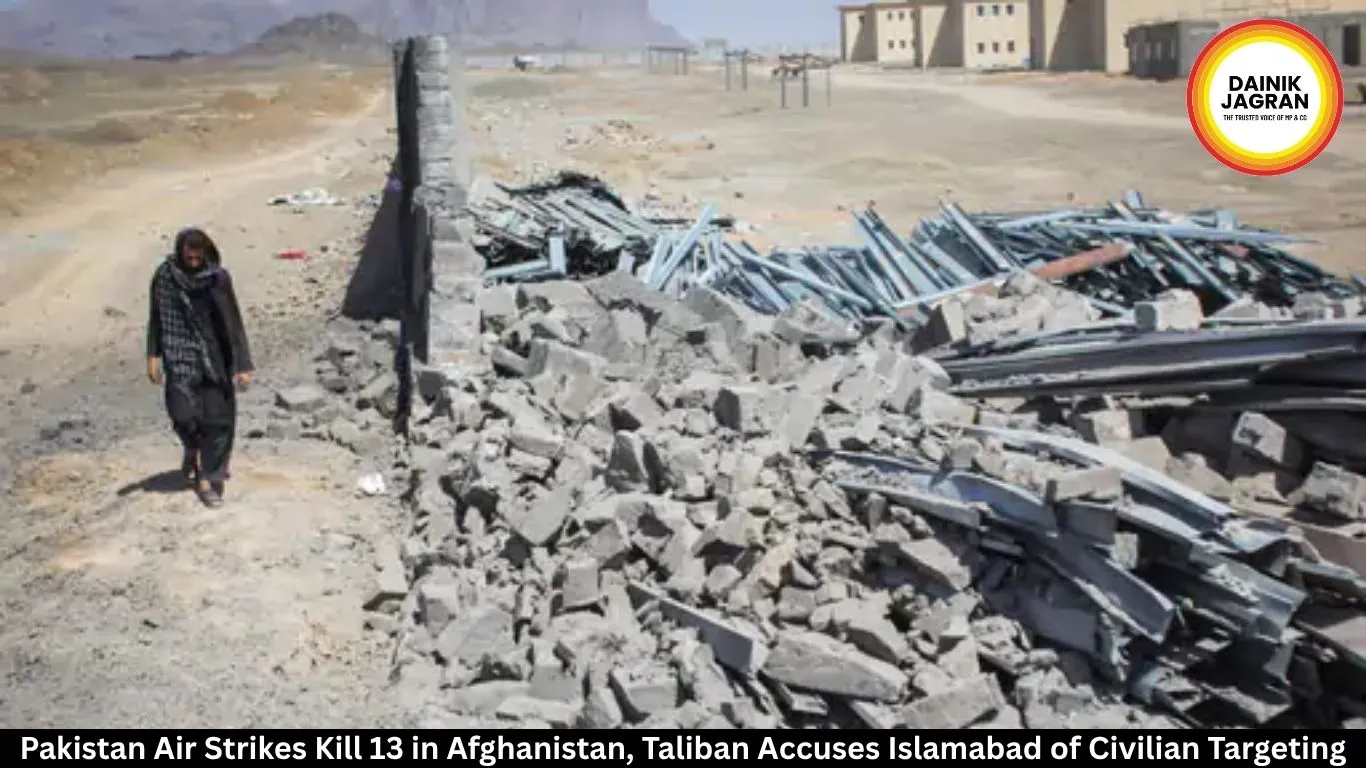
Mujahid described the attacks as “unprovoked aggression” and released photographs showing what he said were the aftermath, including damaged homes and casualties. Pakistan has not yet commented publicly on the latest allegations.

Strikes Hit Residential Areas

Initial reports from local sources indicated explosions in remote villages near the border. Residents described hearing aircraft overhead followed by blasts that shook homes, according to accounts shared with Afghan media outlets. One survivor reportedly lost multiple family members in the strikes.

The Taliban has framed the incident as part of a pattern of cross-border operations by Islamabad that have intensified over the past year.

Rising Civilian Toll

Of the 13 killed, 11 were children, one woman, and one elderly man, Mujahid said. The group also claimed 14 women sustained injuries. While independent verification remains difficult in the volatile region, such casualty figures have become distressingly common in recent flare-ups between the two neighbours.

Photographs circulated by Taliban officials showed rubble and what appeared to be remnants of residential structures. Afghan authorities have called for an immediate end to what they term repeated violations of sovereignty.

Background of Escalating Tensions

Relations between Kabul and Islamabad have deteriorated sharply since the Taliban’s return to power in 2021. Once seen as a key backer of the group, Pakistan now accuses the Taliban of sheltering militants from the Tehreek-e-Taliban Pakistan (TTP) and Balochistan Liberation Army (BLA), who Islamabad blames for deadly attacks inside Pakistan.

Taliban officials reject these charges and counter that Pakistan harbours anti-Afghan elements and routinely infringes on Afghan territory. The border has largely remained closed since major clashes erupted in October 2025, disrupting trade and displacing thousands of civilians on both sides.

Earlier incidents, including reported strikes on a rehabilitation centre in Kabul in March that allegedly killed hundreds, have further poisoned the atmosphere. Pakistani authorities have consistently maintained that their operations target militant hideouts and are necessary for national security.

Impact on Border Communities

The latest violence comes as residents along the porous Durand Line continue to bear the brunt of the conflict. Many families have already fled deeper into Afghanistan or towards safer areas, adding to the humanitarian strain in a country already grappling with economic hardship and internal challenges.

Local traders and farmers, who once relied on cross-border movement, say the prolonged closure has devastated livelihoods. “We used to move goods freely; now everything is frozen,” one merchant from the region was quoted saying in local reports.

Diplomatic Silence and Next Steps

As of Wednesday afternoon, there was no official word from Pakistan’s foreign ministry or military on the Taliban’s accusations. Analysts suggest Islamabad may view such operations as defensive measures against what it sees as persistent threats emanating from Afghan soil.

The incident is likely to further complicate already strained regional dynamics. With both sides locked in mutual recriminations, the prospects for dialogue remain dim in the near term.

Observers warn that continued military actions risk spiralling into wider instability, affecting not just bilateral ties but the broader security architecture in South and Central Asia. International calls for restraint have so far yielded little visible effect on the ground.

The Taliban has vowed to respond appropriately while urging the international community to take note of what it calls Pakistani aggression. For now, the focus remains on the immediate aftermath in Kunar, Khost, and Paktika, where rescue and relief efforts are reportedly underway.

 

--------

🚨 Beat the News Rush – Join Now!

Get breaking alerts, hot exclusives, and game-changing stories instantly on your phone. No delays, no fluff – just the edge you need. ⚡

Tap to join: 

🟢 WhatsApp Channel: Dainik Jagran MP CG

Crave more?

🅕 Facebook: Dainik Jagran MP CG English

🅧 Twitter (X): Dainik Jagran MP CG

🅘 Instagram: Dainik Jagran MP CG

Share the fire – keep your crew ahead! 🗞️🔥

english.dainikjagranmpcg.com
10 Jun 2026 By Abhishek Joshi

Pakistan Strikes Afghanistan Kill 13 Civilians, Taliban Says

Digital Desk

The Taliban government on Wednesday accused Pakistan of conducting overnight air strikes inside Afghan territory, claiming at least 13 civilians were killed, including 11 children.

Taliban spokesperson Zabihullah Mujahid said Pakistani military aircraft violated Afghan airspace between Tuesday night and early Wednesday, hitting civilian homes in the eastern provinces of Kunar, Khost, and Paktika. Fourteen others were injured, mostly women, according to the group.

Mujahid described the attacks as “unprovoked aggression” and released photographs showing what he said were the aftermath, including damaged homes and casualties. Pakistan has not yet commented publicly on the latest allegations.

Strikes Hit Residential Areas

Initial reports from local sources indicated explosions in remote villages near the border. Residents described hearing aircraft overhead followed by blasts that shook homes, according to accounts shared with Afghan media outlets. One survivor reportedly lost multiple family members in the strikes.

The Taliban has framed the incident as part of a pattern of cross-border operations by Islamabad that have intensified over the past year.

Rising Civilian Toll

Of the 13 killed, 11 were children, one woman, and one elderly man, Mujahid said. The group also claimed 14 women sustained injuries. While independent verification remains difficult in the volatile region, such casualty figures have become distressingly common in recent flare-ups between the two neighbours.

Photographs circulated by Taliban officials showed rubble and what appeared to be remnants of residential structures. Afghan authorities have called for an immediate end to what they term repeated violations of sovereignty.

Background of Escalating Tensions

Relations between Kabul and Islamabad have deteriorated sharply since the Taliban’s return to power in 2021. Once seen as a key backer of the group, Pakistan now accuses the Taliban of sheltering militants from the Tehreek-e-Taliban Pakistan (TTP) and Balochistan Liberation Army (BLA), who Islamabad blames for deadly attacks inside Pakistan.

Taliban officials reject these charges and counter that Pakistan harbours anti-Afghan elements and routinely infringes on Afghan territory. The border has largely remained closed since major clashes erupted in October 2025, disrupting trade and displacing thousands of civilians on both sides.

Earlier incidents, including reported strikes on a rehabilitation centre in Kabul in March that allegedly killed hundreds, have further poisoned the atmosphere. Pakistani authorities have consistently maintained that their operations target militant hideouts and are necessary for national security.

Impact on Border Communities

The latest violence comes as residents along the porous Durand Line continue to bear the brunt of the conflict. Many families have already fled deeper into Afghanistan or towards safer areas, adding to the humanitarian strain in a country already grappling with economic hardship and internal challenges.

Local traders and farmers, who once relied on cross-border movement, say the prolonged closure has devastated livelihoods. “We used to move goods freely; now everything is frozen,” one merchant from the region was quoted saying in local reports.

Diplomatic Silence and Next Steps

As of Wednesday afternoon, there was no official word from Pakistan’s foreign ministry or military on the Taliban’s accusations. Analysts suggest Islamabad may view such operations as defensive measures against what it sees as persistent threats emanating from Afghan soil.

The incident is likely to further complicate already strained regional dynamics. With both sides locked in mutual recriminations, the prospects for dialogue remain dim in the near term.

Observers warn that continued military actions risk spiralling into wider instability, affecting not just bilateral ties but the broader security architecture in South and Central Asia. International calls for restraint have so far yielded little visible effect on the ground.

The Taliban has vowed to respond appropriately while urging the international community to take note of what it calls Pakistani aggression. For now, the focus remains on the immediate aftermath in Kunar, Khost, and Paktika, where rescue and relief efforts are reportedly underway.

 

https://english.dainikjagranmpcg.com/special-news/pakistan-strikes-afghanistan-kill-13-civilians-taliban-says/article-19975

Related Posts

Latest News