Panchayat Secretaries Barred from Home, In-Laws Villages: MP New Transfer Policy
Digital Desk
Madhya Pradesh issues new transfer guidelines for over 23,000 panchayat secretaries. No postings in native or in-laws’ villages; mandatory shift if relative becomes sarpanch. Transfers to be completed by June 15.
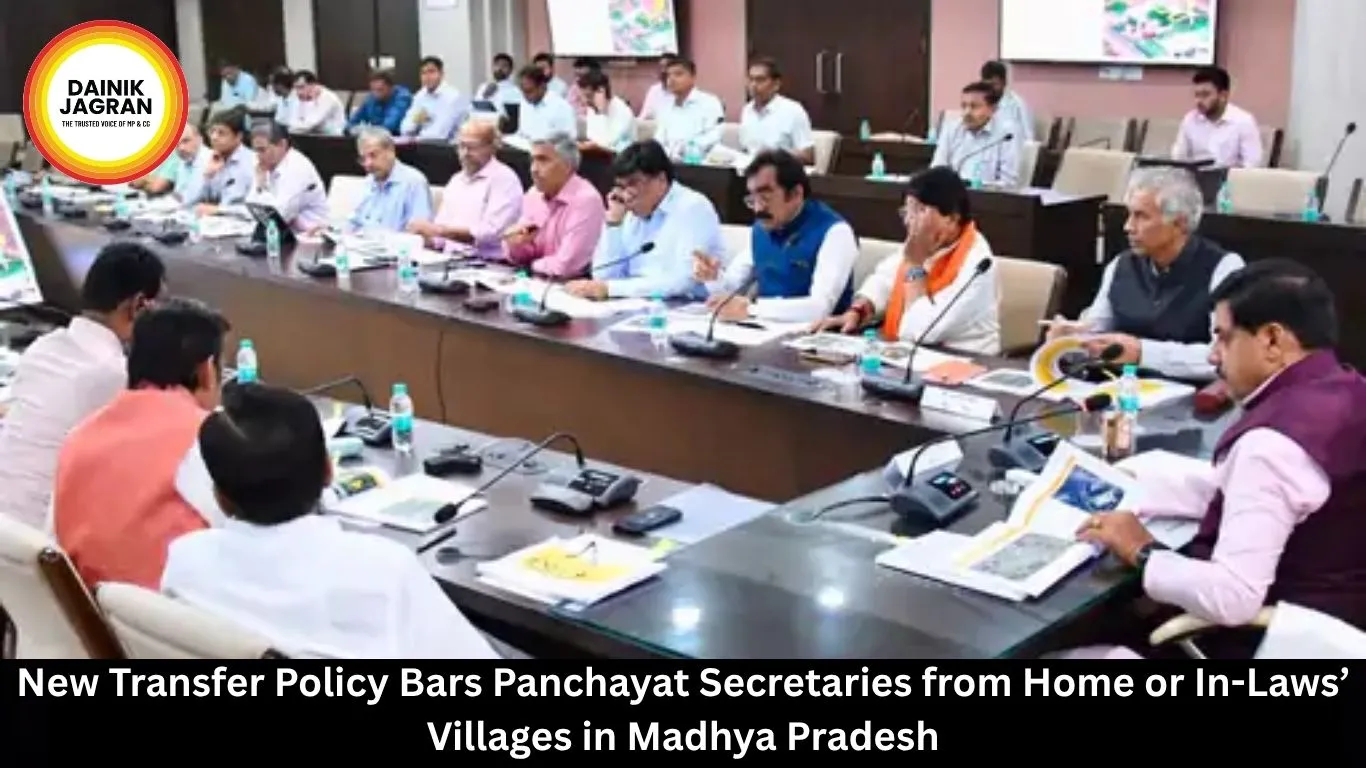
In a significant move during the ongoing transfer season, the Madhya Pradesh Panchayat and Rural Development Department has issued fresh guidelines restricting postings of panchayat secretaries in their native or in-laws’ villages. The new policy also mandates immediate transfers if a close relative of a secretary gets elected as sarpanch or up-sarpanch in the same panchayat.
The department issued the order on June 9, directing all district collectors and chief executive officers of district panchayats to complete the intra-district transfers by June 15. Officials said the guidelines, framed under instructions from the General Administration Department, aim to ensure transparency and minimise conflict of interest at the grassroots level of local governance.
Strict Bar on Native Postings
Under the new norms, no panchayat secretary will be allowed to continue or be posted in their grih gram (native village) or sasural (in-laws’ village). This restriction seeks to prevent any undue influence or familial pressures in day-to-day administrative functioning of gram panchayats.
The policy further states that if any relative of a serving secretary is elected as sarpanch or up-sarpanch, the secretary concerned will be shifted out immediately. Department sources said such cases will be prioritised during the ongoing transfer drive.
Long-Staying Secretaries to Be Moved First
The guidelines give priority to secretaries who have been posted in the same panchayat for 10 years or more. If the number of such long-serving officials exceeds the available transfer quota, those with the longest tenures will be transferred first. With over 23,000 panchayat secretaries working across the state, this exercise is expected to bring fresh administrative vigour to many panchayats.
Mandatory Transfers in Specific Cases
The department has listed several situations where transfers have been made compulsory. Apart from familial connections with elected representatives, secretaries facing corruption charges, financial irregularities, or serious complaints will also be shifted. Transfers can be effected even during the general prohibition period in cases involving pending disciplinary action, inquiries by the Lokayukta, Economic Offences Wing, or other agencies.
In such exceptional cases, orders will be issued by the commissioner or director of panchayat raj with the approval of the departmental minister.
Inter-District Transfers on Voluntary Basis
The policy allows inter-district transfers (sanvilyan) only on a voluntary basis. Married, widowed, or divorced women secretaries can apply for posting in their husband’s, in-laws’, or parents’ district. Similarly, secretaries appointed under compassionate grounds can seek transfer to their home district if they were posted elsewhere.
Applicants will have to submit requests to the chief executive officer of their current district panchayat. After verifying vacant posts in the desired district, proposals will be forwarded to the directorate in Bhopal for approval. Once transferred, the secretary’s name will be placed at the bottom of the seniority list in the new district, and this facility can be availed only once.
Background and Administrative Context
Madhya Pradesh has been witnessing regular reshuffles in panchayat administration to maintain efficiency and accountability. The latest guidelines come at a time when many districts are finalising transfer lists. Collectors have been asked to ensure the entire process is completed within the stipulated deadline following recommendations and ministerial approval.
Local officials familiar with the matter said the move is part of broader efforts to strengthen panchayati raj institutions by reducing possibilities of local influence peddling. Many sarpanches and panchayat representatives have long demanded such measures to ensure impartial implementation of government schemes at the village level.
Expected Impact on Ground
The new policy is likely to affect hundreds of secretaries across the state. In rural areas, where family and kinship ties often play a strong role in local politics, the restrictions are being viewed as a step towards more neutral administration. However, some secretaries posted for long years may face logistical challenges in relocating with their families at short notice.
District administrations have been told to handle the process smoothly while adhering strictly to the new rules. The focus remains on completing intra-district transfers by mid-June, with inter-district requests being processed subsequently.
As the transfer orders begin to roll out in the coming days, the department is expected to closely monitor compliance. The development is being closely watched by panchayat representatives and officials alike, as it could set the tone for future postings in rural governance.
--------
🚨 Beat the News Rush – Join Now!
Get breaking alerts, hot exclusives, and game-changing stories instantly on your phone. No delays, no fluff – just the edge you need. ⚡
Tap to join:
🟢 WhatsApp Channel: Dainik Jagran MP CG
Crave more?
🅕 Facebook: Dainik Jagran MP CG English
🅧 Twitter (X): Dainik Jagran MP CG
🅘 Instagram: Dainik Jagran MP CG
Share the fire – keep your crew ahead! 🗞️🔥
Panchayat Secretaries Barred from Home, In-Laws Villages: MP New Transfer Policy
Digital Desk
In a significant move during the ongoing transfer season, the Madhya Pradesh Panchayat and Rural Development Department has issued fresh guidelines restricting postings of panchayat secretaries in their native or in-laws’ villages. The new policy also mandates immediate transfers if a close relative of a secretary gets elected as sarpanch or up-sarpanch in the same panchayat.
The department issued the order on June 9, directing all district collectors and chief executive officers of district panchayats to complete the intra-district transfers by June 15. Officials said the guidelines, framed under instructions from the General Administration Department, aim to ensure transparency and minimise conflict of interest at the grassroots level of local governance.
Strict Bar on Native Postings
Under the new norms, no panchayat secretary will be allowed to continue or be posted in their grih gram (native village) or sasural (in-laws’ village). This restriction seeks to prevent any undue influence or familial pressures in day-to-day administrative functioning of gram panchayats.
The policy further states that if any relative of a serving secretary is elected as sarpanch or up-sarpanch, the secretary concerned will be shifted out immediately. Department sources said such cases will be prioritised during the ongoing transfer drive.
Long-Staying Secretaries to Be Moved First
The guidelines give priority to secretaries who have been posted in the same panchayat for 10 years or more. If the number of such long-serving officials exceeds the available transfer quota, those with the longest tenures will be transferred first. With over 23,000 panchayat secretaries working across the state, this exercise is expected to bring fresh administrative vigour to many panchayats.
Mandatory Transfers in Specific Cases
The department has listed several situations where transfers have been made compulsory. Apart from familial connections with elected representatives, secretaries facing corruption charges, financial irregularities, or serious complaints will also be shifted. Transfers can be effected even during the general prohibition period in cases involving pending disciplinary action, inquiries by the Lokayukta, Economic Offences Wing, or other agencies.
In such exceptional cases, orders will be issued by the commissioner or director of panchayat raj with the approval of the departmental minister.
Inter-District Transfers on Voluntary Basis
The policy allows inter-district transfers (sanvilyan) only on a voluntary basis. Married, widowed, or divorced women secretaries can apply for posting in their husband’s, in-laws’, or parents’ district. Similarly, secretaries appointed under compassionate grounds can seek transfer to their home district if they were posted elsewhere.
Applicants will have to submit requests to the chief executive officer of their current district panchayat. After verifying vacant posts in the desired district, proposals will be forwarded to the directorate in Bhopal for approval. Once transferred, the secretary’s name will be placed at the bottom of the seniority list in the new district, and this facility can be availed only once.
Background and Administrative Context
Madhya Pradesh has been witnessing regular reshuffles in panchayat administration to maintain efficiency and accountability. The latest guidelines come at a time when many districts are finalising transfer lists. Collectors have been asked to ensure the entire process is completed within the stipulated deadline following recommendations and ministerial approval.
Local officials familiar with the matter said the move is part of broader efforts to strengthen panchayati raj institutions by reducing possibilities of local influence peddling. Many sarpanches and panchayat representatives have long demanded such measures to ensure impartial implementation of government schemes at the village level.
Expected Impact on Ground
The new policy is likely to affect hundreds of secretaries across the state. In rural areas, where family and kinship ties often play a strong role in local politics, the restrictions are being viewed as a step towards more neutral administration. However, some secretaries posted for long years may face logistical challenges in relocating with their families at short notice.
District administrations have been told to handle the process smoothly while adhering strictly to the new rules. The focus remains on completing intra-district transfers by mid-June, with inter-district requests being processed subsequently.
As the transfer orders begin to roll out in the coming days, the department is expected to closely monitor compliance. The development is being closely watched by panchayat representatives and officials alike, as it could set the tone for future postings in rural governance.