Quad Foreign Ministers Meeting Ends in Delhi with Key Initiatives
Digital Desk
Quad foreign ministers meeting in New Delhi concluded with announcements on Critical Minerals Framework, maritime surveillance, and energy security. Jaishankar, Rubio, Motegi and Wong discussed Indo-Pacific challenges and supply chain resilience.
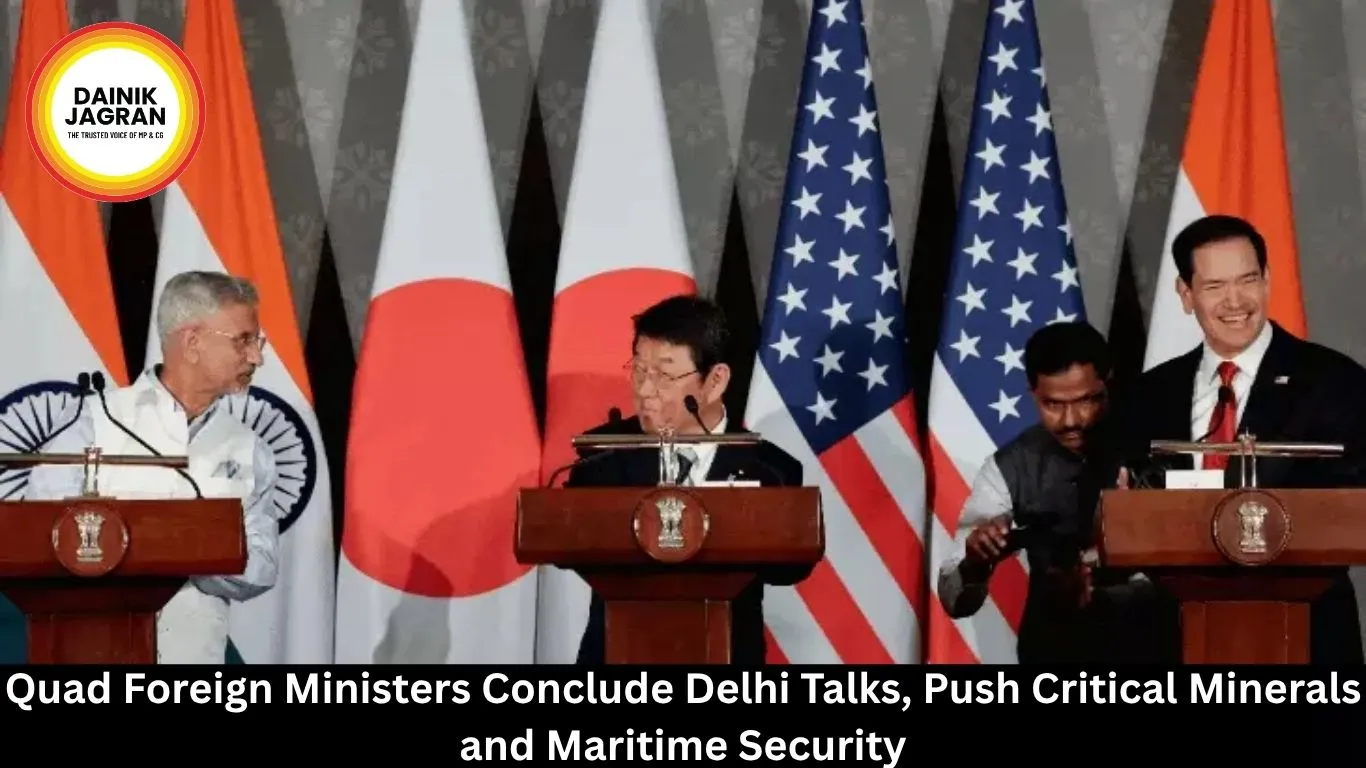
The Quad foreign ministers’ meeting concluded in the national capital on Tuesday with a strong emphasis on deepening cooperation in the Indo-Pacific region amid growing maritime and economic challenges. External Affairs Minister S Jaishankar, along with his counterparts from the US, Japan, and Australia, reviewed progress on multiple fronts including supply chain resilience and regional stability.
Key Outcomes from the Meeting
The ministers announced several concrete initiatives that signal the grouping’s shift towards action-oriented collaboration. A major highlight was the launch of the Quad Critical Minerals Framework, aimed at boosting investment in mining, processing, recycling, and building resilient supply chains for critical minerals and rare earth elements.
In a significant bilateral development, India and the United States signed a framework agreement to secure supplies of critical minerals. Officials described the pact as a step towards strengthening strategic and economic ties between the two countries.
Focus on Energy and Maritime Security
Energy security emerged as another key area of convergence. The Quad nations agreed to establish a Fuel Security Forum and expand regional energy cooperation to reduce vulnerabilities in the Indo-Pacific.
On the maritime front, the grouping decided to enhance surveillance capabilities in the Indian Ocean and broader Indo-Pacific through greater sharing of satellite data. This initiative is expected to help combat illegal fishing, smuggling, and support humanitarian and disaster relief operations.
The ministers also announced the “Ports of the Future” project in Fiji, which aims to strengthen port infrastructure and improve connectivity across island nations in the region.
Jaishankar Highlights Regional Challenges
According to officials, Jaishankar raised concerns over growing challenges in the Indo-Pacific, including maritime security and disruptions in global supply chains. He also stressed the need for zero tolerance against terrorism. Rising tensions in West Asia and the importance of keeping the Strait of Hormuz open for navigation figured prominently in the discussions.
US Secretary of State Marco Rubio, who concluded his India visit after the meeting, emphasised that the Quad is evolving from a dialogue platform into an action-driven partnership. “We are beginning to do that very aggressively and very impressively,” he said, noting the group’s relevance amid ongoing global crises.
Rubio specifically called for the Strait of Hormuz to remain open without restrictions, reflecting broader concerns over energy routes.
Japan and Australia Back Stronger Cooperation
Japan’s Foreign Minister Toshimitsu Motegi described the meeting as sending a “firm message” on maintaining a free and open Indo-Pacific. Australia’s Penny Wong highlighted energy security concerns and reiterated support for the freedom of choice of Indo-Pacific nations.
The meeting comes at a time when the Quad is navigating some underlying strains. The expected 2025 leaders’ summit in India was delayed amid reported differences between Washington and New Delhi, including trade tariffs and other bilateral issues. However, sources said the foreign ministers’ engagement helped reinforce commitment to the forum.
Significance for Regional Stability
Analysts view these outcomes as an attempt to build tangible cooperation in critical areas like technology, minerals, and maritime domain awareness. The initiatives are expected to benefit smaller nations in the Indo-Pacific by improving resilience against economic coercion and security threats.
Local diplomatic circles in Delhi described the meeting as productive, coming shortly after bilateral engagements. Rubio, accompanied by his wife Janet D. Rubio, also visited key sites in the city before departing for Armenia.
As global attention remains fixed on West Asia and other hotspots, the Quad’s focus on practical deliverables — from critical minerals to port development — reflects an effort to translate shared strategic interests into measurable progress.
The next major Quad engagement is expected later this year, with Australia slated to host the leaders’ summit towards the end of 2026.
--------
🚨 Beat the News Rush – Join Now!
Get breaking alerts, hot exclusives, and game-changing stories instantly on your phone. No delays, no fluff – just the edge you need. ⚡
Tap to join:
🟢 WhatsApp Channel: Dainik Jagran MP CG
Crave more?
🅕 Facebook: Dainik Jagran MP CG English
🅧 Twitter (X): Dainik Jagran MP CG
🅘 Instagram: Dainik Jagran MP CG
Share the fire – keep your crew ahead! 🗞️🔥
Quad Foreign Ministers Meeting Ends in Delhi with Key Initiatives
Digital Desk
The Quad foreign ministers’ meeting concluded in the national capital on Tuesday with a strong emphasis on deepening cooperation in the Indo-Pacific region amid growing maritime and economic challenges. External Affairs Minister S Jaishankar, along with his counterparts from the US, Japan, and Australia, reviewed progress on multiple fronts including supply chain resilience and regional stability.
Key Outcomes from the Meeting
The ministers announced several concrete initiatives that signal the grouping’s shift towards action-oriented collaboration. A major highlight was the launch of the Quad Critical Minerals Framework, aimed at boosting investment in mining, processing, recycling, and building resilient supply chains for critical minerals and rare earth elements.
In a significant bilateral development, India and the United States signed a framework agreement to secure supplies of critical minerals. Officials described the pact as a step towards strengthening strategic and economic ties between the two countries.
Focus on Energy and Maritime Security
Energy security emerged as another key area of convergence. The Quad nations agreed to establish a Fuel Security Forum and expand regional energy cooperation to reduce vulnerabilities in the Indo-Pacific.
On the maritime front, the grouping decided to enhance surveillance capabilities in the Indian Ocean and broader Indo-Pacific through greater sharing of satellite data. This initiative is expected to help combat illegal fishing, smuggling, and support humanitarian and disaster relief operations.
The ministers also announced the “Ports of the Future” project in Fiji, which aims to strengthen port infrastructure and improve connectivity across island nations in the region.
Jaishankar Highlights Regional Challenges
According to officials, Jaishankar raised concerns over growing challenges in the Indo-Pacific, including maritime security and disruptions in global supply chains. He also stressed the need for zero tolerance against terrorism. Rising tensions in West Asia and the importance of keeping the Strait of Hormuz open for navigation figured prominently in the discussions.
US Secretary of State Marco Rubio, who concluded his India visit after the meeting, emphasised that the Quad is evolving from a dialogue platform into an action-driven partnership. “We are beginning to do that very aggressively and very impressively,” he said, noting the group’s relevance amid ongoing global crises.
Rubio specifically called for the Strait of Hormuz to remain open without restrictions, reflecting broader concerns over energy routes.
Japan and Australia Back Stronger Cooperation
Japan’s Foreign Minister Toshimitsu Motegi described the meeting as sending a “firm message” on maintaining a free and open Indo-Pacific. Australia’s Penny Wong highlighted energy security concerns and reiterated support for the freedom of choice of Indo-Pacific nations.
The meeting comes at a time when the Quad is navigating some underlying strains. The expected 2025 leaders’ summit in India was delayed amid reported differences between Washington and New Delhi, including trade tariffs and other bilateral issues. However, sources said the foreign ministers’ engagement helped reinforce commitment to the forum.
Significance for Regional Stability
Analysts view these outcomes as an attempt to build tangible cooperation in critical areas like technology, minerals, and maritime domain awareness. The initiatives are expected to benefit smaller nations in the Indo-Pacific by improving resilience against economic coercion and security threats.
Local diplomatic circles in Delhi described the meeting as productive, coming shortly after bilateral engagements. Rubio, accompanied by his wife Janet D. Rubio, also visited key sites in the city before departing for Armenia.
As global attention remains fixed on West Asia and other hotspots, the Quad’s focus on practical deliverables — from critical minerals to port development — reflects an effort to translate shared strategic interests into measurable progress.
The next major Quad engagement is expected later this year, with Australia slated to host the leaders’ summit towards the end of 2026.