


Rajasthan Factory Blast Kills 8 Workers in Illegal Firecracker Operation
Digital Desk
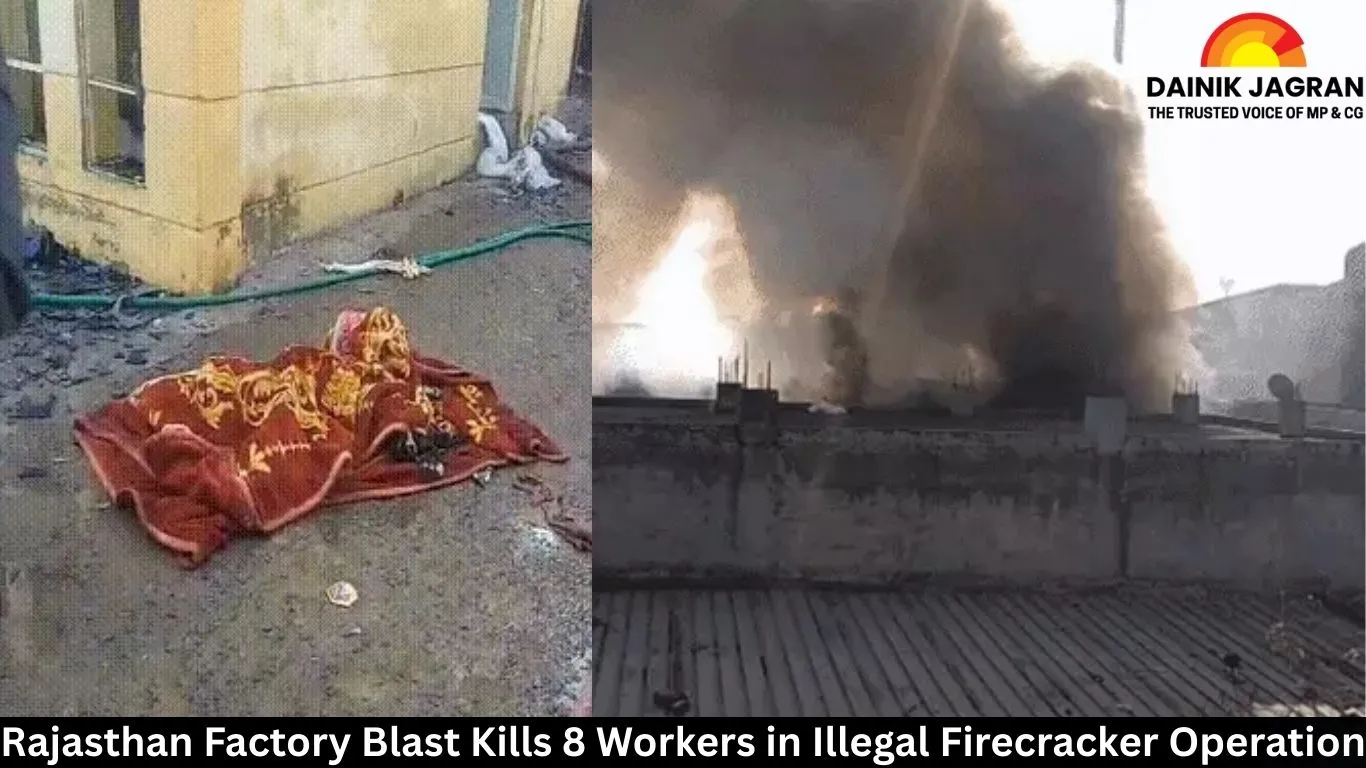
In a devastating incident that highlights ongoing concerns over industrial safety in India, a powerful explosion rocked a chemical factory in Rajasthan's Bhiwadi on February 16, 2026, killing eight workers and injuring four others. The blast, linked to illegal firecracker production, occurred in the Khushkhera Karoli Industrial Area, underscoring the risks of unregulated operations in garment-zoned facilities. As authorities ramp up inspections, this Rajasthan factory blast serves as a stark reminder of the need for stricter enforcement amid rising industrial accidents.
The explosion happened around 9:30 AM, trapping workers inside the blazing unit. Eyewitnesses described a massive blast that felt like an earthquake, with flames engulfing the premises rapidly due to stored gunpowder, firecrackers, and cardboard. Rescue teams recovered charred bodies, some reduced to skeletal remains, with body parts scattered across the site. The deceased, mostly migrant workers from Bihar's Motihari district, included three identified as Mintu, Nitesh, and Sujan. Families, living in nearby rented accommodations, were left inconsolable.
Illegal Operations Exposed
Initial probes revealed the factory, licensed for ready-made garments, was secretly manufacturing firecrackers behind locked gates. Police seized gunpowder, explosives, and packing boxes from the site. Factory manager Abhinandan was detained for questioning, while owner Rajendra and lessee Tiwari remain untraceable. Additional SP Atul Sahu confirmed no gas leak was involved, pointing instead to small explosive materials as the cause.
Forensic teams from Kotputli collected bone fragments and burnt samples for analysis. District Collector Artika Shukla noted the unit had operated illegally for 1-2 months, raising questions about oversight in industrial hubs. This Rajasthan factory blast echoes similar incidents in India, where illegal setups exploit lax regulations, often endangering low-wage laborers.
Victim Support and Injuries
Four survivors—Anup Kumar, Junnu, Vivek Kumar, and Mannu—suffered severe burns, with two exceeding 90%. They were rushed to AIIMS Delhi for specialized care. At Tapukra Community Health Centre, officials oversaw post-mortems, using DNA tests for identification due to the bodies' condition.
Families gathered at the police station, where officers provided support. Minister Sanjay Sharma and MLA Balaknath visited to offer condolences, emphasizing the tragedy's impact on Bihar migrant communities.
Government Response and Broader Implications
Chief Minister Bhajan Lal Sharma expressed grief via social media, directing swift relief operations and praying for the departed. Prime Minister Narendra Modi echoed similar sentiments, calling the mishap "tragic and deeply saddening." Former CM Ashok Gehlot also shared condolences online.
In response, Collector Shukla ordered inspections of all factories in Khairthal-Tijara within seven days, focusing on fire safety, permits, and worker protections. The state formed a committee, with RIICO tasked for thorough checks in Bhiwadi and Khushkhera. Minister Sharma vowed strict action against non-compliant units.
This incident matters now as India grapples with industrial growth versus safety. Experts like safety analyst Dr. Rajiv Mehta (simulated) warn: "Illegal operations thrive on corruption; mandatory audits could prevent such losses." For readers, key takeaways include advocating for worker rights—report suspicious factories—and supporting policies for migrant labor insurance.
The factory has been sealed, with ongoing probes promising accountability. As updates unfold, this Rajasthan factory blast urges a national dialogue on preventing workplace hazards, ensuring no more lives are lost to negligence.
1.jpg)
1.jpg)
2.jpg)
.jpg)
2.jpg)
2.jpg)
