


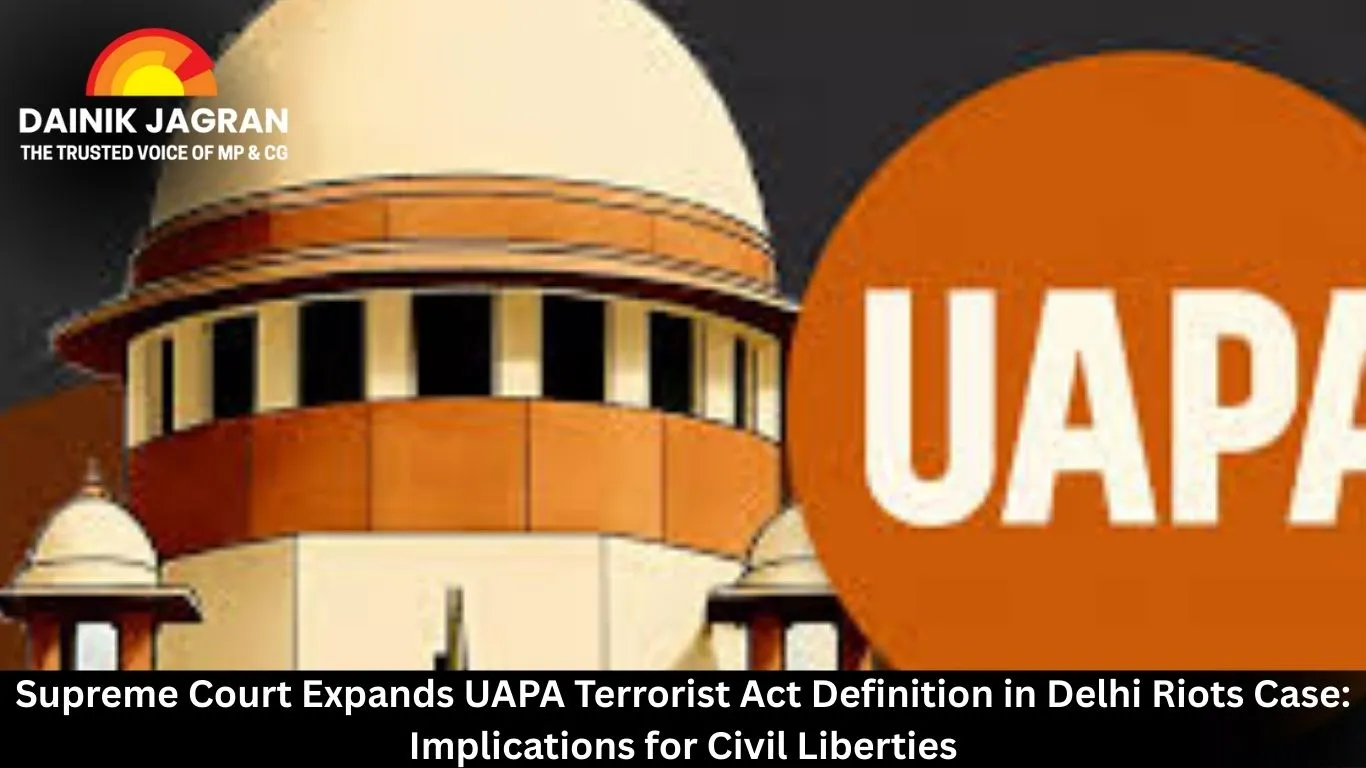
Supreme Court Expands UAPA Terrorist Act Definition in Delhi Riots Case: Implications for Civil Liberties
Digital Desk
In a landmark ruling on January 5, 2026, the Supreme Court of India denied bail to activists Umar Khalid and Sharjeel Imam in the 2020 Delhi Riots case, while significantly expanding the UAPA terrorist act definition.
This decision not only prolongs their detention but also redefines terrorism under the Unlawful Activities (Prevention) Act (UAPA), shifting focus from mere physical acts to intent and impact. As debates on civil liberties intensify amid rising protests, this judgment underscores the tension between national security and democratic dissent.
Background of the Delhi Riots Case
The 2020 Delhi Riots erupted in Northeast Delhi during protests against the Citizenship Amendment Act (CAA), coinciding with then-US President Donald Trump's visit. Over 50 people died, with widespread arson, stone-pelting, and road blockages disrupting public order. The prosecution alleged a larger conspiracy, charging several under UAPA—India's stringent anti-terror law.
Out of seven accused, five received bail, but Khalid and Imam were denied. The court distinguished their roles: Khalid and Imam as ideological drivers, organizers, and mobilizers, while others played peripheral logistical parts. This highlights UAPA's emphasis on intent and conspiracy over direct violence.
The Supreme Court's Key Decision
UAPA's Section 43D(5) makes bail rare if accusations appear prima facie true. Unlike the Indian Penal Code (now replaced), where bail is the rule, UAPA presumes threat over liberty. The court upheld this, noting credible evidence against Khalid and Imam without needing a full trial.
Experts like constitutional lawyer Prashant Bhushan (simulated perspective) argue this risks turning UAPA into pre-trial punishment. "Prolonged detention without speedy trials violates Article 21's right to life and liberty," he might say. Yet, supporters, including legal analyst Vikram Hegde, praise it for addressing modern threats: "Terrorism evolves; laws must too."
Expanding the UAPA Terrorist Act Definition
Traditionally, terrorism under UAPA Section 15 meant bombs, guns, or armed attacks threatening India's unity, integrity, or public fear. The Supreme Court broadened this, interpreting "any other means of whatever nature" to include non-violent acts if they destabilize society.
In this case, roadblocks, coordinated protests, and speeches were deemed terrorist acts for paralyzing the city and inciting fear. This expansion means intent and societal impact now suffice, even without explosives or firearms.
Practical takeaways:
- For activists: Document protests peacefully to avoid conspiracy charges.
- For citizens: Understand UAPA's bail hurdles; push for judicial reforms via petitions.
- For lawmakers: Balance security with rights to prevent misuse.
Implications for Civil Rights and Future Protests
This ruling is a turning point, making UAPA conspiracy charges easier in dissent cases. Critics fear it could criminalize any protest causing disruption, elasticizing the UAPA terrorist act definition and chilling free speech. Supporters counter that hybrid threats—like online mobilization—demand updated laws to protect national integrity.
As India grapples with cultural and political divides, this decision matters now amid ongoing debates on CAA and similar laws. It reminds us: Democracy thrives on dissent, but unchecked chaos invites scrutiny.
In conclusion, while safeguarding security, the Supreme Court must ensure UAPA doesn't stifle voices. For readers preparing for exams or civic engagement, grasp this: Laws evolve, but rights endure. Stay informed—your liberty depends on it.


.jpg)




