

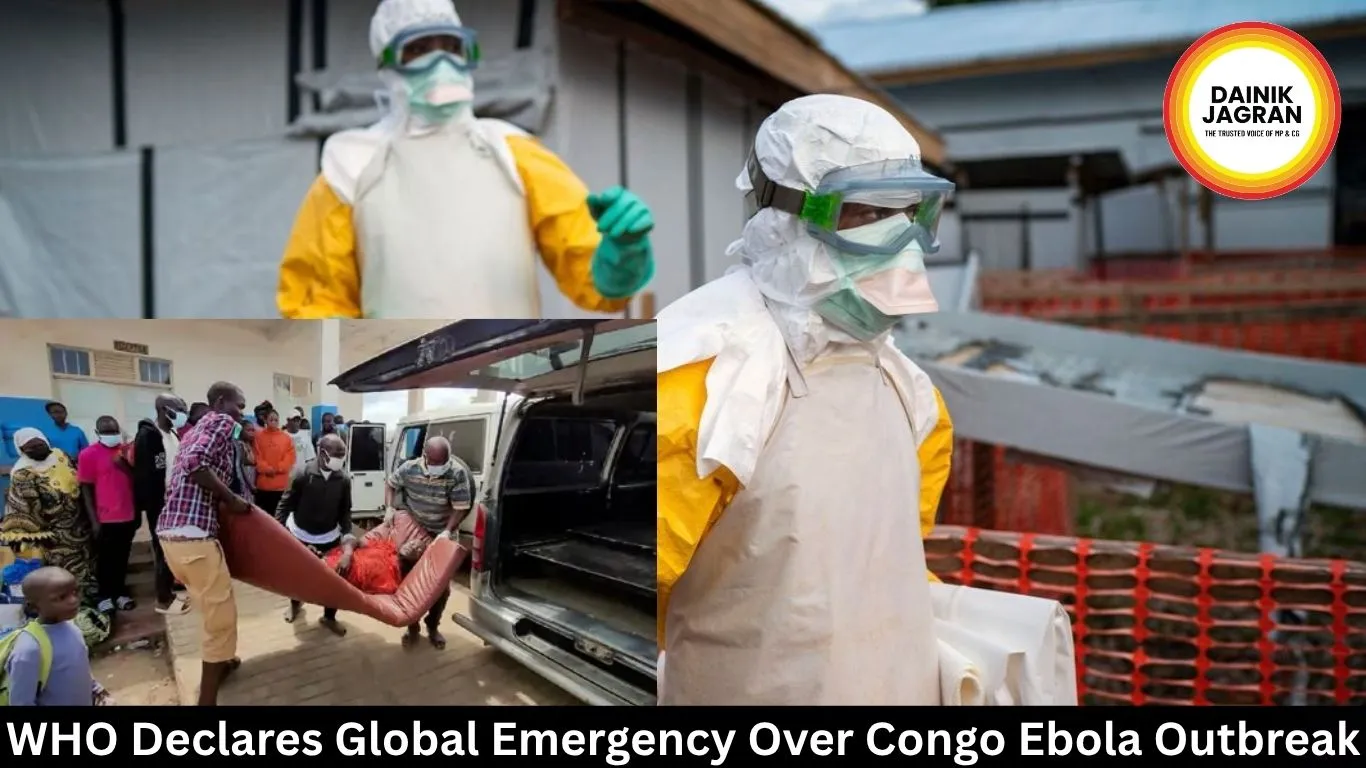
WHO Declares Global Emergency Over Congo Ebola Outbreak

Digital Desk

WHO Declares Global Emergency Over Congo Ebola Outbreak

WHO declares a global health emergency after the Ebola outbreak in Congo leaves 80 dead and raises regional concerns in Uganda and East Africa.


WHO Declares Global Health Emergency After Ebola Outbreak in Congo

Bundibugyo Ebola strain raises fresh concerns as Congo reports 80 deaths and neighbouring Uganda steps up surveillance

The World Health Organization has declared a global health emergency following a fresh Ebola outbreak in the eastern Democratic Republic of the Congo, where at least 80 people have died and 246 suspected cases have been reported so far. The outbreak, centred in Ituri province, has also prompted neighbouring countries including Uganda, South Sudan and Kenya to heighten monitoring and border surveillance.

Outbreak Spreads in Ituri

Health authorities in Congo said the outbreak has spread across Bunia, Rwampara and Mongwalu in the conflict-hit Ituri province. According to Congo’s Health Minister Samuel-Roger Kamba, the first known patient is believed to have been a nurse who died on April 24.

Investigations later confirmed eight cases linked to the Bundibugyo strain of Ebola, a relatively less common variant of the virus that has previously caused outbreaks in Uganda and parts of Central Africa.

The WHO, while announcing the global health emergency late Saturday evening, clarified that the outbreak has not yet been categorised as a pandemic. Officials said the declaration was intended to accelerate international coordination, mobilise emergency funding and strengthen cross-border preparedness.

Fear Grips Bunia

In Bunia, the provincial capital, residents described growing panic as deaths continued over the past several days. Local reports suggest funerals have become frequent in several neighbourhoods, with some families burying multiple relatives within a short period.

Jean Marc Asimwe, a resident of Bunia, told local media that many people initially failed to recognise the symptoms linked to Ebola. “For days, people only knew that more and more residents were falling sick,” he reportedly said.

Despite the outbreak, markets, transport services and other public activities in Bunia are still operating, though with visible caution among residents.

Uganda Reports Linked Case

Uganda has confirmed one Ebola-related death connected to the Congo outbreak. The patient reportedly died at a hospital in Kampala on May 14 before the body was transported back across the border.

Ugandan health authorities said no additional local infections had been identified so far, though contact tracing and isolation measures were continuing in districts near the Congo border.

Regional health experts have warned that the movement of traders, refugees and transport workers across East African borders could complicate containment efforts in the coming weeks.

New Strain Raises Concern

Medical experts say the emergence of the Bundibugyo strain has complicated the response because most existing Ebola vaccines and treatments were primarily designed to target the more common Zaire strain.

While some experimental therapies may still offer protection, health agencies are now assessing how effective current stockpiles and response tools will be against this variant.

“This changes the risk calculation somewhat,” a Central African public health official familiar with the situation said, noting that laboratories are still studying transmission patterns linked to the current outbreak.

The Democratic Republic of the Congo has faced repeated Ebola outbreaks since the virus was first identified near the Ebola River in 1976. This is now the country’s 17th recorded outbreak.

Border Checks Intensified

The Africa Centres for Disease Control and Prevention has warned that Uganda and South Sudan remain particularly vulnerable because of porous border movement and limited rural healthcare infrastructure.

Kenya, meanwhile, has activated emergency preparedness teams and increased screening at airports and land entry points. Authorities there said health workers have been instructed to monitor travellers arriving from high-risk regions in Central Africa.

Public health officials across East Africa are also reviewing isolation capacity, protective equipment availability and emergency response protocols.

What Is Ebola Disease?

Ebola Virus Disease, commonly known as EVD, is a severe and often fatal illness caused by the Ebola virus. Symptoms usually include fever, weakness, vomiting, diarrhoea and internal bleeding in advanced stages.

According to WHO data, Ebola fatality rates have ranged between 25 per cent and 90 per cent in previous outbreaks, depending on the strain and access to treatment.

The virus was first identified simultaneously in Sudan and Congo in 1976 and was named after the Ebola River located near one of the original outbreak zones.

With the latest Ebola outbreak in Congo continuing to expand, international health agencies are expected to increase emergency deployment teams and medical support across affected regions over the coming days.


--------

🚨 Beat the News Rush – Join Now!

Get breaking alerts, hot exclusives, and game-changing stories instantly on your phone. No delays, no fluff – just the edge you need. ⚡

Tap to join: 

🟢 WhatsApp Channel: Dainik Jagran MP CG

Crave more?

🅕 Facebook: Dainik Jagran MP CG English

🅧 Twitter (X): Dainik Jagran MP CG

🅘 Instagram: Dainik Jagran MP CG

Share the fire – keep your crew ahead! 🗞️🔥

english.dainikjagranmpcg.com
17 May 2026 By Abhishek Joshi

WHO Declares Global Emergency Over Congo Ebola Outbreak

Digital Desk

WHO Declares Global Health Emergency After Ebola Outbreak in Congo

Bundibugyo Ebola strain raises fresh concerns as Congo reports 80 deaths and neighbouring Uganda steps up surveillance

The World Health Organization has declared a global health emergency following a fresh Ebola outbreak in the eastern Democratic Republic of the Congo, where at least 80 people have died and 246 suspected cases have been reported so far. The outbreak, centred in Ituri province, has also prompted neighbouring countries including Uganda, South Sudan and Kenya to heighten monitoring and border surveillance.

Outbreak Spreads in Ituri

Health authorities in Congo said the outbreak has spread across Bunia, Rwampara and Mongwalu in the conflict-hit Ituri province. According to Congo’s Health Minister Samuel-Roger Kamba, the first known patient is believed to have been a nurse who died on April 24.

Investigations later confirmed eight cases linked to the Bundibugyo strain of Ebola, a relatively less common variant of the virus that has previously caused outbreaks in Uganda and parts of Central Africa.

The WHO, while announcing the global health emergency late Saturday evening, clarified that the outbreak has not yet been categorised as a pandemic. Officials said the declaration was intended to accelerate international coordination, mobilise emergency funding and strengthen cross-border preparedness.

Fear Grips Bunia

In Bunia, the provincial capital, residents described growing panic as deaths continued over the past several days. Local reports suggest funerals have become frequent in several neighbourhoods, with some families burying multiple relatives within a short period.

Jean Marc Asimwe, a resident of Bunia, told local media that many people initially failed to recognise the symptoms linked to Ebola. “For days, people only knew that more and more residents were falling sick,” he reportedly said.

Despite the outbreak, markets, transport services and other public activities in Bunia are still operating, though with visible caution among residents.

Uganda Reports Linked Case

Uganda has confirmed one Ebola-related death connected to the Congo outbreak. The patient reportedly died at a hospital in Kampala on May 14 before the body was transported back across the border.

Ugandan health authorities said no additional local infections had been identified so far, though contact tracing and isolation measures were continuing in districts near the Congo border.

Regional health experts have warned that the movement of traders, refugees and transport workers across East African borders could complicate containment efforts in the coming weeks.

New Strain Raises Concern

Medical experts say the emergence of the Bundibugyo strain has complicated the response because most existing Ebola vaccines and treatments were primarily designed to target the more common Zaire strain.

While some experimental therapies may still offer protection, health agencies are now assessing how effective current stockpiles and response tools will be against this variant.

“This changes the risk calculation somewhat,” a Central African public health official familiar with the situation said, noting that laboratories are still studying transmission patterns linked to the current outbreak.

The Democratic Republic of the Congo has faced repeated Ebola outbreaks since the virus was first identified near the Ebola River in 1976. This is now the country’s 17th recorded outbreak.

Border Checks Intensified

The Africa Centres for Disease Control and Prevention has warned that Uganda and South Sudan remain particularly vulnerable because of porous border movement and limited rural healthcare infrastructure.

Kenya, meanwhile, has activated emergency preparedness teams and increased screening at airports and land entry points. Authorities there said health workers have been instructed to monitor travellers arriving from high-risk regions in Central Africa.

Public health officials across East Africa are also reviewing isolation capacity, protective equipment availability and emergency response protocols.

What Is Ebola Disease?

Ebola Virus Disease, commonly known as EVD, is a severe and often fatal illness caused by the Ebola virus. Symptoms usually include fever, weakness, vomiting, diarrhoea and internal bleeding in advanced stages.

According to WHO data, Ebola fatality rates have ranged between 25 per cent and 90 per cent in previous outbreaks, depending on the strain and access to treatment.

The virus was first identified simultaneously in Sudan and Congo in 1976 and was named after the Ebola River located near one of the original outbreak zones.

With the latest Ebola outbreak in Congo continuing to expand, international health agencies are expected to increase emergency deployment teams and medical support across affected regions over the coming days.


https://english.dainikjagranmpcg.com/special-news/who-declares-global-emergency-over-congo-ebola-outbreak/article-18567

Related Posts

Latest News


