


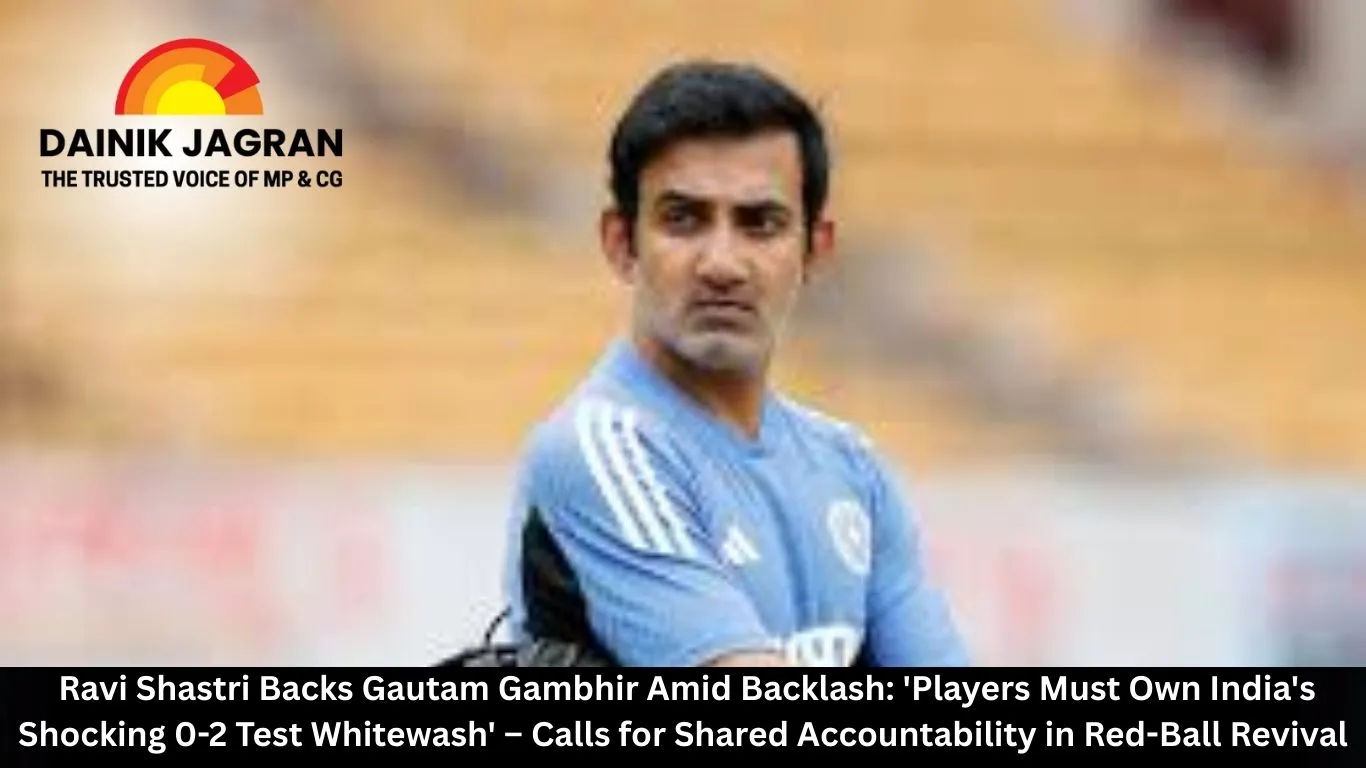
Ravi Shastri Backs Gautam Gambhir Amid Backlash: 'Players Must Own India's Shocking 0-2 Test Whitewash' – Calls for Shared Accountability in Red-Ball Revival
Digital Desk
In the wake of India's humiliating 0-2 Test series defeat to South Africa, the cricket world is buzzing with debates over accountability. As fingers point squarely at head coach Gautam Gambhir, former India skipper and coach Ravi Shastri has stepped in with a measured yet firm take: the blame game ends here—it's time for players to step up too. Speaking on a recent Prabhat Khabar YouTube podcast, Shastri didn't shy away from the heat, urging a collective introspection to salvage India's fading Test legacy.
The series, played on South African soil in late 2025, exposed glaring cracks in India's red-ball armor. In the decisive second Test at Cape Town, the visitors crumbled spectacularly. Chasing a modest target after a first-innings fold for just 201—sliding from 100/1 to 130/7 against a probing Proteas attack—India's batters looked out of depth. Star players like Rohit Sharma and Virat Kohli, once unassailable in tough conditions, faltered under pressure, reigniting talks of a generational shift gone wrong. This whitewash marks India's second straight overseas series loss under Gambhir, following a shocking home defeat to Bangladesh earlier in the year. Fans and pundits alike are questioning if the no-nonsense Gambhir, known for his aggressive IPL-style tactics, can adapt to the nuanced demands of Test cricket.
Shastri, who led India to historic wins Down Under during his 2017-2021 stint, didn't mince words. "It's wrong to target just one person," he said, his voice laced with the frustration of a man who's been there. "The entire team—from management to players—is responsible. No one gets a free pass." He zeroed in on the batting meltdown, adding, "You tell me, what happened in that collapse? This team isn't that bad; they've got talent oozing out. Players have faced spin and seam since childhood—they need to own their failures." Shastri's own record speaks volumes: under him, India topped the Test rankings for 42 months, losing just two home games. Yet, he was quick to include himself hypothetically. "Agar yeh mere saath hota, main pehla responsibility leta (If this happened under me, I'd take the blame first). But I wouldn't spare the players in the team meeting either."
The comments come amid mounting pressure on Gambhir, whose appointment in mid-2024 was hailed as a bold move post-Rahul Dravid. Critics argue his man-management, often blunt and fiery, lacks the patience needed for long-format rebuilds. Social media is ablaze with memes and hot takes—#FireGambhir trends alongside calls for Shastri's return. Even BCCI selectors face scrutiny, with whispers of mid-series tweaks. Shastri addressed this head-on: "Everyone has a right to question performance. But patience is key. Communication, strategy, and man-management—get those right, or you could get fired. Results matter."
As India eyes the upcoming Border-Gavaskar Trophy against Australia in early 2026, Shastri's words serve as a wake-up call. Young guns like Yashasvi Jaiswal and Shubman Gill show promise, but veterans must rediscover form. Gambhir, in a post-series presser, echoed some sentiments, blaming "mental fragility" but vowing resilience. Will this shared responsibility spark a turnaround? Or is India's Test supremacy—a hallmark of the last decade—slipping away?
For now, Shastri's plea resonates: cricket thrives on unity, not finger-pointing. As the off-season looms, expect heated boardroom discussions and fan forums dissecting every move. Stay tuned for daily cricket updates—India's fightback starts with owning the fall.


.jpg)
.jpg)




