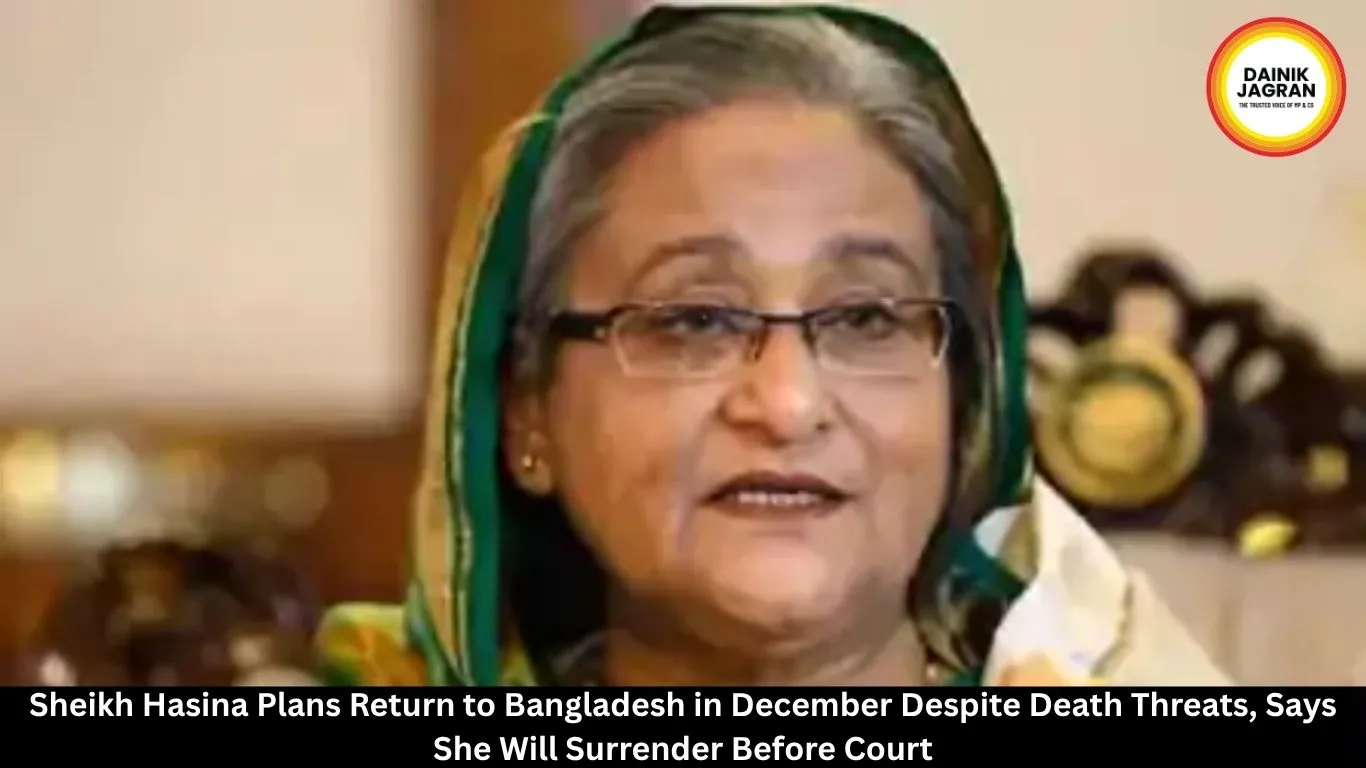
Sheikh Hasina Plans Bangladesh Return in December Despite Death Threats
Digital Desk
Former Bangladesh Prime Minister Sheikh Hasina says she will return to Bangladesh in December and surrender before the court despite facing a death sentence and security threats.
Former Bangladesh Prime Minister Sheikh Hasina has announced plans to return to Bangladesh in December despite facing a death sentence and what she described as serious threats to her life. In an interview with Reuters, the ousted leader said she intends to return voluntarily along with senior leaders of the banned Awami League and surrender before the country's courts.
Hasina said she was fully aware of the risks surrounding her return, including the possibility of arrest or assassination, but maintained that she wanted to face the legal process in her homeland.
"They may arrest me on my return; they may even kill me. Still, I have to go," Reuters quoted Hasina as saying. She added that she wished to die in Bangladesh, where her parents are buried, if that became her fate.
Plans to Return Voluntarily
The former prime minister said Bangladesh's interim authorities have repeatedly sought her extradition from India since she left the country in 2024. However, she stressed that she would not wait for any extradition process and would instead return on her own.
Hasina said she had not held discussions with any foreign government regarding her return and denied any behind-the-scenes negotiations with authorities in Dhaka.
According to her, democracy, voting rights, political freedom for the Awami League and justice cannot be decided through secret talks.
She declined to reveal the exact date of her arrival or specify the court where she plans to surrender but expressed confidence that the judicial proceedings would expose what she described as an unfair legal process.
Awami League Leaders to Accompany Her
Hasina also revealed that several senior Awami League leaders living in exile are expected to return with her and surrender before the courts.
Among those planning to return is former Home Minister Asaduzzaman Khan Kamal, who has also reportedly been sentenced to death.
She said thousands of party workers and leaders continue to face legal cases, forcing many to remain in hiding. According to Hasina, she has urged party members to return home together and face the legal process collectively.
Political Crisis Forced Exile
Hasina fled Bangladesh in 2024 after weeks of nationwide student-led protests escalated into a major political crisis that brought an end to her long tenure in office.
Later, Bangladesh's war crimes tribunal sentenced her to death in absentia after convicting her over the deadly crackdown on protesters during the unrest. Hasina has consistently denied all charges against her.
Following the political transition, the Awami League was banned in Bangladesh.
Legacy Remains Deeply Divisive
The daughter of Bangladesh's founding leader Sheikh Mujibur Rahman, Hasina has remained one of the country's most influential political figures for decades.
Her supporters credit her with driving economic growth, infrastructure development and political stability during much of her tenure. However, critics and several international rights organisations accused her administration of suppressing political opposition, restricting civil liberties and weakening democratic institutions—allegations she has repeatedly rejected.
Return Could Influence Bangladesh's Politics
Hasina acknowledged that she may not be eligible to contest future elections because of the convictions against her. However, she questioned why the Awami League should remain barred from political participation.
She argued that the people of Bangladesh, rather than courts or political authorities, should ultimately decide the party's future through democratic elections.
The former prime minister also disclosed that she has continued to engage with party workers through online meetings covering 125 of Bangladesh's 300 parliamentary constituencies as part of efforts to reorganise the Awami League while in exile.
Her planned return is expected to become one of the most significant political developments in Bangladesh this year and could have far-reaching implications for the country's political landscape.
--------
🚨 Beat the News Rush – Join Now!
Get breaking alerts, hot exclusives, and game-changing stories instantly on your phone. No delays, no fluff – just the edge you need. ⚡
Tap to join:
🟢 WhatsApp Channel: Dainik Jagran MP CG
Crave more?
🅕 Facebook: Dainik Jagran MP CG English
🅧 Twitter (X): Dainik Jagran MP CG
🅘 Instagram: Dainik Jagran MP CG
Share the fire – keep your crew ahead! 🗞️🔥
Sheikh Hasina Plans Bangladesh Return in December Despite Death Threats
Digital Desk
Former Bangladesh Prime Minister Sheikh Hasina has announced plans to return to Bangladesh in December despite facing a death sentence and what she described as serious threats to her life. In an interview with Reuters, the ousted leader said she intends to return voluntarily along with senior leaders of the banned Awami League and surrender before the country's courts.
Hasina said she was fully aware of the risks surrounding her return, including the possibility of arrest or assassination, but maintained that she wanted to face the legal process in her homeland.
"They may arrest me on my return; they may even kill me. Still, I have to go," Reuters quoted Hasina as saying. She added that she wished to die in Bangladesh, where her parents are buried, if that became her fate.
Plans to Return Voluntarily
The former prime minister said Bangladesh's interim authorities have repeatedly sought her extradition from India since she left the country in 2024. However, she stressed that she would not wait for any extradition process and would instead return on her own.
Hasina said she had not held discussions with any foreign government regarding her return and denied any behind-the-scenes negotiations with authorities in Dhaka.
According to her, democracy, voting rights, political freedom for the Awami League and justice cannot be decided through secret talks.
She declined to reveal the exact date of her arrival or specify the court where she plans to surrender but expressed confidence that the judicial proceedings would expose what she described as an unfair legal process.
Awami League Leaders to Accompany Her
Hasina also revealed that several senior Awami League leaders living in exile are expected to return with her and surrender before the courts.
Among those planning to return is former Home Minister Asaduzzaman Khan Kamal, who has also reportedly been sentenced to death.
She said thousands of party workers and leaders continue to face legal cases, forcing many to remain in hiding. According to Hasina, she has urged party members to return home together and face the legal process collectively.
Political Crisis Forced Exile
Hasina fled Bangladesh in 2024 after weeks of nationwide student-led protests escalated into a major political crisis that brought an end to her long tenure in office.
Later, Bangladesh's war crimes tribunal sentenced her to death in absentia after convicting her over the deadly crackdown on protesters during the unrest. Hasina has consistently denied all charges against her.
Following the political transition, the Awami League was banned in Bangladesh.
Legacy Remains Deeply Divisive
The daughter of Bangladesh's founding leader Sheikh Mujibur Rahman, Hasina has remained one of the country's most influential political figures for decades.
Her supporters credit her with driving economic growth, infrastructure development and political stability during much of her tenure. However, critics and several international rights organisations accused her administration of suppressing political opposition, restricting civil liberties and weakening democratic institutions—allegations she has repeatedly rejected.
Return Could Influence Bangladesh's Politics
Hasina acknowledged that she may not be eligible to contest future elections because of the convictions against her. However, she questioned why the Awami League should remain barred from political participation.
She argued that the people of Bangladesh, rather than courts or political authorities, should ultimately decide the party's future through democratic elections.
The former prime minister also disclosed that she has continued to engage with party workers through online meetings covering 125 of Bangladesh's 300 parliamentary constituencies as part of efforts to reorganise the Awami League while in exile.
Her planned return is expected to become one of the most significant political developments in Bangladesh this year and could have far-reaching implications for the country's political landscape.