


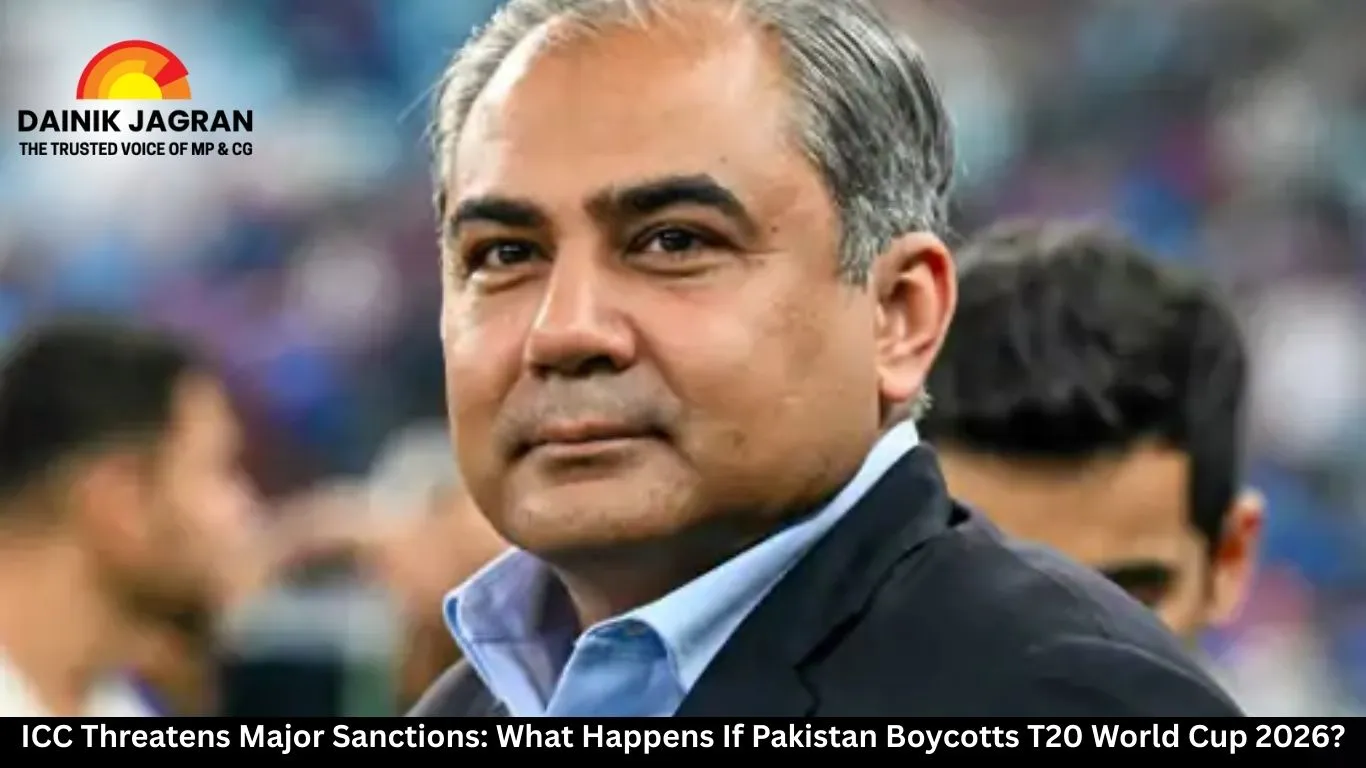
ICC Threatens Major Sanctions: What Happens If Pakistan Boycotts T20 World Cup 2026?
Digital Desk
ICC Threatens Major Sanctions: What Happens If Pakistan Boycotts T20 World Cup 2026?
In a dramatic escalation that could reshape international cricket, the International Cricket Council (ICC) is reportedly prepared to impose severe penalties on Pakistan if the nation follows through on potential threats to boycott the 2026 T20 World Cup. This brewing storm, centered on accusations of ICC "double standards," threatens not just a tournament but the future of Pakistan’s cricketing calendar.
The crisis erupted after the ICC excluded Bangladesh from the 2026 edition for refusing to play in India. In response, Pakistan Cricket Board (PCB) Chairman Mohsin Naqvi publicly criticized the governing body, calling the decision an "injustice" and casting serious doubt over Pakistan’s own participation. "We obey , not the ICC," Naqvi stated, pushing the final decision to Pakistan's political leadership upon their return.
The Stakes: Understanding the Potential ICC Sanctions
According to sources cited in a The Indian Express report, the ICC sanctions on Pakistan would be swift and multifaceted, designed to deter what the council would view as a destabilizing move. The potential penalties are unprecedented in their scope:
A complete ban on bilateral series with any other international team.
Withholding of No Objection Certificates (NOCs) for Pakistani players in overseas leagues, crucially impacting the marquee Pakistan Super League (PSL).
Exclusion from regional tournaments, specifically the Asia Cup.
This package of sanctions aims at the financial and competitive heart of Pakistani cricket, isolating the nation from the global cricketing ecosystem.
PCB’s Stance: A Question of Principle or Politics?
Chairman Mohsin Naqvi’s defiance frames the issue as one of fairness and consistency. "One country can make any decision whenever, while it is the opposite for another," he argued, alluding to perceived inequities in ICC governance. His comments suggest the PCB boycott threat is a bargaining chip, leveraging Pakistan’s status as a "major stakeholder" to challenge ICC authority and rally support from other member boards.
The situation is further complicated by the already-sensitive India-Pakistan cricketing relations. The ICC had previously announced that all matches involving the two rivals would be held at neutral venues for the tournament, with Pakistan slated to play all its games—including a high-voltage clash against India on February 15—in Sri Lanka.
Why This Matters Now: Beyond the Boundary
This standoff is more than a sports scheduling dispute. It highlights the intense and often fraught intersection of geopolitics, sports governance, and national pride. With the T20 World Cup 2026 still two years away, the ICC’s hardline stance is a preemptive strike to maintain authority and tournament integrity. For Pakistan, the calculation involves weighing symbolic solidarity with Bangladesh against the devastating practical consequences of isolation.
Expert analysts suggest the ICC’s leaked sanctions are a classic pressure tactic, hoping the PCB will back down before irrevocable decisions are made. The coming weeks, as Pakistan’s government deliberates, will be critical.
The Bottom Line
The threat of ICC sanctions on Pakistan for a T20 World Cup boycott presents a pivotal moment for international cricket. The ICC is signaling that tournament boycotts, especially by full-member nations, will be met with existential financial and sporting penalties. While the PCB champions the cause of equitable treatment, it must now navigate a high-risk game of chicken with the sport’s global governing body. The outcome will set a powerful precedent for how cricket manages political dissent within its ranks for years to come.

.jpg)




