

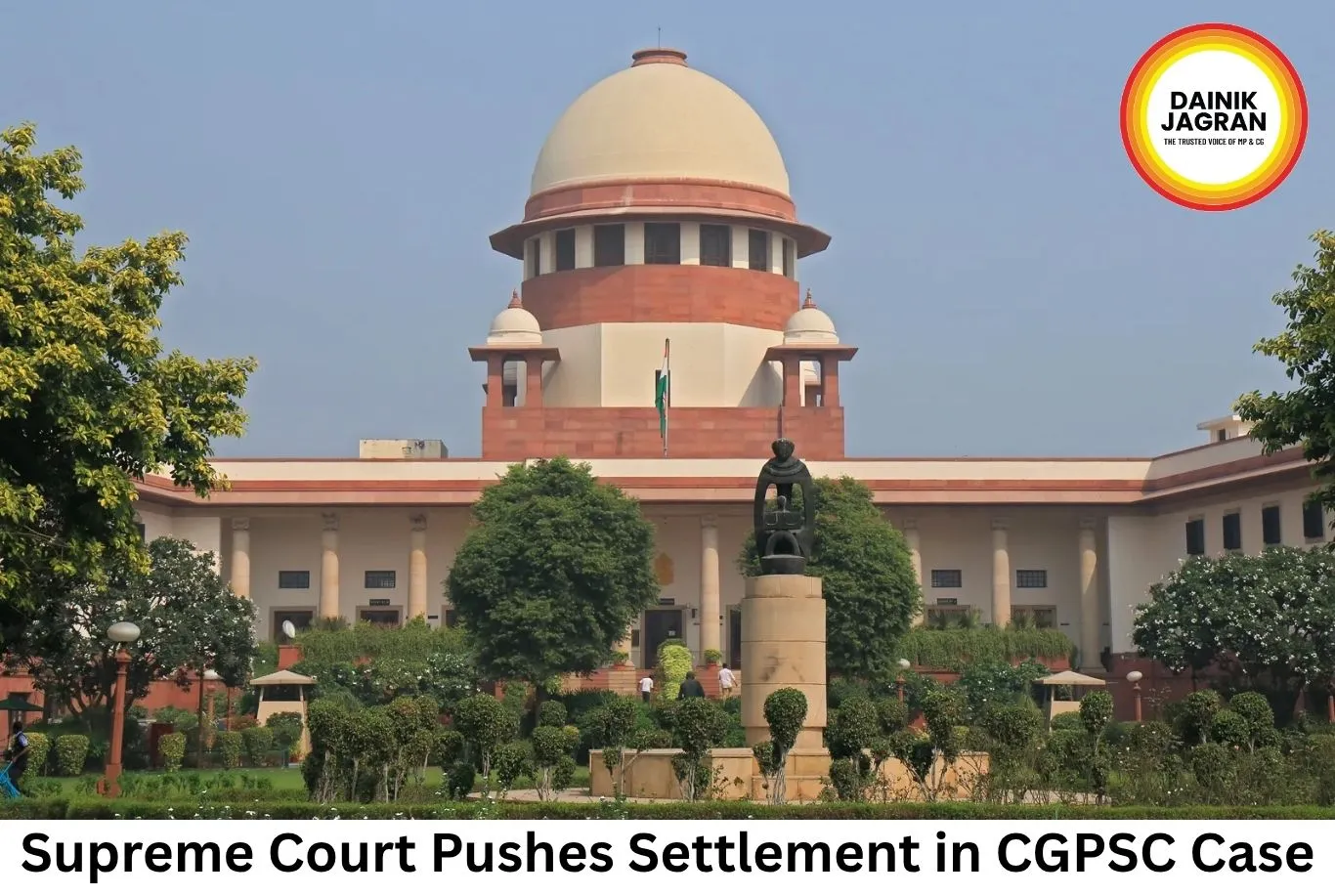
Supreme Court Pushes Settlement Route in CGPSC 2003 Scam Case
Digital Desk
The Supreme Court has referred the long-pending CGPSC 2003 dispute to a special Lok Adalat process.
The controversial CGPSC 2003 scam case has once again come into national focus after the Supreme Court initiated efforts for an out-of-court settlement through a special resolution mechanism. The apex court has reportedly invited both petitioners and selected candidates to participate in a “Samadhan Samaroh” or special Lok Adalat aimed at resolving the long-pending dispute. The case relates to alleged irregularities in the Chhattisgarh Public Service Commission examination conducted in 2003. The controversy has remained under judicial review for nearly two decades and directly affects several officers currently serving in administrative positions.
Supreme Court Suggests Settlement
In the latest development, the Supreme Court has attempted to explore a negotiated settlement between the parties involved in the CGPSC 2003 scam case. Notices have reportedly been issued asking key stakeholders to appear before district legal services authorities in Mungeli and Kabirdham. The move is being seen as an effort to resolve one of the state’s longest-running recruitment disputes through mutual consensus rather than prolonged litigation. However, petitioner Varsha Dongre has publicly stated that there is little scope for compromise in the matter because the High Court had already delivered a detailed judgment in favour of the petitioners.
Petitioner Rejects Compromise
Speaking on the latest proceedings, petitioner Varsha Dongre maintained that the issue should now be decided strictly on legal grounds. According to her, the Chhattisgarh High Court had already identified serious irregularities in the recruitment process and directed corrective action years ago. She argued that instead of seeking compromise, the High Court judgment should be implemented fully. The petitioner also stated that the matter has remained pending for several years due to the stay granted by the Supreme Court. The latest comments have once again intensified discussions surrounding transparency and accountability in public recruitment examinations.
High Court Order in 2017
The CGPSC 2003 scam case witnessed a major turning point in 2017 when the Chhattisgarh High Court cancelled the selection list prepared through the examination process. The High Court directed authorities to conduct fresh re-scaling of marks and prepare a revised merit list. The judgment also instructed that answer sheets in certain optional subjects, particularly anthropology, should be reassessed according to proper evaluation standards. If implemented fully, the decision could reportedly affect the service positions of several officers, including deputy collectors and other administrative officials selected through the disputed recruitment process.
Allegations of Irregularities
The controversy surrounding the CGPSC 2003 scam case first surfaced after the implementation of the Right to Information Act in 2005. Candidates including Varsha Dongre and Ravindra Singh reportedly obtained official documents through RTI applications that pointed towards discrepancies in evaluation and scaling methods. According to records cited in court proceedings, some candidates allegedly received unusually high marks despite writing minimal answers, while others who attempted complete papers secured comparatively low scores. Questions were also raised regarding the scaling system used during evaluation, with allegations that candidates from the same subject stream received inconsistent moderation despite similar scores.
PSC Admitted Errors
Court records indicate that after receiving notice from the High Court, the Public Service Commission reportedly acknowledged mistakes in the selection process in 2005 itself. Despite this, the legal dispute continued for years before the High Court delivered its detailed judgment nearly 11 years later. The prolonged delay has often been criticised by petitioners who claim that justice was delayed despite early indications of irregularities. Legal experts say the case became significant because it raised larger concerns regarding fairness in state-level recruitment examinations and administrative accountability.
147 Officers Potentially Affected
The High Court judgment reportedly had implications for around 147 selected officers linked to the disputed examination. Officials selected through the process feared that revised scaling and merit calculations could alter rankings and service allocations. Several officers, including deputy collectors, later challenged the High Court decision before the Supreme Court. After preliminary hearings, the apex court stayed implementation of the High Court order, allowing the selected officers to continue in service while the matter remained pending. Experts familiar with public service recruitment processes say fresh scaling could substantially alter the original merit list.
Legal and Administrative Impact
The CGPSC 2003 scam case continues to remain one of the most debated recruitment controversies in Chhattisgarh’s administrative history. The outcome of the case could influence future recruitment policies, examination transparency measures, and evaluation systems used by state commissions. Legal observers believe the Supreme Court’s attempt to encourage settlement reflects efforts to reduce prolonged litigation involving public appointments. However, conflicting positions taken by petitioners and selected candidates may make consensus difficult. The issue also continues to attract attention because many officers selected through the disputed process currently occupy important administrative roles.
-----------
--------
๐จ Beat the News Rush โ Join Now!
Get breaking alerts, hot exclusives, and game-changing stories instantly on your phone. No delays, no fluff โ just the edge you need. โก
Tap to join:ย
๐ข WhatsApp Channel: Dainik Jagran MP CG
Crave more?
๐ Facebook: Dainik Jagran MP CG English
๐ ง Twitter (X): Dainik Jagran MP CG
๐ Instagram: Dainik Jagran MP CG
Share the fire โ keep your crew ahead! ๐๏ธ๐ฅ
Supreme Court Pushes Settlement Route in CGPSC 2003 Scam Case
Digital Desk
The controversial CGPSC 2003 scam case has once again come into national focus after the Supreme Court initiated efforts for an out-of-court settlement through a special resolution mechanism. The apex court has reportedly invited both petitioners and selected candidates to participate in a “Samadhan Samaroh” or special Lok Adalat aimed at resolving the long-pending dispute. The case relates to alleged irregularities in the Chhattisgarh Public Service Commission examination conducted in 2003. The controversy has remained under judicial review for nearly two decades and directly affects several officers currently serving in administrative positions.
Supreme Court Suggests Settlement
In the latest development, the Supreme Court has attempted to explore a negotiated settlement between the parties involved in the CGPSC 2003 scam case. Notices have reportedly been issued asking key stakeholders to appear before district legal services authorities in Mungeli and Kabirdham. The move is being seen as an effort to resolve one of the state’s longest-running recruitment disputes through mutual consensus rather than prolonged litigation. However, petitioner Varsha Dongre has publicly stated that there is little scope for compromise in the matter because the High Court had already delivered a detailed judgment in favour of the petitioners.
Petitioner Rejects Compromise
Speaking on the latest proceedings, petitioner Varsha Dongre maintained that the issue should now be decided strictly on legal grounds. According to her, the Chhattisgarh High Court had already identified serious irregularities in the recruitment process and directed corrective action years ago. She argued that instead of seeking compromise, the High Court judgment should be implemented fully. The petitioner also stated that the matter has remained pending for several years due to the stay granted by the Supreme Court. The latest comments have once again intensified discussions surrounding transparency and accountability in public recruitment examinations.
High Court Order in 2017
The CGPSC 2003 scam case witnessed a major turning point in 2017 when the Chhattisgarh High Court cancelled the selection list prepared through the examination process. The High Court directed authorities to conduct fresh re-scaling of marks and prepare a revised merit list. The judgment also instructed that answer sheets in certain optional subjects, particularly anthropology, should be reassessed according to proper evaluation standards. If implemented fully, the decision could reportedly affect the service positions of several officers, including deputy collectors and other administrative officials selected through the disputed recruitment process.
Allegations of Irregularities
The controversy surrounding the CGPSC 2003 scam case first surfaced after the implementation of the Right to Information Act in 2005. Candidates including Varsha Dongre and Ravindra Singh reportedly obtained official documents through RTI applications that pointed towards discrepancies in evaluation and scaling methods. According to records cited in court proceedings, some candidates allegedly received unusually high marks despite writing minimal answers, while others who attempted complete papers secured comparatively low scores. Questions were also raised regarding the scaling system used during evaluation, with allegations that candidates from the same subject stream received inconsistent moderation despite similar scores.
PSC Admitted Errors
Court records indicate that after receiving notice from the High Court, the Public Service Commission reportedly acknowledged mistakes in the selection process in 2005 itself. Despite this, the legal dispute continued for years before the High Court delivered its detailed judgment nearly 11 years later. The prolonged delay has often been criticised by petitioners who claim that justice was delayed despite early indications of irregularities. Legal experts say the case became significant because it raised larger concerns regarding fairness in state-level recruitment examinations and administrative accountability.
147 Officers Potentially Affected
The High Court judgment reportedly had implications for around 147 selected officers linked to the disputed examination. Officials selected through the process feared that revised scaling and merit calculations could alter rankings and service allocations. Several officers, including deputy collectors, later challenged the High Court decision before the Supreme Court. After preliminary hearings, the apex court stayed implementation of the High Court order, allowing the selected officers to continue in service while the matter remained pending. Experts familiar with public service recruitment processes say fresh scaling could substantially alter the original merit list.
Legal and Administrative Impact
The CGPSC 2003 scam case continues to remain one of the most debated recruitment controversies in Chhattisgarh’s administrative history. The outcome of the case could influence future recruitment policies, examination transparency measures, and evaluation systems used by state commissions. Legal observers believe the Supreme Court’s attempt to encourage settlement reflects efforts to reduce prolonged litigation involving public appointments. However, conflicting positions taken by petitioners and selected candidates may make consensus difficult. The issue also continues to attract attention because many officers selected through the disputed process currently occupy important administrative roles.
-----------


